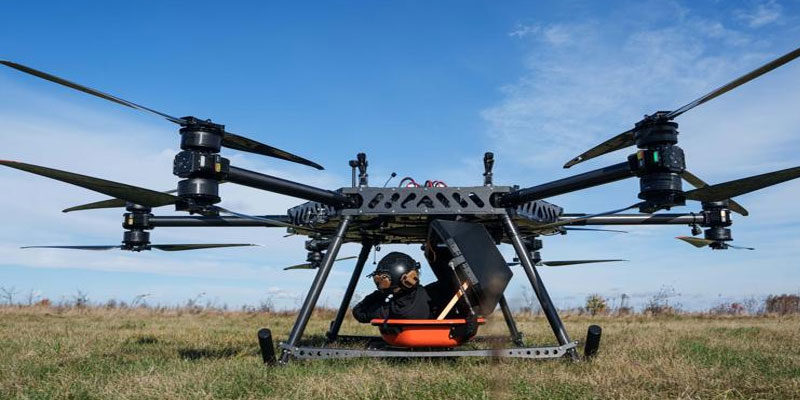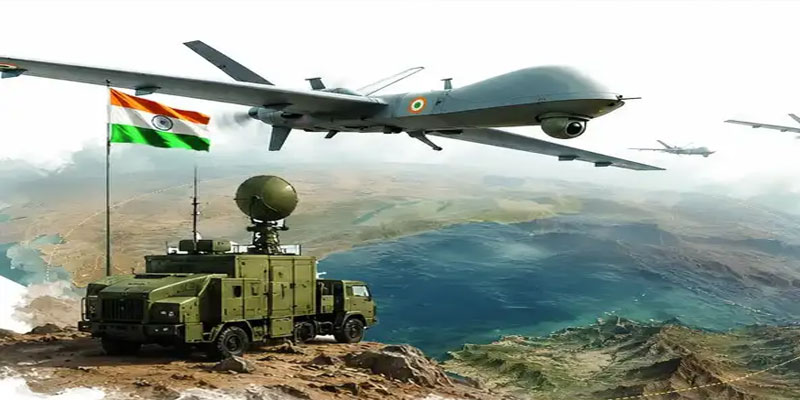
India defence firm eyes Gulf market amid Iran war, explores making a 1,000-km strike drone in Oman. Noida-based defence company IG Defence has signed a memorandum of understanding (MoU) with Oman's MSA Global LLC to explore the joint development and local manufacturing of three Indian-origin drone and counter-drone systems. The proposed partnership comes amid heightened security concerns in West Asia, where regional conflicts and the growing use of unmanned aerial systems have increased demand for advanced military technology. The most significant proposal is KAL, a long-range, one-way attack drone with a company-stated range of up to 1,000 kilometres.
What Is the India-Oman Defence Partnership?
The agreement aims to assess opportunities for developing, localising and potentially manufacturing the systems in Oman for its armed forces and other Gulf Cooperation Council (GCC) countries.
Importantly, the MoU is exploratory and does not represent a confirmed production or procurement contract.
Oman's strategic location near the Strait of Hormuz and the Arabian Sea makes it an important partner for India's expanding defence and maritime engagement in the Gulf.
Three Indian-Origin Systems: What Are They?
The proposed collaboration covers three platforms:
· KAL: A long-range, one-way attack unmanned aerial system (UAS), with a claimed range of up to 1,000 km, intended for deep-strike missions.
· BAJ: An unmanned aerial interceptor designed to detect and neutralise hostile drones.
· JWALA: A micro-missile system under development for counter-drone operations, potentially providing a lower-cost interception option.
Together, these systems address both offensive and defensive requirements. This combination is increasingly important as recent conflicts have demonstrated how inexpensive drones can challenge conventional air-defence systems.
Why Is Oman Important for India's Defence Industry?
For IG Defence, Oman could provide an entry point into the wider GCC defence market.
The proposed localisation offers several opportunities:
· Access to Gulf defence customers and regional export channels.
· Expansion of India's indigenous defence technology exports.
· Opportunities for joint manufacturing and industrial cooperation.
· Strengthening India-Oman strategic and security relations.
For Oman, the partnership could support defence-industrial diversification, technology development and reduced dependence on imported military equipment.
What Are the Major Challenges?
Several important questions remain unanswered, including project financing, production volumes, technology-transfer arrangements, export permissions and manufacturing timelines.
The proposed 1,000-km strike drone will also require extensive testing, reliable navigation, secure communications and regulatory clearances. IG Defence will face competition from established Turkish, Iranian, Chinese, Israeli and Western defence manufacturers.
Can Oman Become India's Gulf Defence Gateway?
The immediate next step is likely to involve feasibility assessments, technology demonstrations and discussions on local assembly rather than immediate mass production. If successful, the partnership could position Oman as a regional manufacturing and export hub for Indian-designed drone technologies. Beyond the commercial opportunity, the initiative reflects India's ambition to evolve from a defence equipment buyer into a credible global defence technology exporter, strengthening its strategic footprint across West Asia.
(With agency inputs)