A New Dawn: Oath-Taking Ceremony Set for May 9
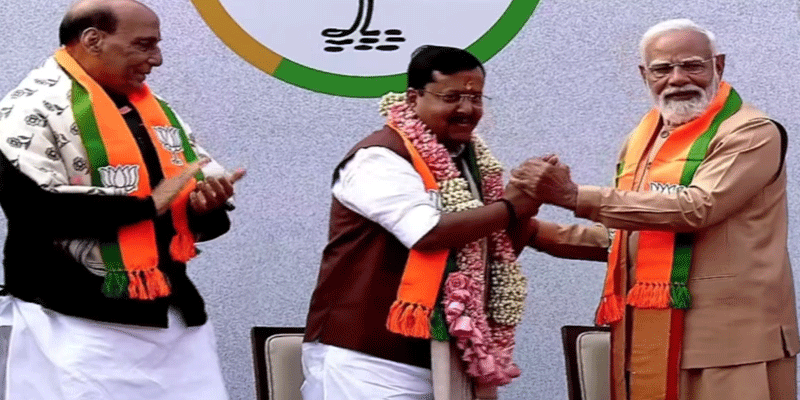
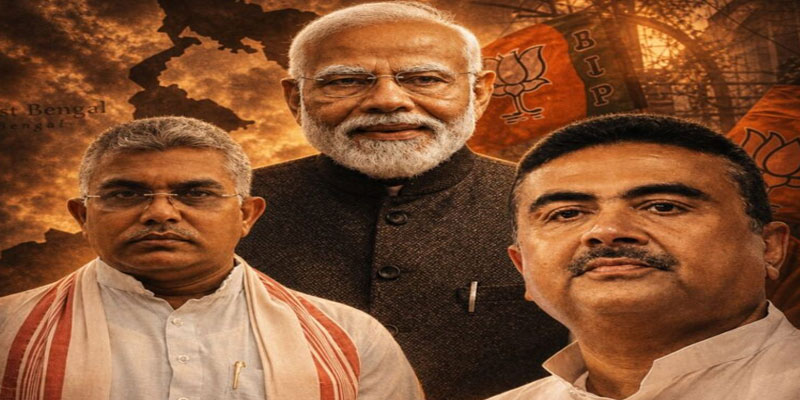
West Bengal stands on the cusp of a political transformation, with the Bharatiya Janata Party (BJP) preparing to swear in its first-ever Chief Minister on May 9. Party-linked sources indicate that administrative preparations are already underway, even as the central leadership keeps the final name under wraps. The chosen date is far from arbitrary—it coincides with “25 Baishakh” in the Bengali calendar and the birth anniversary of Rabindranath Tagore, lending cultural symbolism to what the BJP hopes to project as the beginning of a “new Bengal.”
This strategic timing reflects an attempt to root the incoming government in Bengal’s cultural ethos, countering criticisms that the BJP represents an external political force. With the Governor expected to be formally approached soon, the announcement of the Chief Minister is likely imminent.
The Electoral Battle: From Resistance to Realignment
The BJP’s decisive majority in the 294-seat Assembly marks the end of over a decade of rule by Mamata Banerjee and her Trinamool Congress (TMC). The electoral contest was intense, defined by high voter turnout, sharp ideological clashes, and a narrative of “change” versus continuity.
At the center of this battle was Suvendu Adhikari, who emerged as the face of the BJP’s campaign. His victory over Banerjee in Bhabanipur—her political stronghold—by over 15,000 votes became the defining moment of the election. It symbolized not just a personal triumph but a broader shift in voter sentiment, reflecting fatigue with incumbency and a desire for alternative governance.
The BJP’s gains across urban, semi-urban, and even traditional TMC bastions suggest a deep electoral realignment, driven by grassroots mobilization, strategic messaging, and organizational expansion.
The CM Race: Front-Runners and Contenders
As the BJP prepares to form the government, the spotlight is firmly on the Chief Minister race. Suvendu Adhikari is widely seen as the frontrunner. His aggressive campaign, electoral success, and symbolic victories position him as the leader who delivered the mandate.
Close behind is Samik Bhattacharya, the state BJP president, known for his organizational acumen and relatively moderate image. He represents the party’s institutional backbone and could play a crucial role in governance, whether as Chief Minister or in a senior cabinet position.
Other prominent names include Dilip Ghosh, Nisith Pramanik, and Agnimitra Paul. While each brings distinct strengths—from grassroots appeal to public visibility—most analysts believe the BJP will opt for a single, high-impact leader to anchor its narrative.
Reading the Mandate: A Deeper Analysis
The BJP’s victory in Bengal is not merely a numerical success; it represents a structural shift in the state’s political fabric. The party has moved from the margins to the mainstream, breaking through entrenched networks and redefining electoral coalitions.
Adhikari’s rise underscores the importance of regional leadership within a national framework, while Bhattacharya’s presence highlights the role of organizational depth. The challenge ahead lies in balancing these forces—delivering governance while maintaining political cohesion.
The symbolic choice of May 9 further signals an attempt to blend cultural legitimacy with political authority, a crucial factor in a state as identity-conscious as Bengal.
The Beginning of a New Political Chapter
As West Bengal prepares for its first BJP government, the May 9 oath-taking ceremony will mark more than a change in power—it will signal the start of a new political era. Whether led by Suvendu Adhikari or another contender, the incoming leadership faces the dual task of fulfilling high expectations and navigating a complex socio-political landscape.
The real test begins after the celebrations. Governance, inclusivity, and delivery will determine whether this historic victory translates into lasting political legitimacy. For Bengal, the page has turned—but the story is only just beginning.
(With agency inputs)