A Mission Rooted in Civilization
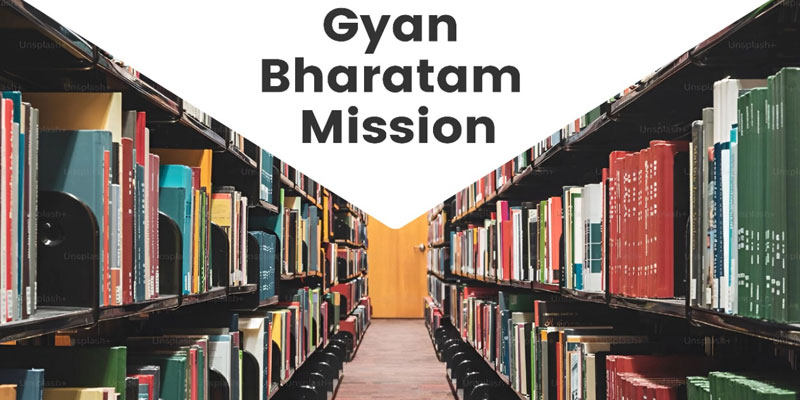
India’s intellectual tradition spans millennia, preserved in manuscripts that contain timeless insights into philosophy, science, mathematics, medicine, and the arts. Yet, many of these treasures lie scattered, neglected, or hidden away in libraries across the world. Recognizing the urgency of safeguarding this heritage, the Ministry of Culture has launched ‘Gyan Bharatam’, a national mission to preserve, digitize, and disseminate India’s manuscript wealth. At the heart of this effort was a three-day international conference held at Vigyan Bhavan, New Delhi, bringing together over 1,100 scholars, cultural leaders, and global experts under the theme “Reclaiming India’s Knowledge Tradition through Manuscript Heritage.”
A Landmark Gathering
The conference opened with Culture Minister Gajendra Singh Shekhawat as chief guest, setting the tone for an ambitious intellectual and cultural undertaking. Eminent figures including Fields Medal-winning mathematician Prof. Manjul Bhargava, senior officials of the Ministry of Culture, and heads of leading academic institutions joined to deliberate on how India’s vast manuscript collection could be preserved and shared with the world. Prime Minister Narendra Modi is expected to join the participants to hear the working group’s presentations before delivering his address, while the Home Minister will chair the concluding session.
Preserving Knowledge, Reclaiming Pride
In his inaugural speech, Minister Shekhawat emphasized that India’s knowledge tradition has withstood centuries of invasions and upheavals, yet remains resilient and relevant. He argued that the manuscripts—products of sages and thinkers who explored the depths of human experience and the natural world—are not relics of the past but guiding lights for the present and future. The mission, he stressed, aims not only at digital preservation but also at making this wisdom accessible to all, instilling national pride and reinforcing India’s role as a custodian of global heritage.
The minister also called for creating a national repository of manuscripts, supported by clusters of excellence across universities and cultural institutions. He praised those individuals and organizations who safeguarded these texts despite neglect and adversity, describing them as true protectors of humanity’s shared treasure.
The Renaissance Vision
Delivering the keynote address, Prof. Manjul Bhargava highlighted that India, with over ten million manuscripts, holds perhaps the richest reservoir of classical and vernacular traditions worldwide. He noted that these works seamlessly integrate diverse disciplines—literature, science, mathematics, philosophy, and art—demonstrating the deeply interdisciplinary nature of India’s intellectual tradition.
According to him, reviving these texts could trigger nothing less than a modern renaissance: inspiring education reforms, enhancing cultural diplomacy, promoting sustainability, and catalyzing new research. “Preservation,” he insisted, “must go hand in hand with revival, so that ancient wisdom informs contemporary challenges and inspires future generations.”
Manuscripts as Storehouses of Ideas
Vivek Aggarwal, Secretary at the Ministry of Culture, underlined the importance of transmitting this heritage to the youth. Quoting Swami Vivekananda’s remark that Indians “worship the ideal behind the idol,” Aggarwal observed that manuscripts, too, are not objects but vessels of profound ideas. This, he said, is the guiding philosophy behind Gyan Bharatam: to treat manuscripts not as fragile antiques but as living sources of wisdom.
The Challenge of Repatriation
A major theme of the conference was the repatriation of Indian manuscripts housed abroad. Dr. Sachchidanand Joshi pointed out that India does not yet have a comprehensive record of its estimated ten crore manuscripts. Moreover, nearly a million manuscripts are scattered across institutions in France, Germany, the United Kingdom, Denmark, Sweden, the Netherlands, and Russia. The first step, he argued, is accurate identification and digital cataloguing, which would not only preserve knowledge but also strengthen India’s case for their eventual return.
Scholarly Dialogues and Parallel Sessions
Throughout the event, parallel sessions covered a wide spectrum of topics: manuscriptology and paleography; advances in digitization tools, AI-based transcription, and digital archiving; conservation and restoration practices; and global perspectives on safeguarding heritage. Prominent scholars such as Professor Ramesh Kumar Pandey, Professor Sachin Chaturvedi, Professor Bihari Lal Sharma, and Dr. Padma Subrahmanyam contributed insights, reflecting the multidisciplinary and international scope of the mission.
Toward a Cultural Reawakening
The discussions made clear that Gyan Bharatam is not simply about cataloguing ancient texts. It is about rediscovering a knowledge ecosystem that shaped India’s civilization and contributed to the world’s intellectual heritage. By digitizing and making these works accessible, the initiative could democratize knowledge, empower communities, and reinforce cultural confidence at home while also enhancing India’s soft power globally.
Preserving the Past, Shaping the Future
The launch of Gyan Bharatam represents a decisive step toward bridging India’s civilizational past with its contemporary aspirations. If carried out with commitment, it could mark the beginning of a cultural renaissance—where ancient wisdom meets modern technology to enrich society, education, and policy.
India’s manuscripts are more than historical curiosities; they are living dialogues with human existence, nature, and the cosmos. Preserving and reviving them is not only a national responsibility but also a gift to humanity. By reclaiming this knowledge tradition, India has the opportunity to lead the world in demonstrating how heritage can inform progress and how memory can inspire a more thoughtful future.
(With inputs from agencies)