As geopolitical tensions between China and the West intensify, Beijing is issuing stark warnings to its companies: phase out cybersecurity software from major US and Israeli firms. This move, framed as a national security imperative, isn't merely regulatory housekeeping—it's a bold step in China's quest for technological independence, reshaping global supply chains and accelerating the fragmentation of the internet.
Chinese authorities have recently instructed state-owned enterprises and private firms to limit or eliminate the use of cybersecurity products from prominent American and Israeli vendors. Unlike overt bans, this guidance has been disseminated through internal channels, such as industry associations and regulatory whispers, allowing Beijing to exert pressure without immediate international backlash.
Reports from sources like Reuters and South China Morning Post indicate the targets include cybersecurity giants whose tools monitor networks, detect threats, and manage vulnerabilities—software deeply embedded in China's corporate and government systems. While specifics remain opaque, firms like Palo Alto Networks, Check Point Software (Israeli), and CrowdStrike (US) are widely speculated to be in the crosshairs, given their market dominance in endpoint detection, firewalls, and threat intelligence.
This isn't Beijing's first rodeo. It echoes the 2014-2020 "Xinwenzihao" campaign, where China purged Western tech from government networks, replacing it with domestic alternatives. Now, amid US export curbs on semiconductors (e.g., the 2022 CHIPS Act expansions), the focus has sharpened on cybersecurity as a "crown jewel" of critical infrastructure.
From Vulnerability to Self-Reliance
At its heart, China's stance stems from a foundational fear: foreign software isn't just a shield—it's a potential sword. Cybersecurity tools require privileged access to data flows, logs, and system internals, making them ideal vectors for espionage or backdoors. Beijing cites incidents like the 2015 OPM hack (blamed on China by the US) and SolarWinds supply-chain attack (linked to Russia) to argue that no vendor is truly neutral.
This aligns with President Xi Jinping's "secure and controllable" doctrine, enshrined in the 2021 Data Security Law and 2023 Cybersecurity Law amendments. The strategy prioritizes indigenous innovation: Huawei's HarmonyOS for OS, Qi An Xin and Sangfor for cybersecurity suites, and state-backed chips via SMIC. By 2025, China aims for 70% domestic substitution in critical tech stacks, per MIIT targets—up from 40% in 2020.
Economic Analysis: The shift carries hefty costs. Western tools often outperform locals in zero-day detection (e.g., MITRE evaluations show US firms leading in ATT&CK framework efficacy). Transitioning could hike enterprise spending by 20-30% short-term, per Gartner estimates, but long-term savings from reduced licensing fees (US firms charge premiums) and forex risks could offset this. Chinese vendors grew 25% YoY in 2025, capturing 60% domestic market share.
Geopolitical Chess:
Timing is everything. This warning coincides with US blacklisting of 140+ Chinese firms in 2025 (Entity List expansions) and Israel's deepened US alliance via Abraham Accords tech pacts. Israel, a cybersecurity powerhouse (exporting $12B annually, 10% of GDP), has accused China of IP theft, while China views US-Israeli intel-sharing (e.g., via Five Eyes extensions) as a direct threat.
Historical Parallels: Think Huawei's 2019 US ban or TikTok scrutiny—mirrored now in reverse. It's mutual decoupling: US firms lost $10B+ in China revenue since 2020 (IDC data), while China's tech exports to the US dropped 15% in 2025.
Western responses? Muted so far. The Biden-Harris (and incoming) administrations see it as validation of "friend-shoring," pushing allies toward US tools. But it alarms multinationals: 40% of Fortune 500 firms with China ops use affected software, per Deloitte surveys, risking compliance whiplash.
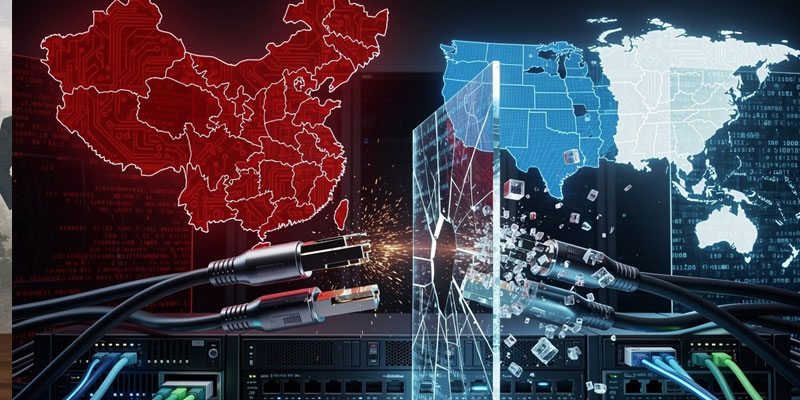
This episode heralds "digital balkanization." China's Great Firewall evolves into a full-stack sovereign stack, with data localization (under PIPL) blocking cross-border flows. Globally:
-
Markets: Cybersecurity stocks dipped 2-5% post-reports (e.g., CYBR, PANW). Chinese alternatives surged on Shenzhen exchange.
-
Innovation: Reduced competition stifles R&D; China's AI-cyber fusion lags US (e.g., OpenAI's threat models vs. Baidu's).
-
Security Risks: Rushed swaps invite gaps—local tools scored 15% lower in AV-TEST 2025 benchmarks.
Expert Views:
-
Pro-China (e.g., Tsinghua's Hu Wei): "Sovereignty demands control; Western tools are leverage points."
-
Western Skeptics (e.g., FireEye's Kevin Mandia): "Paranoia breeds weakness—isolated ecosystems amplify blind spots."
-
Neutral (RAND Corp): "Expect 20% global cyber spend reallocation by 2030, with dual-stack norms."
For the West, it's a wake-up: cybersecurity is now hybrid warfare terrain. Tools once universal are battlegrounds, eroding the post-Cold War illusion of tech neutrality.
In sum, Beijing's warning isn't protectionism—it's preemption. As Xi's era prioritizes "dual circulation" (domestic focus + selective globalism), expect more such moves, fortifying China's digital fortress amid eroding trust.