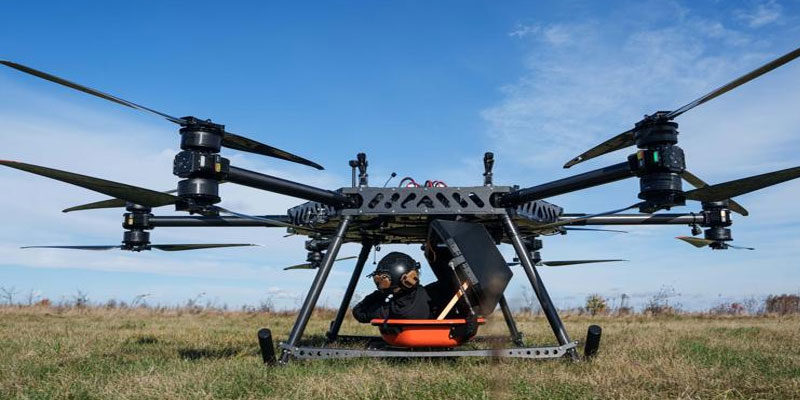
The Indian Army has received its first new Land Warfare Doctrine since 2018, reflecting the changing character of modern warfare and India's evolving security challenges. Released by Defence Minister Rajnath Singh on October 23, 2026, the Land Warfare Doctrine 2026 sets a strategic framework for preparing the Army for conflicts over the next 20–30 years, with greater emphasis on technology, joint operations and multi-domain capabilities.
From Conventional Warfare to Multi-Domain Operations
For decades, India's military planning focused heavily on conventional threats, particularly from Pakistan. The 2004 doctrine introduced concepts associated with rapid, limited offensives, commonly linked to the Cold Start approach, intended to enable faster military responses while managing escalation risks.
The 2018 doctrine subsequently addressed hybrid warfare, multi-front operations, precision strikes and information warfare. The latest framework builds on these foundations, reflecting growing challenges along both the western and northern borders, including the possibility of simultaneous contingencies involving Pakistan and China.
Drones and Artificial Intelligence Take Centre Stage
Recent conflicts, including the Russia-Ukraine war, fighting in West Asia and India's Operation Sindoor in 2025, have demonstrated how drones, precision weapons, persistent surveillance and electronic interference can reshape battlefield outcomes.
The revised approach emphasises:
· Drone warfare: Developing drone-operating skills across the Army rather than restricting them to specialist units.
· Artificial intelligence: Building AI capabilities through structured training for military personnel.
· Resilient communications: Maintaining command networks and situational awareness despite cyberattacks, jamming and electronic warfare.
· Reliable logistics: Ensuring frontline formations receive ammunition, food and equipment during prolonged operations.
A reported five-year training roadmap for multi-domain warfare complements these priorities.
Jointness and Indigenous Defence Capabilities
The doctrine reinforces closer coordination among the Army, Navy and Air Force, integrating land operations with air power, maritime capabilities, cyber operations and space-based assets. This supports India's broader military integration and theatreisation agenda.
The development of flexible formations, including Rudra all-arms brigades, complements this direction. Greater reliance on indigenous defence technology is also intended to strengthen operational autonomy and reduce dependence on external suppliers.
Implementation Will Determine Strategic Success
The doctrine signals a shift towards preparing for complex, technology-intensive and potentially prolonged conflicts without abandoning conventional deterrence. Its effectiveness, however, will depend on investment, realistic training, modern equipment and seamless coordination across military services.
India's battlefield advantage will ultimately depend on execution, not doctrine alone. Turning strategic vision into integrated forces, resilient networks and effective combat capabilities will determine whether the Army can respond successfully to the next generation of security threats.
(With agency inputs)