A Promising Life Ends in Horror
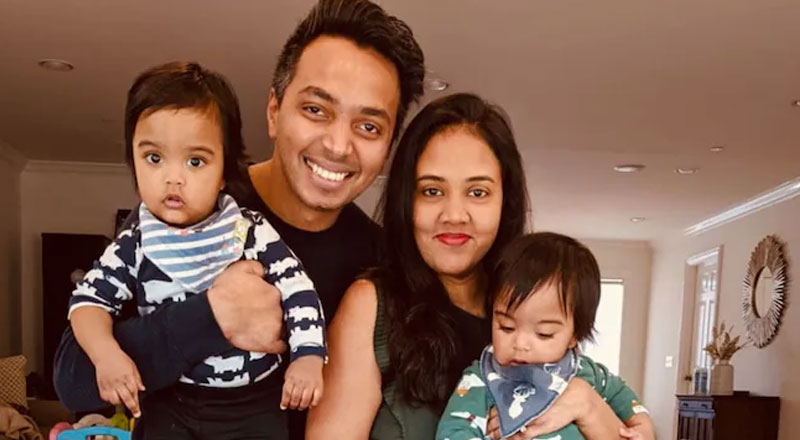
In a deeply disturbing incident that has stunned both the Indian and tech communities in the United States, Harshavardhana S. Kikkeri, a robotics entrepreneur and CEO of HoloWorld, is believed to have shot and killed his wife and teenage son before turning the gun on himself. The bodies of Kikkeri, his wife Shwetha Panyam (44), and their son Dhruva (14) were found inside their home in Newcastle, Washington on April 24. The couple’s younger son, 7, survived the ordeal as he was not at home during the time of the crime.
The tragedy has raised troubling questions about mental health, isolation, and the hidden pressures faced by high-achieving professionals living abroad.
The Rise of a Tech Visionary
Born in KR Pet Taluk of Mandya, Karnataka, Harshavardhana Kikkeri pursued his engineering education in Mysuru before completing a Master’s in Electrical Engineering from Syracuse University in the U.S. A gifted innovator, Kikkeri worked at Microsoft, earned a Gold Star award, and held 44 international patents across the U.S., Europe, China, and Japan.
In 2017, Kikkeri and his wife returned to India and co-founded HoloWorld, a robotics company that gained attention for its invention, the HoloSuit — a full-body AI-powered motion capture suit designed for education, sports, and rehabilitation. Their products were exported globally, and cricketer Yuvraj Singh served as brand ambassador.
The couple enjoyed success and acclaim. Kikkeri was a frequent speaker at conferences, a member of the TiE (The Indus Entrepreneurs) network, and once even pitched robotic border solutions to Prime Minister Narendra Modi.
In 2022, they relocated back to the U.S., presumably to scale business operations or seek new opportunities. However, the firm reportedly shut down later that year, although its digital presence remained active until late 2023.
A Dark Turn: What We Know So Far
On the evening of April 24, authorities responded to a distressing 911 call from the family's townhouse on 129th Place Southeast in Newcastle. Deputies arrived to find blood on a window, a bullet on the street, and three bodies inside the home.
The King County Medical Examiner’s Office ruled the deaths of Shwetha and Dhruva as homicides and confirmed Harshavardhana died by suicide. No official motive has been revealed, and police have remained tight-lipped about possible causes, only stating that the investigation remains active.
Neighbors described the family as “quiet and reserved,” offering no visible signs of discord or distress.
The Weight of Pressure and Isolation
While motives remain speculative, the tragedy underscores the immense pressure entrepreneurs and expatriates often face — balancing financial stress, business setbacks, family responsibilities, and isolation. The shuttering of HoloWorld may have contributed to a sense of failure or despair, compounded by the cultural stigma around mental health, particularly among high-achieving professionals.
The illusion of perfection can mask deep psychological turmoil. In Kikkeri’s case, a man celebrated for innovation and intellect may have struggled in silence, ultimately succumbing to a mental health crisis with devastating consequences for his loved ones.
The case also raises larger questions about the mental well-being of immigrant families, where cultural dislocation, high expectations, and limited support systems can create a dangerous cocktail of unaddressed stress.
Time to Confront the Silence Around Mental Health
The deaths of Harshavardhana Kikkeri, his wife, and teenage son are not just a personal tragedy — they are a societal wake-up call. As India celebrates its global achievers, it must also recognize the human vulnerabilities that exist behind professional success.
Mental health must be destigmatized and prioritized, especially in high-pressure, high-visibility careers like tech entrepreneurship. Governments, corporations, and communities must come together to build support frameworks for migrant professionals, ensuring that ambition is not achieved at the cost of emotional collapse.
The surviving child, just seven years old, will carry the weight of this tragedy for a lifetime. Let this heart-breaking incident serve as a solemn reminder: no achievement is worth more than a life left unseen, unheard, or untreated.
(With agency inputs)