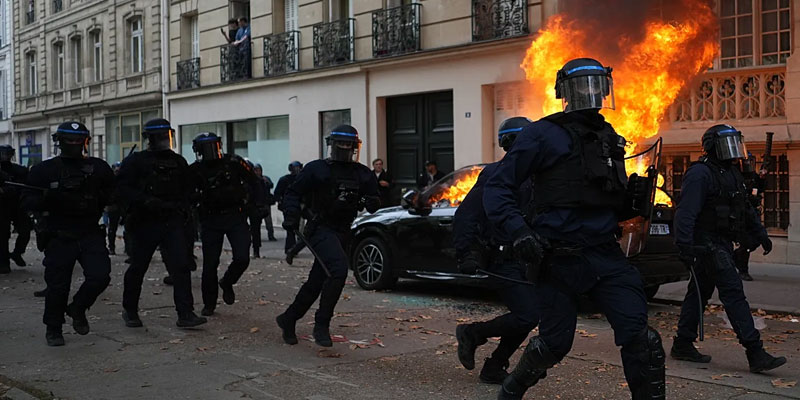
Cost-of-Living Protests Escalate into Widespread Violence
France is grappling with one of its most serious episodes of urban unrest in recent years after demonstrations over rising living costs and deteriorating school conditions descended into riots, looting and arson. President Emmanuel Macron has called for calm while promising an “uncompromising” legal response against those responsible for violence. Fresh confrontations in Paris and Marseille have intensified concerns over public safety and the country's political stability.
Grievances Fuel Mass Demonstrations
Hundreds of thousands of people reportedly took to the streets across France on Saturday, protesting against mounting household expenses and inadequate conditions in schools. Although many demonstrations began peacefully, violent groups allegedly exploited the gatherings to attack police, vandalise public infrastructure and loot commercial establishments.
According to the Interior Ministry, nearly 2,400 people were arrested nationwide, while close to 1,000 police officers and gendarmes were injured. Two deaths were reported: a protester who suffered cardiac arrest during demonstrations in Paris and a police officer who was killed.
The scale of the violence has raised questions about crowd management, public security and the government's ability to contain unrest without aggravating existing social tensions.
Arson, Looting and Clashes Across Cities
· Limoges: A fire gutted the 19th-century City Hall, causing its roof to collapse.
· Lyon: A fire broke out inside a tourist office, while police dispersed masked youths attempting to damage a Lacoste store.
· Paris: Police deployed tear gas and water cannon near Place de la République as masked groups threw fireworks and attempted to burn bicycles and rubbish bins.
· Marseille: Protesters briefly entered City Hall's lobby and damaged a police station, while riot police intervened to protect businesses.
The incidents demonstrated how largely peaceful demonstrations can rapidly deteriorate when violent groups confront law enforcement and target public property.
Macron Draws a Firm Line Against Violence
In a televised address on Sunday, Macron distinguished between citizens with legitimate grievances and those responsible for destruction. He declared: “Those who destroyed must pay. Those who looted must pay back. Those who sought to bring down the Republic will be held accountable.”
The President blamed what he described as radical far-left insurrectionist elements and criminal groups for much of the violence. Prime Minister Sébastien Lecornu similarly insisted that the government would not be intimidated.
However, Macron stopped short of declaring a state of emergency or imposing a curfew. Authorities are expected to strengthen security arrangements, pursue prosecutions and seek compensation for damages.
Political Fallout and the Road Ahead
The unrest has intensified France's political debate ahead of the presidential election scheduled for next April. While the government emphasises law enforcement, critics may argue that economic pressures and deteriorating public services have not received adequate attention.
Restoring Order Requires More Than Punishment
France faces a dual challenge: holding those responsible for violence accountable while addressing the grievances that brought people onto the streets. Heavy-handed policing without meaningful engagement could deepen public resentment, while tolerating arson and looting would undermine the rule of law. Macron's response will ultimately be judged by whether it restores public confidence, protects democratic protest and delivers credible action on the economic and educational concerns driving public anger.
(With agency inputs)