Odisha-Bengal Clash Over Sacred ‘Jagannath Dham’ Label for Digha Temple
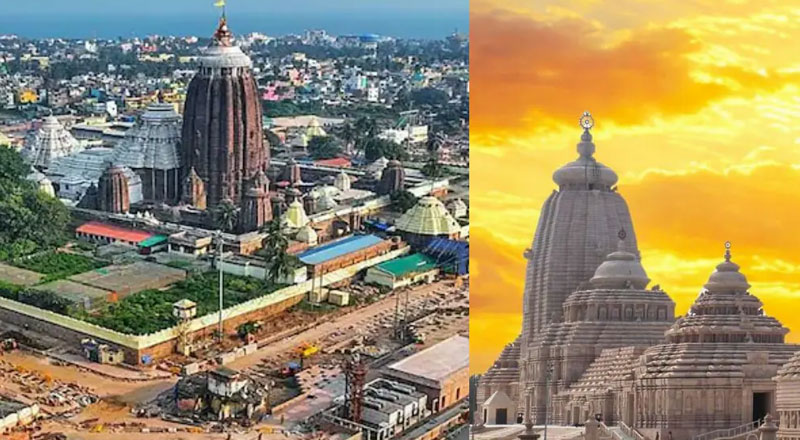
The inauguration of a grand new Jagannath temple in Digha by the West Bengal government has sparked a sharp interstate controversy with Odisha, home to the ancient 12th-century Jagannath temple in Puri. The core of the dispute lies in Bengal’s use of the term “Jagannath Dham” to describe the newly built complex, a title steeped in deep spiritual and scriptural sanctity that, according to Hindu tradition, is reserved solely for Puri.
The Digha temple, built over 22 acres at an estimated cost of ₹250 crore, is being promoted both as a religious site and a tourism magnet. However, promotional material using phrases like “No need to go to Puri to see Jagannath Dham and the sea” has drawn outrage in Odisha, where devotees and religious authorities see this as an act of cultural appropriation.
Historic Precedents and Sacred Boundaries: What Makes a ‘Dham’?
In Hindu theology, the term ‘Dham’ is not a decorative honorific—it is a sacred designation. Puri, along with Badrinath, Dwarka, and Rameswaram, was formally established by Adi Shankaracharya as one of the four cardinal pilgrimage sites. These ‘Char Dhams’ are central to the spiritual geography of India. To equate a modern replica—however large or ornate—with one of these ancient sites is seen by many scholars as a theological overreach.
Noted sand artist and Padma Shri awardee Sudarsan Pattnaik wrote to Odisha Chief Minister Mohan Charan Majhi expressing concern that misusing the term could mislead pilgrims. “There exists only one Jagannath Dham, and that is in Puri,” he stated, urging the Odisha government to formally object and seek corrective action from its West Bengal counterpart.
The letter has been copied to key state officials, including Odisha's Law Minister, indicating growing institutional concern in Bhubaneswar.
Puri Temple’s Ritual Guardians Strike Back
Beyond nomenclature, the controversy touches upon ritual sanctity. The servitor body of the Puri temple, Suar Mahasuar Nijog, has issued an explicit ban on any member participating in rituals or services related to the Digha temple. A formal letter posted at Puri’s south gate warns that violations—such as hoisting a flag or preparing Mahaprasad—will lead to lifetime bans from temple service and possible dismissal.
These measures underscore the Puri temple’s insistence on guarding its unique spiritual traditions, which cannot be duplicated or exported under state-led initiatives. The rituals tied to the Puri Jagannath temple are not merely ceremonial—they are encoded in centuries-old tradition and theology.
Political Flashpoints and Electoral Undercurrents
The row has swiftly taken on political overtones. BJP leader and West Bengal’s Leader of Opposition Suvendu Adhikari has questioned the nature and intent of the Digha complex. Citing official tenders, he pointed out that the project was originally called “Jagannath Dham Sanskriti Kendra” (Cultural Centre), not a temple. “If it’s a cultural centre, why is there a temple-style inauguration?” he asked.
Adhikari also raised constitutional concerns over using public funds for religious construction, contrasting it with the Ram Mandir in Ayodhya, which was entirely funded through public donations and built under an independent trust. With state assembly elections approaching, the BJP alleges that the Trinamool Congress (TMC) is using religion to bolster its appeal among Hindu voters—a demographic it has struggled to consolidate amid accusations of minority appeasement.
Moreover, promotional imagery released by the Mamata Banerjee government, such as one closely resembling Puri’s iconic Neelachakra with the Bana, has only deepened the perception of cultural encroachment.
Bang on Tradition or Cultural Misstep? Bengal's Balancing Act
While the Digha temple’s design and ambition are laudable in architectural and tourism terms, its symbolic positioning has invited accusations of blurring spiritual distinctions. West Bengal’s vision to enhance religious tourism is not in itself controversial. However, invoking a sacred identity linked with one of Hinduism’s holiest sites has crossed an emotional and cultural threshold for many in Odisha.
The invocation of Jagannath Dham by a state government, especially one with no historical or scriptural claim to the term, places the initiative at odds with long-standing religious and regional identities.
A Sacred Legacy Deserves Sacred Precision
In India, where spiritual history is deeply interwoven with cultural and political identity, symbols and terminology matter. While the Digha temple may well become a cherished spiritual destination in its own right, to mirror the Puri temple’s identity—rituals, iconography, and title—risks not only misleading devotees but also diluting the sanctity of a millennia-old legacy.
The Mamata Banerjee government may find it politically advantageous to tap into cultural symbolism ahead of elections, but in doing so, it must tread carefully around the sentiments and traditions that define the Jagannath cult in Odisha. Religious reverence, after all, thrives not just in structures, but in the authenticity of tradition, and in India, that authenticity is non-negotiable.
(With inputs from agencies)
LATEST NEWS