Justice B.R. Gavai Begins Tenure as 52nd Chief Justice of India
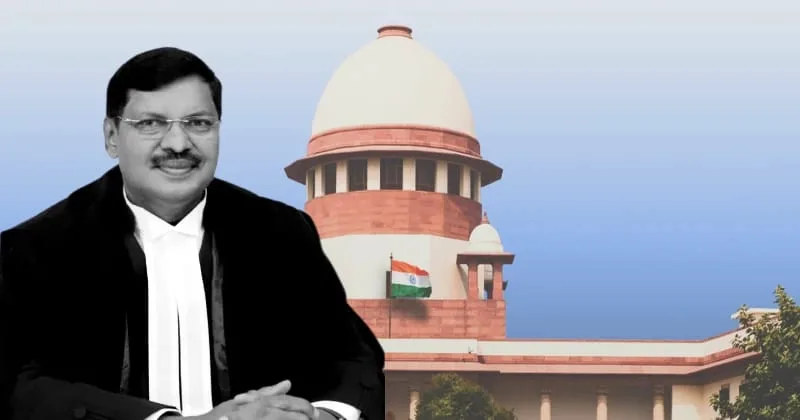
In a historic ceremony at Rashtrapati Bhavan, Justice Bhushan Ramkrishna Gavai was sworn in as the 52nd Chief Justice of India (CJI) on Wednesday, marking a significant moment in the annals of Indian judicial history. With this appointment, Justice Gavai becomes not only the first Buddhist to hold the post but also the second person from the Dalit community to reach the pinnacle of India’s judiciary after Justice K.G. Balakrishnan in 2007.
The oath was administered by President Droupadi Murmu in the presence of Prime Minister Narendra Modi, Vice President Jagdeep Dhankhar, former President Ram Nath Kovind, and an assembly of dignitaries including members of the Cabinet and the outgoing Chief Justice Sanjiv Khanna, who offered warm congratulations to his successor.
A Legacy Rooted in Justice and Representation
Justice Gavai’s ascent to the highest judicial office is deeply symbolic. Born into a family steeped in social reform and public service, he is the son of the late R.S. Gavai, a veteran parliamentarian, social activist, and founder of the Republican Party of India (Gavai). R.S. Gavai served as Governor of three states and was a staunch advocate of the Ambedkarite principles of equality and justice—values that clearly echo in the professional journey of his son.
Justice Gavai began his legal career in 1985 and was appointed as a judge of the Bombay High Court in 2003. After serving there for over 15 years, he was elevated to the Supreme Court in 2019. Over the course of his judicial career, he has authored around 300 judgments—many of them constitutionally significant—and has been widely respected for his sharp legal reasoning, impartiality, and approachable demeanor.
An Analytical Outlook: Responsibilities and Expectations
Chief Justice Gavai assumes leadership at a time when the Indian judiciary is grappling with critical challenges: judicial pendency, digital transformation, increasing public scrutiny, and balancing constitutional values in a rapidly evolving political climate.
His tenure, though limited to six months, will be crucial for setting the tone on several pending constitutional matters and judicial reforms. Among the key responsibilities awaiting his judgment are:
- Electoral Reforms and Transparency: Having been part of the bench that struck down the electoral bonds scheme as unconstitutional, Justice Gavai is now expected to play a guiding role in ensuring transparency in political funding and reinforcing democratic accountability.
- Fundamental Rights and Federalism: The court under his leadership is expected to hear petitions related to freedom of expression, federal powers vis-à-vis central agencies, and the legal implications of data privacy—especially in the context of new surveillance technologies.
- Judicial Efficiency and Access to Justice: With more than 70,000 cases pending before the Supreme Court, expectations are high for administrative innovation. Justice Gavai’s pragmatic approach, as noted by several senior advocates, may drive efforts to streamline court functioning and enhance accessibility, particularly through digital platforms.
- Social Justice and Representation: His appointment is itself a nod to inclusive representation in India’s judiciary. As the first CJI from the Buddhist community, his leadership symbolizes a judiciary more reflective of the country’s diverse social fabric—potentially influencing decisions on reservation policies, minority rights, and social justice jurisprudence.