Top Court Says Spyware Justified for Terror Threats
In a significant observation during the Pegasus spyware hearings on Tuesday, the Supreme Court of India stated that there is “nothing wrong” with a country using spyware like Pegasus to safeguard national security, particularly for tracking terrorists. A two-judge bench comprising Justices Surya Kant and N Kotiswar Singh emphasized that while deploying such tools is not inherently objectionable, the crucial issue lies in how—and against whom—they are used.
“What’s wrong if the country uses the spyware, what’s wrong if it is used against terrorists? We can’t sacrifice national security,” the bench remarked during the proceedings. The justices also made it clear that matters touching on national security and sovereignty would not be publicly disclosed, but individuals with legitimate privacy concerns could be privately informed about any findings related to them.
The court scheduled the next hearing for July 30, while refusing to make public the expert committee’s report, citing national interest.
The Pegasus Controversy: Origins and Fallout
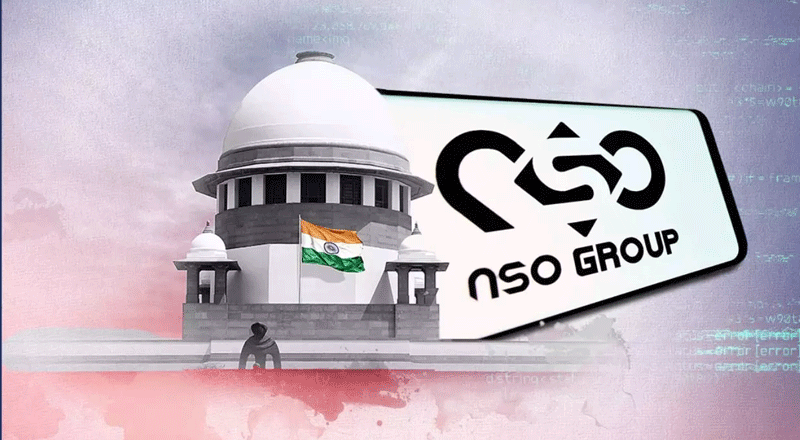
The Supreme Court’s remarks come nearly three years after the explosive revelations of the Pegasus Project, a global media investigation coordinated by Forbidden Stories and Amnesty International. In July 2021, it was reported that Pegasus spyware—developed by Israeli cybersecurity firm NSO Group—was allegedly used by the Indian government to surveil over 300 individuals.
Those targeted included journalists, opposition leaders, civil society activists, government officials, and even Supreme Court judges. The accusations sparked a political firestorm in India, with the opposition accusing the Modi-led government of using military-grade spyware to stifle dissent and violate citizens' privacy.
Pegasus is a highly invasive surveillance tool that can infiltrate smartphones without any user interaction, granting near-total access to the device’s camera, microphone, location data, and encrypted messaging apps.
Court-Appointed Committee Found No Conclusive Evidence
In response to the growing outrage, the Supreme Court in October 2021 appointed a three-member technical and oversight committee headed by former judge Justice R.V. Raveendran to investigate the allegations.
In its July 2022 report, the committee stated that Pegasus itself was not conclusively detected on any of the 29 mobile phones it examined. However, it found traces of unspecified malware on five devices. Notably, the report also pointed out that the Government of India had “not cooperated” with the investigation—a fact that drew criticism from civil liberties advocates and legal experts.
Despite the inconclusive findings, the report deepened suspicions about the potential misuse of surveillance technology by the state, particularly in light of the government's lack of transparency.
Balancing Security and Civil Liberties: The Legal Debate
At the heart of the Pegasus case lies a critical legal and ethical dilemma: how should a democracy balance national security concerns with the fundamental right to privacy?
India’s Supreme Court in 2017 recognized the right to privacy as a fundamental right under Articles 14, 19, and 21 of the Constitution. Petitioners in the Pegasus case argue that the alleged use of spyware without due legal process violates this right and sets a dangerous precedent for unchecked state surveillance.
While the apex court has acknowledged national security imperatives, it has also reiterated the need for safeguards to prevent arbitrary targeting of individuals. “Yes, individual apprehensions must be addressed,” Justice Surya Kant noted, signaling that legitimate privacy concerns will be heard—albeit not in the public domain.
A Crossroads for Accountability and Trust
The Supreme Court’s nuanced stance underscores a broader challenge in modern democracies: preserving national security without eroding individual freedoms. Spyware like Pegasus may serve as a critical counterterrorism tool, but its deployment must be accountable, transparent, and legally sanctioned.
The lack of cooperation by the government during the Pegasus inquiry and the absence of legislative oversight mechanisms continue to raise red flags. As surveillance technologies become more powerful and opaque, India's judiciary—and its civil society—must play an active role in ensuring they are not misused to suppress dissent or violate privacy.
Whether the Pegasus saga ends in accountability or impunity may well define the contours of India’s democratic resilience in the digital age.
(With inputs from agencies)
LATEST NEWS