A Diplomatic Reckoning at the United Nations
In a rare and revealing closed-door session, the United Nations Security Council (UNSC) convened to address spiralling tensions between India and Pakistan following the devastating Pahalgam terror attack. While the session was initiated at Pakistan’s request, it ended with Islamabad under intense diplomatic pressure. Member states not only condemned the targeting of civilians—particularly tourists—but also pressed Pakistan on its continued tolerance of terror outfits like Lashkar-e-Taiba and its escalating military posturing. This moment signals a shift in global sentiment as the international community confronts the rising instability in South Asia.
Pahalgam: The Flashpoint That Reignited Old Wounds
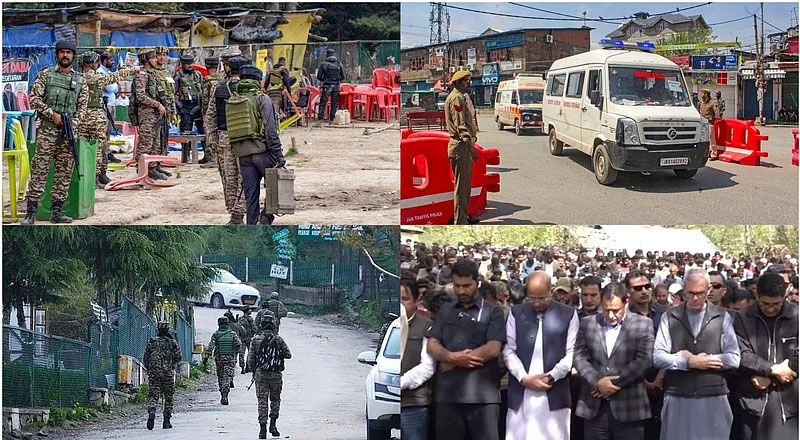
On April 22, terrorists carried out a brutal attack in Pahalgam, Jammu and Kashmir, killing 26 people—most of them tourists—alongside a local pony ride operator. The sheer brutality and apparent targeting based on religious identity sent shockwaves through India and the international community. This was one of the deadliest attacks in the region in decades.
What followed was swift and severe: India suspended the Indus Waters Treaty, cancelled visas for Pakistani nationals, and fortified its military posture along the Line of Control (LoC). Pakistani forces, meanwhile, have repeatedly violated the ceasefire—most recently engaging in unprovoked firing across five districts in J&K for 12 consecutive nights. These developments formed the backdrop for the UNSC’s emergency consultations.
UNSC’s Message: Accountability Over Ambiguity
Despite Pakistan’s aim to internationalize the issue and seek sympathy from the world body, the tide at the UNSC turned sharply against it. According to diplomatic sources, member states posed "tough questions" to Pakistan, especially concerning the suspected involvement of the proscribed terror group Lashkar-e-Taiba.
Pakistan’s repeated attempts to float a “false flag” theory found little traction. Instead, the focus remained firmly on Pakistan's failure to dismantle terror networks operating from its soil. UNSC members broadly condemned the Pahalgam killings and emphasized the need for credible accountability. Some envoys explicitly criticized the targeting of civilians based on religious identity—an act that veers dangerously close to ethnic cleansing.
Nuclear Posturing and Missile Tests: Escalation, Not Defense
Further raising global concern was Pakistan's recent nuclear rhetoric and ballistic missile tests. Members of the Council flagged these actions as dangerously escalatory, especially in a region already teetering on the edge. The symbolic weight of such military actions—coming immediately after a terror attack—only served to undermine Pakistan’s credibility.
UN Secretary-General António Guterres echoed these sentiments in a public address from the UNSC stakeout. Calling the current situation “the most volatile in years,” he emphasized that “a military solution is not a solution,” urging both nations to exercise maximum restraint. Guterres condemned the Pahalgam attack in unambiguous terms, calling the targeting of civilians “unacceptable” and urging lawful accountability.
Diplomatic Isolation: Pakistan Finds Few Takers
If Pakistan sought to portray itself as a victim of aggression, it found few sympathizers in the Council chamber. Instead, its actions—both military and rhetorical—have drawn skepticism and alarm. With India choosing to retaliate diplomatically and strategically, and the UNSC echoing calls for accountability, Pakistan now finds itself increasingly isolated.
Even traditional allies such as Russia called for “de-escalation,” while the Greek presidency of the UNSC termed the meeting “productive and helpful”—coded language in diplomatic circles for discussions that don’t favor the initiator. Tunisian envoy Khaled Mohamed Khiari characterized the situation as “volatile” and reiterated the call for dialogue.
A New Tone in the Global Conversation
The UNSC’s closed-door meeting may not have yielded an official statement, but the implications are clear. The global community is no longer willing to accept silence or obfuscation in the face of state-tolerated terrorism. By holding Pakistan to account—however subtly—the UNSC has signaled that the cost of inaction is rising.
As the world watches the fragile Indo-Pakistani relationship inch toward dangerous territory, one message rings clear from New York: the time for ambiguity is over. Peace requires not just dialogue, but sincerity—and accountability. Whether Islamabad heeds that message may shape the future of South Asian stability.
(With inputs from agencies)
LATEST NEWS