The Latest Flashpoint on the Vande Mataram Row
A fresh political storm has erupted around “Vande Mataram,” India’s national song, as the Bharatiya Janata Party (BJP) marked its 150th anniversary by reviving an old controversy. The immediate trigger was BJP spokesperson C.R. Kesavan’s accusation that the Congress under Jawaharlal Nehru had “deliberately distorted” the song in 1937 by removing its stanzas praising Goddess Durga, allegedly to appease communal sensitivities.
The debate—rooted in history but inflamed by today’s politics—has once again placed the question of national identity, secularism, and symbolism at the center of India’s political discourse.
Historical Roots: From Literature to Liberation
Vande Mataram first appeared in Bankim Chandra Chattopadhyay’s 1882 novel Anandamath, emerging as a potent anthem of India’s freedom movement. The hymn, rich in spiritual and nationalistic imagery, personifies the motherland as Maa Durga, the warrior goddess symbolizing strength, courage, and divine protection.
During the freedom struggle, the song became a unifying chant against colonial rule. Yet, by the 1930s, concerns surfaced among sections of Muslim leaders who felt its Hindu imagery might alienate non-Hindu patriots. The challenge before the Indian National Congress was to retain Vande Mataram’s emotional power while ensuring that national symbols reflected India’s plural ethos.
The 1937 Compromise and Nehru’s Balancing Act
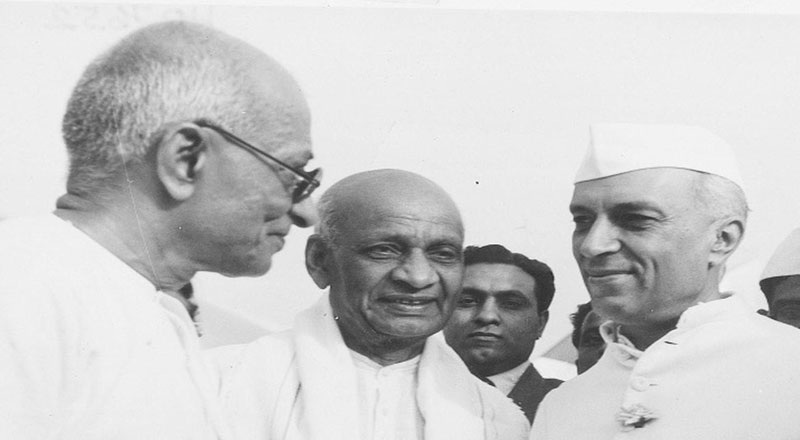
The turning point came at the Faizpur session of the Congress in 1937, when the Congress Working Committee, including Jawaharlal Nehru and Subhas Chandra Bose, debated whether the full version of Vande Mataram should be officially adopted. After extensive discussion, the committee decided that only the first two stanzas—those free of overt religious references—would be sung at official functions.
According to letters cited by the BJP, Nehru acknowledged that the later stanzas, invoking Durga, might “irritate” Muslim citizens. He argued that linking the song too closely with religion could undermine its broader message of patriotism. Bose, however, reportedly believed the song’s spiritual fervor transcended sectarian lines and should be celebrated in full.
This 1937 compromise, seen as a pragmatic attempt at inclusion, has now become the centrepiece of renewed ideological sparring between India’s two principal political parties.
The Political Resurgence: BJP vs Congress
In reviving the debate, the BJP has framed the 1937 decision as a “historic wrong”. Prime Minister Narendra Modi and other senior leaders argue that Congress “diluted” national pride to appease religious minorities, accusing the party of “fracturing unity” for political convenience. Spokesperson C.R. Kesavan charged that Congress “linked the song with religion,” when its essence, he said, was spiritual and universal.
The Congress has hit back, accusing the BJP of weaponizing history for electoral advantage. Party representatives insist that Vande Mataram continues to be revered nationwide—sung in schools, official ceremonies, and cultural events—and that the 1937 decision reflected a commitment to inclusive nationalism, not communal appeasement.
Regional Ripples and the Broader Message
The controversy has rippled across states. In Rajasthan, the government’s directive to make Vande Mataram recitation mandatory in madrasas sparked backlash from minority groups. Similar tensions have flared in West Bengal and Maharashtra, where political rivals deploy the song as a litmus test of patriotism and identity.
Analysts suggest that the renewed row reflects India’s ongoing struggle to reconcile religious diversity with cultural nationalism, and how historical symbols remain potent tools in shaping contemporary politics.
Symbolism and Division
The Vande Mataram controversy, reignited on its 150th anniversary, reveals how deeply India’s past continues to echo in its political present. What began as a hymn of liberation has become a mirror of the nation’s ideological divides—between inclusion and identity, secularism and symbolism.
For the BJP, the debate reinforces its narrative of reclaiming cultural pride; for the Congress, it revives old accusations of compromise and appeasement. In the end, the enduring power of Vande Mataram lies not just in its melody, but in the questions it raises about who gets to define the nation’s soul—a question India still struggles to answer.
(With agency inputs)