

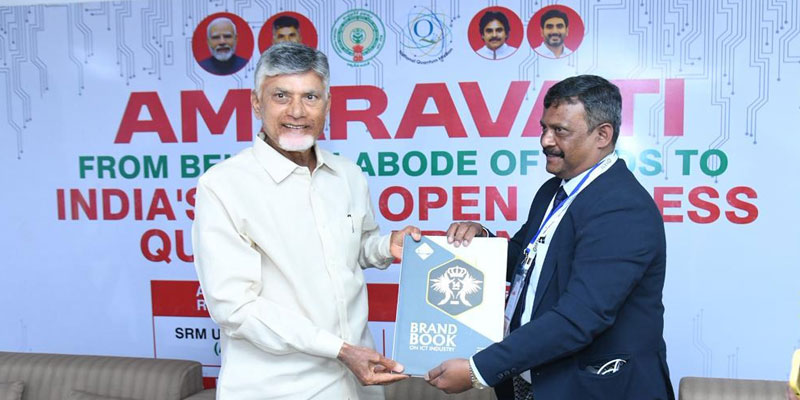
Andhra Pradesh has achieved a major technological milestone with the inauguration of India’s first indigenous Quantum Testing Reference Facility in Amaravati on April 14, aligning with World Quantum Day. Led by Chief Minister N. Chandrababu Naidu, the initiative signals India’s transition from quantum research to hardware capability and ecosystem building, positioning Amaravati at the forefront of advanced computing innovation.
Qubitech Launches India's First Open Quantum Lab in Amaravati. India’s first open-access quantum characterization facility goes live in Amaravati
Built for superconducting qubits, cryogenic systems, and advanced materials research.
It has been built by QBit Force, a team of scientists and engineers led by Dr. Venkata Subramaniam, who designed its end-to-end quantum hardware stack, including dilution refrigerators, Josephson junctions, and FPGA-based control systems. Qubitech will operate the facility and run its research and training programs.
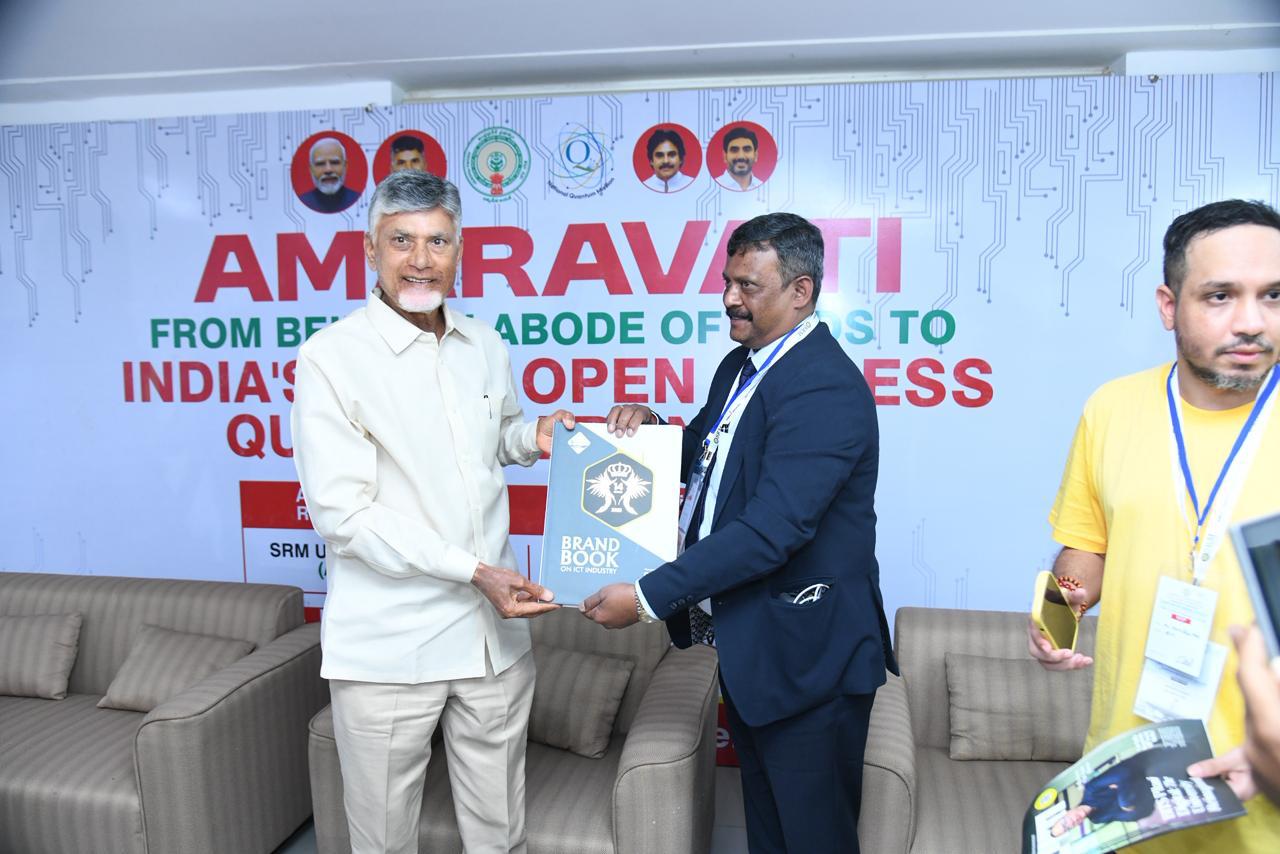
The project includes two open-access quantum testbeds: 1S at SRM University, Amaravati, and 1Q at Medha Towers, Gannavaram. These facilities are part of the larger Quantum Valley initiative spanning 50 acres in Uddandarayunipalem, designed as a hub for quantum research, testing, and manufacturing.
Indigenous Technology and Infrastructure
A defining feature of the initiative is its strong “Make in India” foundation, with over 80% of components developed domestically. The systems incorporate superconducting technology and operate at cryogenic temperatures nearing absolute zero (−273°C). Critical hardware—including processors, amplifiers, dilution refrigerators, and gas handling systems—has been developed locally, reducing dependence on imports and strengthening technological self-reliance.
Strategic Vision and Policy Support
The facility aligns with Andhra Pradesh’s Quantum Computing Policy (2025–30) and the national National Mission on Quantum Technologies and Applications (NM-QTA). The state aims to build a complete quantum ecosystem encompassing hardware, software, and talent. Plans include developing a 133-qubit quantum computer in partnership with IBM, supported by major industry players and premier research institutions.
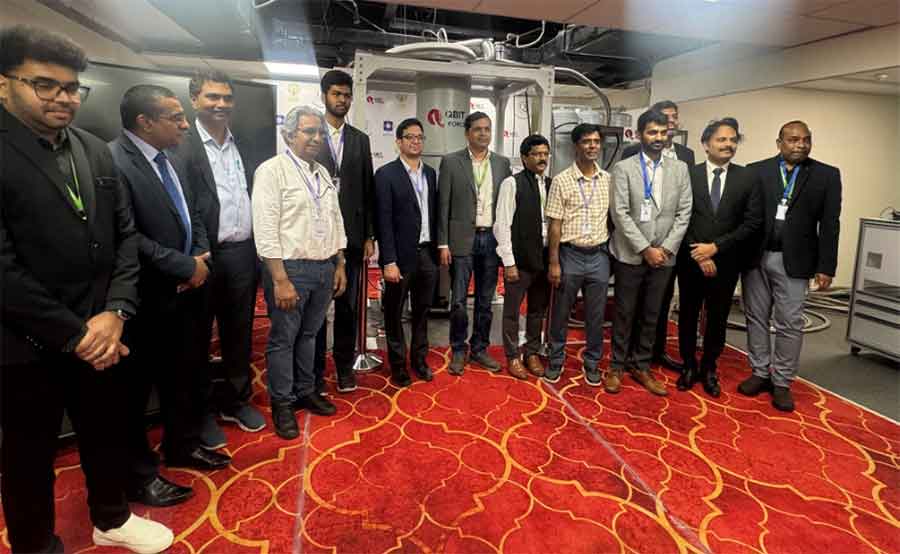
The Amaravati facilities follow an open-access model, enabling researchers, startups, academic institutions, and government bodies to test quantum hardware and develop algorithms. The initiative encourages solving real-world problems—such as logistics optimization and healthcare systems—through quantum computing, fostering innovation across sectors.
Economic and Skill Development Impact
The project is expected to generate high-value employment and attract global collaborations, with over 80 organizations already engaged. The government plans to train 60,000 professionals immediately and up to 4.5 million quantum-skilled individuals over five years, creating a robust talent pipeline to support India’s quantum ambitions.

Amaravati’s emergence as a quantum hub reflects a broader ambition to position Andhra Pradesh among the top global centers for quantum innovation. With planned expansions, international partnerships, and a strong policy framework, the initiative could accelerate breakthroughs in fields such as drug discovery, cryptography, and aerospace.