A Dramatic Turn in a Global Edtech Saga
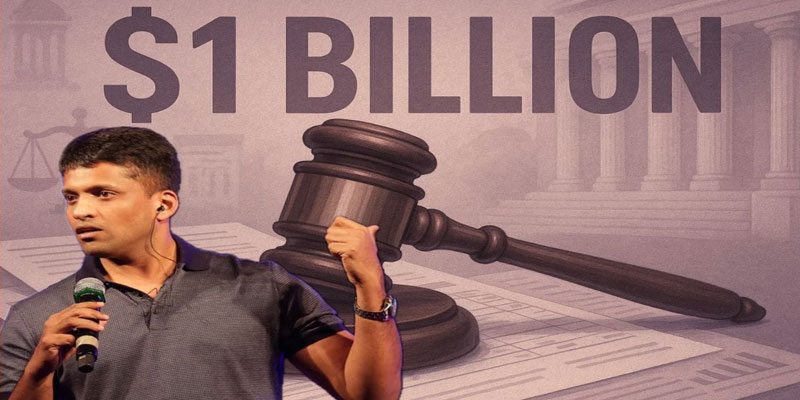
A US bankruptcy court has dealt a decisive blow to Byju’s founder, Byju Raveendran, ordering him to personally pay more than $1 billion after finding that he obstructed the discovery process in a case involving missing funds from Byju’s Alpha. The ruling marks one of the most significant personal liability judgments faced by an Indian startup founder in an international court—an extraordinary moment in the ongoing collapse of what was once India’s most celebrated edtech unicorn.
When Compliance Becomes Crisis
The judgment stems from a complex dispute over a $1.2 billion term loan secured by Byju’s from global lenders. The loan proceeds were housed in Byju’s Alpha, a Delaware-incorporated special-purpose vehicle intended solely as a holding entity. Yet what began as a financial structure to support Byju’s aggressive global expansion has spiraled into allegations of misappropriation, fund diversion, and failure to cooperate with court-mandated disclosures.
Judge Brendan Shannon’s ruling—awarding $533 million tied to disputed fund transfers and another $540.6 million for fiduciary breaches and civil conspiracy—cements Raveendran’s personal liability at more than $1.07 billion. As lenders prepare cross-border enforcement and Byju’s contemplates an appeal, the case underscores the growing global scrutiny of corporate governance in high-growth startups.
The Rise: From Kerala Classrooms to Global Edtech Icon
Byju Raveendran’s ascent is often cited as one of India’s most compelling entrepreneurial stories. What began in 2006 as a small coaching initiative in Kerala evolved into Byju’s—the mobile-first learning platform that revolutionized India’s approach to digital education.
The company soared through the 2010s and early 2020s:
· Explosive Growth: Aggressive marketing, celebrity endorsements, and a polished learning app propelled Byju’s to the forefront of India’s edtech boom.
· Mega Funding Rounds: Between 2019 and 2020 alone, the startup raised more than $1 billion from global investors.
· Strategic Acquisitions: Purchases of Whitehat Jr., Aakash Educational Services, and several international edtech platforms positioned Byju’s as a global powerhouse.
· Cultural Visibility: Sponsorships ranging from cricket teams to FIFA cemented its status as a household brand.
By 2022, Byju’s carried a valuation of $22 billion with over 50,000 employees worldwide—an emblem of India’s innovation potential.
The Fall: Debt, Disputes, and Decline
But beneath the glossy exterior, structural fissures widened rapidly.
· Financial Irregularities: Auditors raised concerns over revenue recognition, culminating in Deloitte’s resignation and heightened regulatory oversight.
· Unwieldy Acquisitions: What were once strategic assets transformed into heavy liabilities amid slowing growth and rising debt.
· Operational Collapse: By 2024, the company shut most tuition centers and laid off over 90% of its workforce.
· Legal Battles on Multiple Fronts: Lenders, investors, and regulatory bodies intensified scrutiny as liquidity tightened and allegations mounted.
These cascading failures culminated in the US court’s billion-dollar ruling—an unprecedented blow to an already embattled founder.
A Cautionary Tale for the Startup Age
The Byju’s story—once a beacon of Indian entrepreneurial ambition—has morphed into a global case study in financial governance, unchecked expansion, and the perils of opacity. Raveendran’s personal liability ruling is more than a legal setback; it symbolizes the consequences of rapid growth unchecked by disciplined oversight.
As the company fights for survival and creditors pursue enforcement across jurisdictions, the saga stands as a stark reminder: in the modern startup ecosystem, scale cannot substitute for stewardship, and transparency remains non-negotiable.
(With agency inputs)