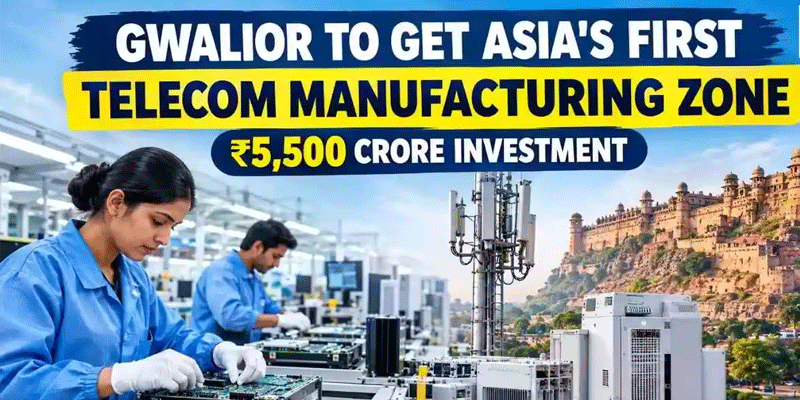
Gwalior is poised to become a major telecom manufacturing hub with the establishment of Asia’s first Telecom Manufacturing Zone (TMZ), backed by proposed investments of around ₹5,500 crore and expected to generate more than 18,000 employment opportunities. The project is designed not as a standalone factory but as an integrated ecosystem of telecom equipment and component manufacturers.
Gwalior Prepares for A New Manufacturing Ecosystem
Union Communications Minister Jyotiraditya Scindia inspected the proposed TMZ site at Shrimant Madhavrao Scindia Counter Magnet City (SADA) on September 20, accompanied by senior Department of Telecommunications officials. Around 170 acres have been identified for the first phase—more than 90 acres in SADA and over 70 acres in the city’s IT Park. Investor applications have already exceeded the currently available land, prompting plans to identify additional land if required.
The zone is expected to accommodate 24–25 manufacturing units, producing telecom equipment and components and creating a broader supply-chain ecosystem in Gwalior.
₹5,500 Crore Pipeline Builds Investment Momentum
The investment commitments have emerged through a series of government-industry engagements. The Department of Telecommunications and Madhya Pradesh government signed an MoU in July 2026 to establish the TMZ, followed by investor roadshows in Delhi and Mumbai in August.
The investment pipeline includes:
· Delhi roadshow: Around ₹3,500 crore, with potential for approximately 14,000 jobs.
· Mumbai roadshow: Around ₹2,000 crore, with another 4,000 employment opportunities.
Together, these commitments take the proposed investment to ₹5,500 crore, while 24 companies have initiated the application process for units in the zone.
Incentives And Testing Infrastructure Strengthen Appeal
The project is being supported through incentives linked to land leases, power, employment and production, along with measures encouraging environmental sustainability and green development. The Centre has also proposed a Common Testing Lab package of about ₹500 crore, aimed at providing shared testing infrastructure and reducing the cost and time involved in certifying telecom products.
The July MoU also envisaged ₹493 crore of central support for Phase-I infrastructure, adding a public-investment component to the manufacturing ecosystem.
Talent And Connectivity Could Drive Expansion
Gwalior’s existing engineering ecosystem is another important advantage. Around 25,000 engineering students graduate annually from institutions in and around the city, creating a potential talent pool for manufacturing, testing, product development and related technical activities.
Improving road, rail and air connectivity is also expected to strengthen access to markets, suppliers and skilled manpower.
A Strategic Shift from Services to Telecom Products
The Gwalior TMZ represents a broader shift in India’s telecom strategy—from primarily consuming and servicing telecom technology to manufacturing products and building domestic supply chains. The government has described the initiative as part of its effort to strengthen indigenous manufacturing and integrate Indian companies more deeply into global telecom value chains.
Gwalior’s Next Chapter in India’s Telecom Ambition
If the proposed investments translate into operational units, Gwalior could develop a concentrated ecosystem spanning equipment, components, testing and technical talent. Beyond the ₹5,500-crore investment and employment potential, the project could give the city a new industrial identity and strengthen India’s ambition to become a globally competitive telecom manufacturing base.
(With agency inputs)