Leadership Under Unprecedented Pressure
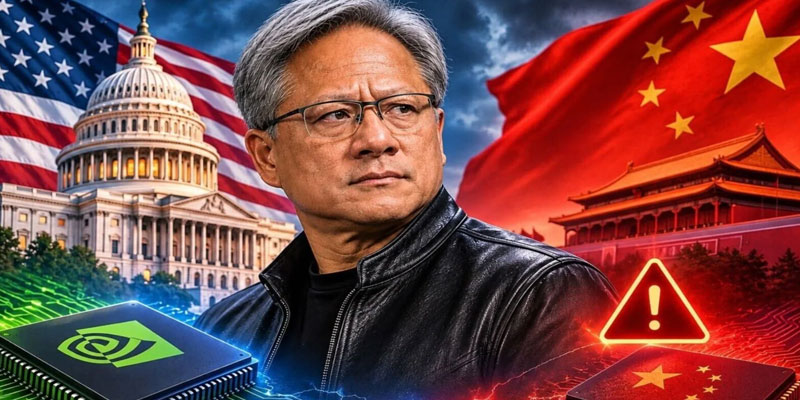
Nvidia CEO Jensen Huang may face an exit from the world's most influential artificial intelligence chipmaker as its board reportedly considers removing him following allegations involving two extramarital relationships, one of which has raised concerns about possible Chinese intelligence connections. The controversy has developed into a serious corporate governance and national-security issue, potentially threatening leadership stability at a company central to the global AI industry.
The Man Behind Nvidia's Global Dominance
At 63, Huang has led Nvidia for 33 years, transforming it from a graphics-chip manufacturer into the world's dominant supplier of advanced AI processors. With a reported market capitalisation of approximately $4 trillion, Nvidia occupies a strategically important position in the global technology ecosystem.
Huang owns approximately 3.6% of the company and exercises considerable operational influence. His management structure is unusual, with dozens of executives reporting directly to him. He has also not publicly designated a successor, making the prospect of his sudden departure particularly complicated.
Allegations Trigger Corporate Investigation
The immediate controversy began with reports of Huang's alleged extramarital relationship with a businesswoman whom US officials reportedly suspected of having connections to Chinese intelligence.
Given Nvidia's importance to American technological competitiveness and defence-related computing, the allegations raised questions about potential foreign influence, access to sensitive information and corporate security.
Nvidia's board subsequently initiated an investigation into whether Huang might have been targeted by a foreign intelligence operation. It reportedly engaged a former acting US attorney and a major Wall Street law firm to examine the matter.
The situation intensified when a second allegation emerged concerning an alleged relationship with an Nvidia executive. This added another dimension to the board's concerns, particularly regarding disclosure obligations, executive judgement and workplace governance.
Boardroom Deliberations and Market Fallout
According to CNBC, Nvidia's board met late on Wednesday to consider Huang's future, including whether he should be removed as CEO.
The financial markets reacted sharply:
· Nvidia shares declined nearly 7% in Thursday's US premarket trading.
· The stock had already fallen approximately 8% in after-hours trading.
· Around $600 billion in market value was reportedly wiped out during the week following the investigation announcement.
Investors are concerned about the potential loss of a leader whose technological vision; government relationships and customer engagements have helped establish Nvidia's global dominance.
Succession Becomes Nvidia's Biggest Challenge
The possibility of Huang's departure has exposed a major succession-planning weakness. Potential internal candidates include:
· Ian Buck: A senior engineering executive overseeing hyperscale and high-performance computing, considered a potential long-term technology leader.
· Colette Kress: Nvidia's longtime CFO, who could provide financial and operational continuity as an interim chief executive.
Bloomberg has also reported that Nvidia is working with an external search firm to identify potential replacements and that directors are considering an interim leadership arrangement.
Washington's Concerns Add a National-Security Dimension
The controversy has attracted attention in Washington, where lawmakers are seeking explanations about the alleged intelligence connections and Nvidia's business dealings involving China. Some legislators have called for Huang's resignation, while congressional committees are considering further scrutiny. President Donald Trump, meanwhile, has described Huang as an honourable person.
Importantly, Nvidia's November 8 board statement said there was no reason to believe that national security or company secrets had been compromised. It also expressed confidence in Huang while confirming an independent investigation.
A Defining Test of Corporate Governance
Ultimately, Huang's future will depend on the board's assessment of leadership accountability, corporate ethics and security risks. The reported deliberations do not yet establish that he has been removed. However, the possibility of losing the architect of Nvidia's extraordinary rise exposes the risks of excessive dependence on one individual. The company's next decision could become a defining moment for corporate governance in the global AI industry.
(With agency inputs)