Musk Ordered Slowdown of Starlink Service
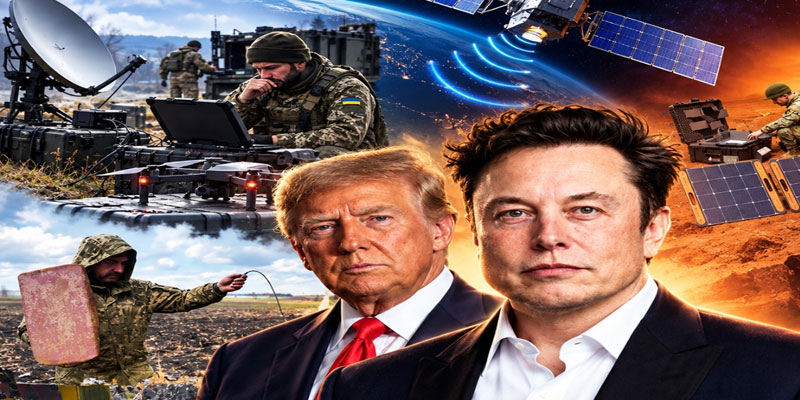
Elon Musk reportedly ordered restrictions on the Starlink satellite internet service used by Ukrainian forces, disrupting battlefield communications and leaving some attack and interceptor drones nearly ineffective, according to a Wall Street Journal investigation. The restrictions reportedly took effect on October 14, 2026, catching Kyiv and parts of the Trump administration off guard and raising questions about the influence of private technology companies on modern warfare.
Starlink Becomes Ukraine’s Digital Lifeline
Since Russia’s full-scale invasion in February 2022, Starlink has become a critical component of Ukraine’s military communications infrastructure. Operated by SpaceX, the satellite network provides connectivity for frontline coordination, command-and-control systems, intelligence sharing and unmanned aerial operations.
Its low-latency connections have proved valuable in areas where damaged terrestrial networks and Russian electronic warfare disrupt conventional communications. Ukrainian forces use the service to control drones, transmit live video and coordinate defensive operations, making reliable connectivity essential to battlefield effectiveness.
What the Report Says About the Restrictions
According to the Journal, Musk authorised a cap on connection speeds available to Ukrainian military hardware. Drones travelling faster than approximately 160 km/h reportedly began losing connectivity, affecting both offensive systems and interceptor drones designed to counter aerial threats.
The reported consequences included:
· Disrupted drone operations: Reduced connectivity undermined the ability of some drones to maintain control and transmit real-time information.
· Weakened air defence: Interceptor drones faced additional difficulties engaging incoming aerial threats.
· Frontline coordination challenges: Unreliable communications complicated operational planning and battlefield responses.
The report said Kyiv received no advance warning. It also described discussions between Musk and US President Donald Trump before and after the restrictions were imposed.
Conflicting Accounts Leave Responsibility Unclear
Trump said he had not ordered the slowdown and wanted to establish who was responsible. Musk, meanwhile, publicly maintained that decisions concerning Starlink speed and usage restrictions rested with the US military and ultimately the president.
US officials denied that Washington had instructed SpaceX to make the changes, while War Secretary Pete Hegseth said the US military had not directed any restrictions.
These conflicting accounts leave the precise chain of decision-making unresolved. The reported slowdown therefore raises questions about whether the action reflected a corporate decision, broader policy considerations or circumstances not fully disclosed publicly.
Military Consequences and Strategic Pressure
The incident reportedly occurred amid heightened tensions between Washington and Kyiv over Ukraine’s military strategy, including attacks on Russian energy infrastructure. The communications disruption added another complication for Ukrainian forces operating under pressure from Russian drones and electronic warfare.
Even temporary connectivity restrictions can affect the timing of drone launches, surveillance, interception and coordination between units. Because unmanned systems now perform both offensive and defensive roles, communications failures can have consequences extending beyond individual missions.
A Warning About Dependence on Private Technology
The episode exposes a fundamental vulnerability in Ukraine’s wartime infrastructure: its substantial dependence on a satellite network controlled by a private company. A change in service parameters can influence military operations without the conventional mechanisms associated with state-controlled communications systems.
For Ukraine, the challenge is to preserve operational resilience while reducing dependence on a single provider. Diversifying satellite connectivity, strengthening military communications and developing alternative networks could limit future disruptions. More broadly, the reported episode highlights an emerging reality of modern warfare: when commercial technology becomes essential to national defence, corporate decisions can carry consequences far beyond the marketplace.
(With agency inputs)