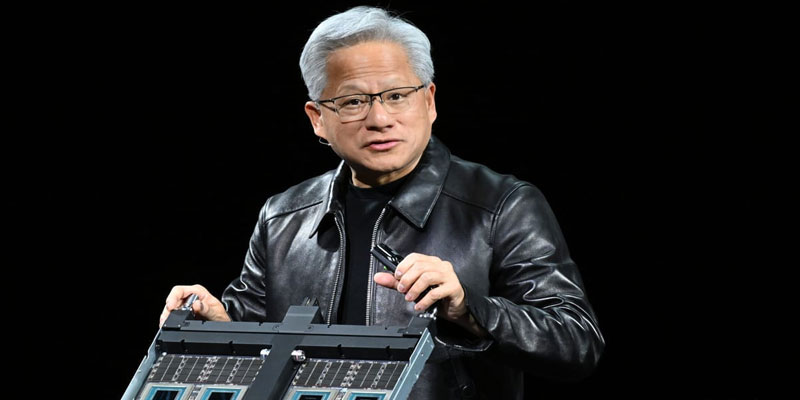
Nvidia CEO Jensen Huang is facing an escalating political, legal and market controversy after US President Donald Trump disclosed that the FBI was examining Huang's reported relationship with a Chinese businesswoman allegedly linked to Chinese intelligence. The controversy has triggered an independent investigation by Nvidia's board, a proposed shareholder class-action lawsuit and a sharp decline in the company's stock. The episode has also raised serious questions about corporate governance, national security and the vulnerabilities surrounding the global artificial intelligence (AI) supply chain.
The Controversy Behind the Allegations
The controversy centres on Alice Huang, a former executive at Singapore-based Megaspeed, who is not related to Nvidia's chief executive. US intelligence officials reportedly suspect that she passed information to Beijing, prompting scrutiny of her association with Jensen Huang.
Nvidia announced late Sunday that its board had initiated an independent investigation to determine whether its CEO had been targeted by a foreign-intelligence operation. The company maintained that it had found no reason to believe that US national security or its confidential information had been compromised.
However, the disclosure has failed to contain the growing political and financial repercussions.
Trump's Intervention Raises the Stakes
Speaking at the White House, Trump said he had spoken with Huang, who reportedly told him that he was unaware of the woman's alleged intelligence connections. Trump confirmed that the FBI was examining the matter but expressed confidence that Huang would be "in good shape".
The presidential intervention has elevated what began as a corporate and counterintelligence controversy into a politically sensitive issue. It also places greater attention on export-control compliance, corporate disclosures and potential national-security implications.
Market Reaction: $250 Billion Wiped Out
Nvidia shares closed 4.2% lower on Monday, even as broader markets rallied. The decline wiped out approximately $250 billion in market capitalisation during the trading session, reflecting investor concerns beyond the immediate allegations.
The potential risks include regulatory scrutiny, reputational damage, leadership uncertainty and complications arising from Washington's restrictions on advanced AI-chip exports to China. For a company central to the global AI revolution, even questions surrounding governance can have significant market consequences.
Shareholder Lawsuit Adds Legal Pressure
Shareholders have filed a proposed class-action lawsuit against Nvidia and Huang in a federal court in San Jose, California. The complaint alleges that the company misled investors by concealing Huang's relationship with Alice Huang and associated espionage concerns.
The allegations remain unproven, and the lawsuit is at an early stage. Its outcome could depend on when Nvidia's board became aware of the relationship and whether the company adequately disclosed potentially material risks to investors.
Beijing Rejects the Espionage Narrative
China's Foreign Ministry spokesperson Guo Jiakun dismissed the allegations as groundless accusations, slander and an attempt to smear China. Beijing's response adds another geopolitical dimension to the controversy, particularly amid continuing US-China tensions over semiconductor technology and AI dominance.
The timing is sensitive, with an expected meeting between Chinese President Xi Jinping and Trump approaching.
Huang's Leadership and The Road Ahead
An immediate departure by Huang appears unlikely, given the board's initial assessment and Trump's public support. Nevertheless, his position will depend on the findings of Nvidia's investigation, the FBI's examination and the shareholder litigation.
Particular attention will focus on Megaspeed's alleged involvement in supplying Nvidia AI chips to Chinese customers and whether any export-control violations or improper information transfers occurred.
Beyond One CEO: A Warning for The AI Industry
The controversy exposes how personal associations, corporate governance and national-security concerns can converge at the highest levels of the technology industry. Nvidia remains a dominant force in AI computing, but its reputation and investor confidence depend on transparency and compliance. Ultimately, the investigation must establish facts rather than rely on allegations. For the wider AI industry, the episode is a reminder that technological leadership brings extraordinary geopolitical responsibilities, and no company, however powerful, is insulated from them.
(With agency inputs)