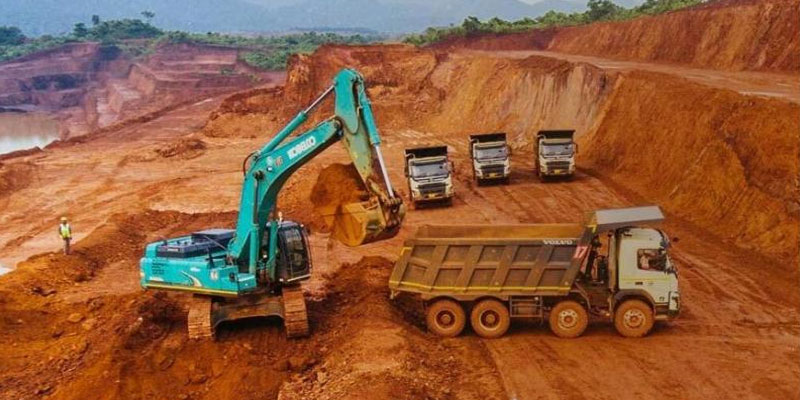
The struggle over Odisha's mining rights has entered a decisive phase as the Mines and Minerals (Development and Regulation) Amendment Bill, 2026 redraws the balance of fiscal powers between the Centre and mineral-rich states. While the Supreme Court's landmark 2024 judgment had affirmed states' authority to tax mineral-bearing lands, the new legislation places fresh restrictions on state-imposed taxes, cesses and levies unless expressly permitted by the Union government. For Odisha, where mining is a major source of public revenue and tribal welfare funding, the stakes extend beyond taxation to questions of federalism, development and local livelihoods.
From Supreme Court Victory to Legislative Reversal
Odisha's mining economy has long depended on revenues generated from iron ore, coal, bauxite and other mineral resources. The legal landscape shifted dramatically in July-August 2024, when a nine-judge Constitution Bench of the Supreme Court ruled by an 8:1 majority that royalty paid by mining companies is not a tax but compensation for extraction rights.
The Court held that states possess legislative authority under Entry 50 of the State List to impose taxes on mineral rights and mineral-bearing lands. It also allowed states to recover dues dating back to April 1, 2005, through staggered payments over twelve years beginning April 1, 2026, without interest or penalties.
What the MMDR Amendment Changes
Parliament's passage of the MMDR Amendment Bill, 2026 on August 13 significantly alters that equation.
The legislation introduces Section 9D, which prevents states from imposing additional taxes or levies on mineral rights unless authorised by the Centre. It also transfers greater rule-making authority over such taxation to the Union government while retaining existing central levies, including royalties, District Mineral Foundation (DMF) contributions and payments to the National Mineral Exploration Trust.
Supporters argue the move creates a uniform national mining regime and reduces uncertainty for companies such as Tata Steel, JSW, Adani, Vedanta and NALCO.
Why Odisha Has the Most at Stake
For Odisha, the implications are both financial and social.
The state's anticipated retrospective revenue from the Supreme Court ruling could now face significant constraints, reducing a potential fiscal cushion at a time of growing development needs.
Equally important is the possible indirect impact on District Mineral Foundation funds, which finance:
· Schools and Anganwadi centres.
· Rural healthcare facilities.
· Drinking water projects.
· Livelihood programmes.
· Tribal welfare initiatives.
Many mining-affected districts with substantial tribal populations rely heavily on these funds for essential public services.
Political Response and the Federalism Debate
Despite the high financial stakes, Odisha's political response has remained relatively restrained. Analysts attribute this to ongoing negotiations with the Centre, assurances regarding overall mining revenue sharing and broader political calculations.
The amendment has nevertheless revived a wider constitutional debate over cooperative federalism. Critics argue it weakens states' fiscal autonomy after the Supreme Court's landmark ruling, while supporters maintain that a centralised framework will improve investment confidence and simplify compliance across India's mining sector.
Beyond Minerals, a Test of Federal Balance
The Odisha mining dispute is no longer just about taxes—it has become a test of how India balances national economic priorities with states' constitutional rights over natural resources. The Supreme Court expanded states' fiscal authority in 2024, but Parliament's latest amendment has narrowed that space through legislation. Whether future negotiations, judicial review or policy adjustments reshape this balance will determine not only Odisha's revenue prospects but also the evolving relationship between the Centre and mineral-rich states in India's federal framework.
(With agency inputs)