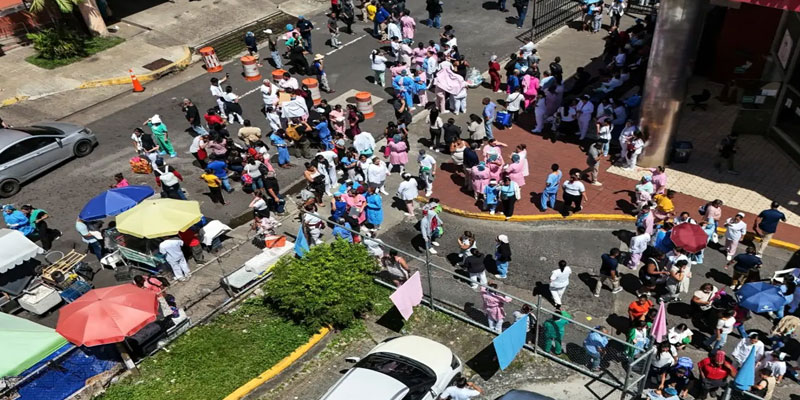
Panama was shaken by a powerful earthquake on Friday, sending residents rushing out of buildings, damaging structures near the epicentre and triggering fears of a potentially dangerous tsunami. The tremor was felt in the capital, Panama City, and beyond the country’s borders. Although authorities subsequently lifted the tsunami warning after no destructive waves materialised, the earthquake and subsequent aftershocks highlighted the vulnerability of communities along Central America’s Pacific coastline.
Why Panama Faces Seismic Risks
Panama lies in a tectonically active region where the Cocos, Caribbean and Nazca plates interact. Movements along these geological boundaries can generate powerful earthquakes, while undersea seismic activity can also trigger tsunamis.
The country’s Pacific coastline is particularly exposed to these hazards, making rapid monitoring, evacuation procedures and emergency communication essential during major seismic events.
What Happened: A Major Tremor and Strong Aftershocks
The earthquake struck at approximately 12:56 p.m. local time near Pitaloza Arriba in Herrera province, central Panama. The epicentre was reported near the southern coast, roughly 200 kilometres from Panama City, at a shallow depth of around 10 kilometres.
The initial magnitude estimate was revised several times as seismologists analysed the data, with reports citing magnitudes of 7.6 and 7.7.
Key developments included:
· Widespread shaking: The tremor rattled buildings in Panama City and was reportedly felt in neighbouring Colombia.
· Emergency evacuations: Office workers and residents left buildings and gathered in open spaces as a precaution.
· Powerful aftershocks: A subsequent magnitude 6.6 earthquake and additional tremors heightened anxiety and complicated damage assessments.
· Tsunami warning: Authorities warned of potentially hazardous waves affecting coastal areas of Panama, Colombia, Ecuador, Nicaragua and Guatemala.
The warning was subsequently lifted after the anticipated destructive waves did not materialise.
Damage and Impact: Central Provinces Bear the Brunt
Panama’s National Civil Protection Service reported damage concentrated in the central provinces of Veraguas, Herrera and Los Santos. Images and local reports showed structural damage, including a collapsed cathedral and a hotel façade falling onto a vehicle in Penonomé.
Panama City experienced considerable alarm, but officials reported no major structural damage in the capital. Authorities said no deaths had been documented by Friday evening, while warning that the situation could change as emergency teams reached remote communities and completed inspections.
The earthquake’s shallow depth likely contributed to intense shaking near the epicentre. Damaged buildings, falling debris and repeated tremors posed continuing risks even after the tsunami alert ended.
Official Response: Assessments Continue Amid Uncertainty
Panama’s Civil Protection Service coordinated emergency operations and assessed damage in affected areas. President José Raúl Mulino cautioned that the initial casualty and damage figures might change as further information became available.
Geoscientists also emphasised the importance of distinguishing between the threat of a tsunami and the actual development of destructive waves. Although the warning caused considerable concern, the absence of major tsunami impacts helped prevent a broader coastal emergency.
Authorities urged residents, particularly those in coastal communities and damaged buildings, to remain alert and follow official instructions as aftershocks continued.
A Narrow Escape, but a Lasting Warning
The earthquake demonstrated how quickly a powerful natural disaster can disrupt communities, overwhelm emergency communication and generate fears extending far beyond its epicentre. Although Panama’s capital escaped major reported structural damage and the tsunami warning was lifted, the destruction in central provinces underscored the uneven impact of seismic events.
The crucial lesson is that early warnings must be matched by resilient infrastructure, effective evacuation plans and sustained public preparedness. For Panama and its neighbours, Friday’s earthquake serves as a reminder that seismic hazards cannot be prevented, but their human and economic consequences can be reduced through stronger buildings, reliable monitoring and coordinated emergency responses.
(With agency inputs)