After months of strained exchanges following Washington’s decision to raise tariffs on Indian goods, New Delhi and Washington have restarted face-to-face trade negotiations. The dialogue, held in the Indian capital, marks the first substantive attempt to reset bilateral commercial ties since President Donald Trump’s administration doubled tariffs to 50% in retaliation for India’s continued oil trade with Russia. The renewed talks not only seek to revive a long-stalled trade agreement but also highlight the broader complexities of balancing strategic ties with economic disputes.
Seven Hours of Constructive Dialogue
The meeting, led by U.S. Assistant Trade Representative Brendan Lynch and India’s Chief Negotiator Rajesh Agrawal, stretched nearly seven hours. According to India’s commerce ministry, both sides agreed to accelerate efforts toward finalizing a “mutually beneficial” deal. While no breakthroughs were announced, officials described the engagement as “positive” and “forward-looking,” signaling a willingness to set aside recent friction.
Agriculture and Dairy: The Toughest Frontier
Market access in agriculture remains the most sensitive issue. India has consistently held firm against opening its dairy and farm sectors to U.S. companies, citing domestic sensitivities. However, American negotiators indicated flexibility, narrowing their demands to premium cheese and corn rather than large-scale dairy exports. This shift is being interpreted as a conciliatory move to restart momentum after weeks of deadlock.
The Tariff Fallout
The tariffs imposed by Washington in late August have already started to pinch Indian exporters. India’s shipments to the U.S. fell from $8.01 billion in July to $6.86 billion in August, with industry representatives warning of sharper declines once the new duties take full effect. For New Delhi, resolving the tariff dispute has become as urgent as protecting red-line sectors such as agriculture.
Diplomatic Undercurrents: The Modi–Trump Call
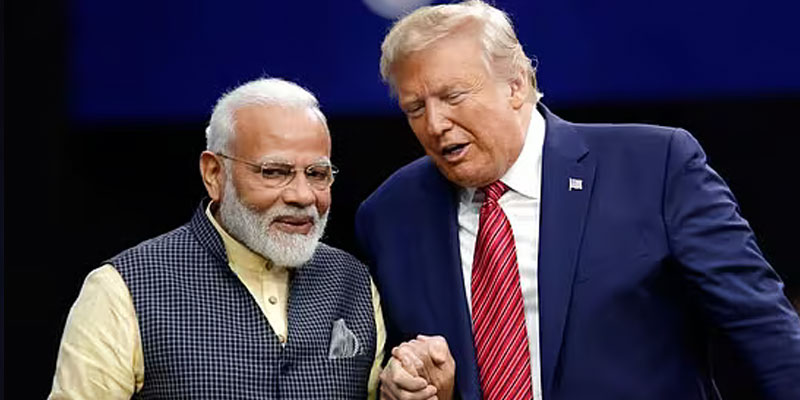
Coinciding with the talks was a rare phone call between Prime Minister Narendra Modi and President Trump — their first publicly acknowledged interaction in three months. The call, timed with Modi’s 75th birthday, was described warmly by both leaders. Trump thanked Modi for supporting his initiatives on Ukraine, though no details were provided. Modi, in turn, reaffirmed India’s backing for a peaceful resolution of the conflict. While the specifics remain opaque, the cordial exchange underscored efforts to rebuild trust and reduce tensions in the broader relationship.
The Larger Geopolitical Context
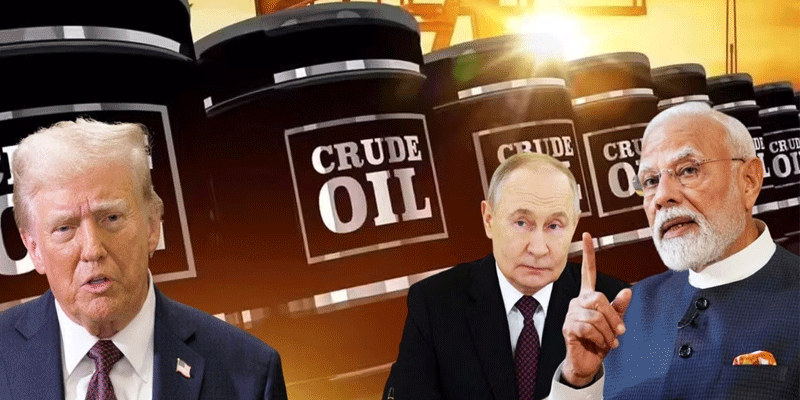
Beyond trade, the trajectory of India–U.S. relations is influenced by larger strategic concerns, particularly the shared challenge of China’s assertiveness in Asia. This common ground has historically cushioned disagreements in other areas. However, Washington’s insistence that India reduce its reliance on Russian energy continues to loom large over negotiations. Whether New Delhi can balance energy security with U.S. expectations will significantly shape the path forward.
Looking Ahead: Sixth Round on the Horizon
Both governments have agreed to hold a formal sixth round of negotiations soon. While expectations of an immediate breakthrough remain tempered, the willingness to reengage after months of friction represents progress in itself. The talks suggest that despite tariffs and disagreements, neither side is prepared to let the relationship stall, given its strategic importance.
A Cautious Reset in the Making
The resumption of India–U.S. trade talks demonstrates a tentative but important step toward repairing ties tested by tariffs and geopolitical friction. India remains protective of its core agricultural interests, while the U.S. appears to be recalibrating demands to salvage momentum. The Modi–Trump phone call provided a symbolic boost, underscoring that diplomacy continues at the highest levels despite disputes. The coming rounds will determine whether the two countries can translate goodwill into a durable trade pact, ensuring that economic cooperation matches the depth of their strategic partnership.
(With agency inputs)