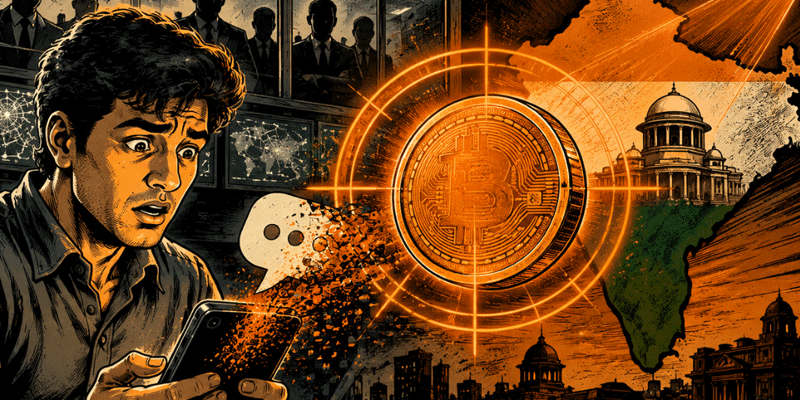
Bitchat, Jack Dorsey’s decentralised messaging application designed to work even without conventional internet connectivity, has been blocked in India amid concerns over security, anonymity and lawful interception. The action follows the app’s reported use during protests in Delhi, where internet restrictions had been imposed. While authorities cite potential misuse, the move has also raised questions about transparency, proportionality and the limits of government control over decentralised communication.
What Is Bitchat?
Developed by Dorsey, co-founder of Twitter and Block, Bitchat is fundamentally different from conventional messaging platforms such as WhatsApp or Telegram. It can exchange messages between nearby devices using Bluetooth Low Energy (BLE), allowing phones to form a mesh network in which devices relay messages to one another.
Its architecture combines:
· Bluetooth mesh communication for offline messaging.
· The Nostr protocol for internet-based communication when connectivity exists.
· Encrypted private messaging using the Noise Protocol or encrypted envelopes.
· Local rather than conventional centralised message storage.
The app does not require a phone number, email address or conventional account, making it particularly useful during internet outages, disasters, network failures and crowded events.
Why Did India Move Against Bitchat?
The app came under increased scrutiny following its reported use during Delhi protests in July 2026, when mobile internet services were restricted around demonstration sites. Bitchat reportedly experienced an extraordinary surge in Indian usage, accounting for around 85% of global downloads between July 17 and 23, compared with about 1% during the previous month.
Indian authorities subsequently raised concerns that its decentralised architecture could make lawful surveillance and attribution difficult.
The government's concerns broadly centre on:
· Difficulty identifying users and communication chains.
· Absence of a central server from which records can readily be obtained.
· Resistance to internet shutdowns.
· Potential misuse by terrorist organisations or criminal groups.
· Challenges in investigating serious public-order incidents.
The latest action reportedly followed a MeitY request under Section 69A of the Information Technology Act, 2000. Bitchat was removed from Apple’s Indian App Store, while it was also unavailable through Google Play and reportedly inaccessible through some Indian internet-service providers.
Security Concerns Versus Digital Rights
The controversy is not simply about encryption. It is the combination of encryption, anonymity, decentralisation and offline functionality that concerns authorities.
However, digital-rights advocates argue that blocking an entire communication platform because it could potentially facilitate unlawful activity raises proportionality concerns. Such a measure could also affect legitimate users, including journalists, emergency responders and citizens communicating during network failures.
The legal debate therefore centres on whether restricting an entire technology is justified when the government has not publicly identified the specific unlawful content or conduct that prompted the action.
Why The Ban May Not Fully Work
Removing an application from official stores does not automatically remove it from phones where it is already installed. Its Bluetooth-based communication can also function without an internet connection.
Moreover, Bitchat is open source, meaning its code can potentially be mirrored, modified or redistributed independently of official app stores. Unofficial downloads, however, carry risks of malicious or modified versions.
Bitchat Raises a Bigger Question About Digital Control
India faces a legitimate challenge in preventing secure communication technologies from being exploited for terrorism, cybercrime or serious public disorder. At the same time, offline communication can be vital when networks fail or authorities impose connectivity restrictions.
The Bitchat episode therefore goes beyond one application. The lasting test will be whether India can protect national security while maintaining transparency, proportionality and legitimate access to secure communications. Without greater disclosure of the precise legal grounds behind the action, the controversy is likely to persist alongside the technology itself.
(With agency inputs)