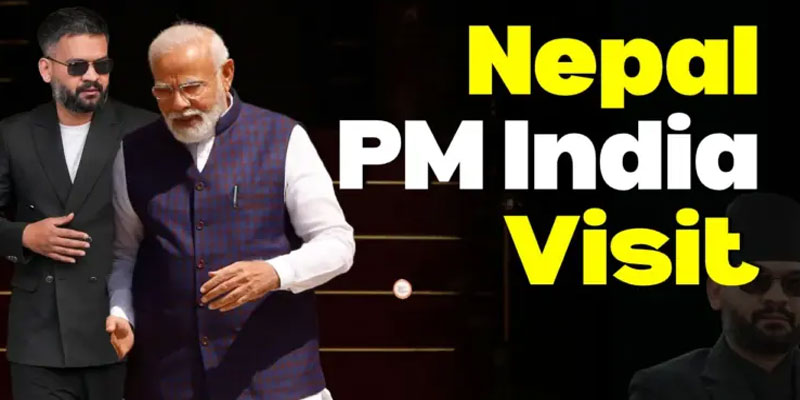
Nepal Prime Minister Balendra “Balen” Shah's two-day state visit to India on November 22–23, 2026, marks an important diplomatic engagement aimed at resetting bilateral relations and expanding economic, energy and connectivity cooperation. His first bilateral foreign visit since taking office in March reflects the importance Kathmandu attaches to its relationship with New Delhi. The visit's symbolic centrepiece is the proposed launch of the Saryu-Kamala Express, connecting Ayodhya in Uttar Pradesh with Janakpur in Nepal, strengthening the cultural and historical bonds between the two countries.
A New Chapter in India-Nepal Relations
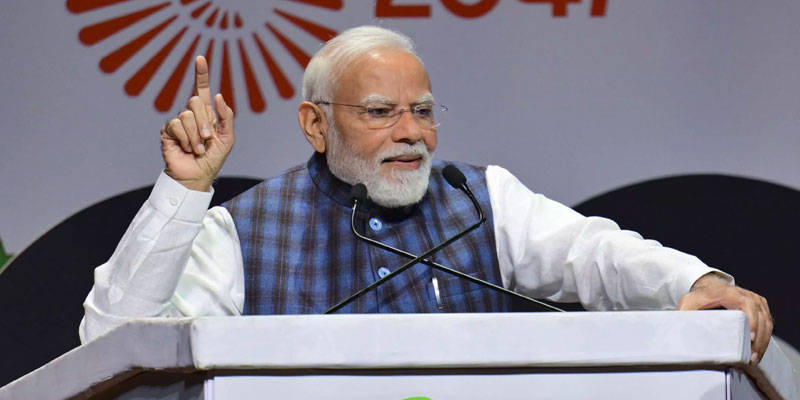
Shah arrived in New Delhi on November 22 at the invitation of Prime Minister Narendra Modi. The visit comes after political changes in Nepal following the 2025 Gen Z uprising and the formation of a new government under Shah.
India, Nepal's largest trade partner and a major development partner, is seeking to strengthen its traditional neighbourhood relationship while ensuring greater economic and strategic cooperation. The two countries share deep civilisational, religious and cultural connections, alongside extensive trade, energy and people-to-people links.
Key Agenda: Trade, Energy, Connectivity and Reconstruction
The November 23 bilateral discussions at Hyderabad House focused on strengthening economic relations, infrastructure, hydropower, cross-border electricity trade, technology and regional cooperation.
Major priorities include:
· Financial assistance: Nepal has sought approximately $2 billion in grants and concessional credit, including support for reconstruction following devastating August floods. Reports indicate India has responded positively, with a possible $1.5-billion package under consideration.
· Air connectivity: Kathmandu wants additional international air-entry routes through Indian airspace, particularly around Mahendranagar and Bhairahawa. Differences over operational conditions remain unresolved.
· Energy cooperation: Hydropower development, electricity exports and cross-border transmission infrastructure are important priorities.
· Development partnership: Education, healthcare, agriculture, disaster management, sports and human-resource development are expected to receive attention.
What Has Happened So Far? Diplomatic Engagement Gains Momentum
On November 22, Shah was received at Indira Gandhi International Airport by Union Minister of State for Commerce and Industry Jitin Prasada. External Affairs Minister S. Jaishankar subsequently called on him to discuss connectivity, trade, transit, energy, culture, education and sports. Nepal's Finance Minister Swarnim Wagle also participated in a business roundtable, inviting Indian investors to explore opportunities in Nepal.
On November 23, Shah received a ceremonial welcome at Rashtrapati Bhavan before holding bilateral discussions with Modi. He was also scheduled to pay his respects at Rajghat and call on President Droupadi Murmu.
The Saryu-Kamala Express, a proposed 604-km weekly rail service connecting Ayodhya Cantonment with Janakpur Dham, is another major highlight. The journey is expected to take approximately 19 hours, with regular operations scheduled to begin November 28.
Reactions and Expectations: A Test of Neighbourhood Diplomacy
Nepal's Finance Minister Swarnim Wagle expressed optimism, describing the visit as potentially historic. India's Ministry of External Affairs has emphasised the importance of strengthening the partnership under its Neighbourhood First policy.
A joint vision document, reportedly titled Samriddha Nepal, Samunnat Bharat, is expected to provide a long-term framework for cooperation. The anticipated outcomes also include agreements on infrastructure, technology, investment and development projects.
From Diplomatic Warmth to Tangible Partnership
Shah's visit presents an opportunity for India and Nepal to move beyond traditional diplomatic engagement towards a more practical and mutually beneficial relationship. For India, stronger ties reinforce regional connectivity and its neighbourhood strategy; for Nepal, Indian investment, financial assistance, energy cooperation and improved access to international markets offer significant development opportunities. However, unresolved air connectivity and sensitive boundary issues involving Kalapani, Lipulekh and Limpiyadhura remain challenges. Ultimately, the success of this diplomatic reset will depend not on announcements alone, but on timely implementation, mutual respect and measurable benefits for citizens on both sides of the border.
(With agency inputs)