Water Scarcity and Wildlife Concerns Cloud $15-Billion AI Investment
Google's ambitious $15-billion artificial intelligence data-centre project in Visakhapatnam, Andhra Pradesh, has emerged as a major test of India's ability to balance technological advancement with environmental sustainability. While the investment promises to transform the state into a leading AI and cloud computing hub, it has also sparked concerns over water availability and the potential impact on nearby wildlife. With legal challenges now before the Andhra Pradesh High Court, the project has become a focal point in the broader debate over sustainable digital infrastructure.
The Project: A Landmark Investment in India's Digital Future
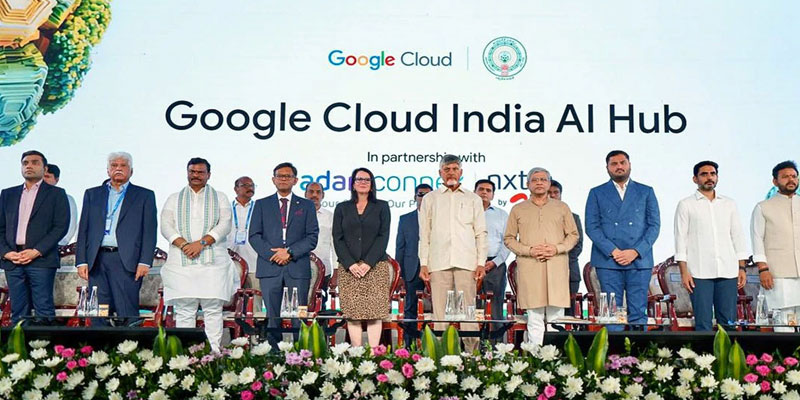
The project aims to establish gigawatt-scale computing infrastructure supported by modern energy systems, expanded fibre connectivity and an international subsea cable gateway. Google is partnering with AdaniConnex and Airtel to develop the facility.
The Andhra Pradesh government views the project as a transformative opportunity that could position Visakhapatnam as a major global technology and AI destination, attract additional investments and generate high-skilled employment. For Google, the facility is expected to significantly expand its cloud and AI capabilities in one of the world's fastest-growing digital markets.
Environmental Concerns Take Centre Stage
Despite its economic promise, the project has attracted opposition from environmental activists and local groups.
The activist organisation Jal Biradari (Water Community) has raised concerns that the proposed data centre could place additional stress on local water resources. Protesters have questioned reported plans to ensure water supply to the project for the next two decades, arguing that such commitments could affect future drinking water availability if urban demand rises.
The issue is particularly significant because large-scale data centres require substantial cooling systems. Although modern technologies have reduced water consumption, environmental groups contend that the project's approvals did not adequately evaluate the long-term implications for surrounding communities.
Another major concern relates to wildlife conservation. The proposed facility is located approximately 860 metres from the Kambalakonda Wildlife Sanctuary, home to species such as leopards and pangolins. A public interest litigation has argued that construction activities, heavy machinery and operational noise could disturb the sanctuary's fragile ecosystem.
Latest Developments
On August 3, the Andhra Pradesh High Court directed the state government to respond to the environmental concerns raised in the petition.
The state government has rejected allegations that the project bypassed environmental safeguards, maintaining that the site complies with legal distance requirements from the sanctuary. It has also asserted that neither nearby reservoirs nor rural drinking-water sources will be used for the project.
Google has similarly defended the proposal, stating that the development will fully comply with Indian regulations. The company says it will employ advanced air-cooling technologies to minimise water consumption and install sound-dampening systems to reduce operational noise, ensuring the facility remains environmentally responsible.
Building India's AI Future Without Compromising Nature
The Visakhapatnam data-centre project represents more than a major technology investment—it reflects India's broader challenge of pursuing rapid digital growth while safeguarding natural resources and biodiversity. If implemented with transparent environmental oversight, responsible water management and continuous public engagement, the project could become a benchmark for sustainable AI infrastructure. However, failure to adequately address ecological concerns may undermine public confidence and complicate future investments. The outcome of this project is therefore likely to shape not only Google's expansion plans but also India's approach to balancing innovation with environmental stewardship.
(With agency inputs)