A Defining Moment for Democracy
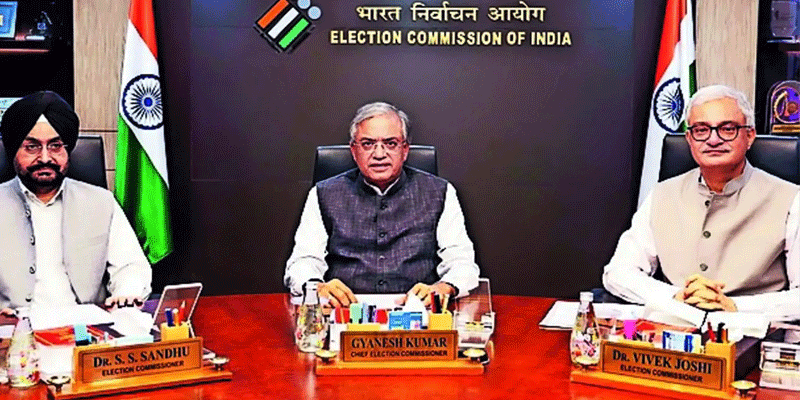
After Assam, Kerala, and Puducherry recorded historic voter turnout, Chief Election Commissioner Gyanesh Kumar on Thursday described the Assembly elections as a “historic testimony” not just for India, but for democracies worldwide. The remarkable participation across these diverse regions underscores the enduring strength and credibility of India’s electoral system at a time when global democratic institutions face increasing scrutiny.
Turnout Breakdown: Numbers That Tell a Story
The April 9, 2026 elections witnessed unprecedented voter engagement across all three regions. Puducherry led the chart with turnout figures between 89.20% and 91.2%, marking one of the highest ever recorded in the country. Assam followed closely with over 85% participation across its 126 constituencies—its highest in history. Meanwhile, Kerala registered turnout nearing 78%, its best performance since 1987.
A particularly notable trend was the surge in participation among women and third-gender voters, especially in Puducherry, where their turnout exceeded 91%. Across all polling stations—nearly 63,000—electronic voting machines (EVMs) and VVPAT systems functioned seamlessly, supported by extensive webcasting and monitoring.
Driving Forces: What Boosted Voter Participation
Several factors contributed to this electoral enthusiasm. The Election Commission of India (ECI) undertook rigorous electoral roll revisions, eliminating duplicate entries and ensuring greater accuracy. Door-to-door awareness campaigns and initiatives like “Chunav ka Parv, Matdaata ka Garv” played a crucial role in mobilizing voters.
Improved infrastructure at polling booths, enhanced security arrangements, and transparent processes further strengthened public confidence. The increased participation of women signals a shift toward more inclusive and issue-based voting, reflecting growing awareness around governance, welfare, and rights.
High-Voltage Contests Across States
The elections carried significant political weight. In Assam, Chief Minister Himanta Biswa Sarma is seeking a third term, facing a strong challenge from the Congress-led INDIA bloc. Key issues include development, flood management, and concerns around illegal infiltration.
In Kerala, Chief Minister Pinarayi Vijayan and the Left Democratic Front aim to retain power against the United Democratic Front and the BJP-led NDA. The contest revolves around governance performance versus welfare delivery.
Puducherry presents a complex coalition battle, with the NDA government facing off against the Congress-DMK alliance. Across all regions, the high turnout reflects both political polarization and heightened voter interest in shaping leadership outcomes.
Broader Significance: A Global Democratic Signal
These record-breaking numbers reinforce India’s position as one of the world’s most vibrant democracies. At a time when voter apathy and democratic decline are concerns in many parts of the world, India’s electoral participation offers a compelling counter-narrative.
The strong turnout, especially among women, highlights evolving voter priorities and increasing engagement with policy-driven issues. With results scheduled for May 4, the outcomes will have implications not only for state governance but also for national political alignments ahead of future elections.
Democracy in Action
The 2026 Assembly elections in Assam, Kerala, and Puducherry stand as a powerful affirmation of democratic resilience. High voter turnout reflects trust in institutions, faith in the electoral process, and a collective commitment to shaping governance.
As India continues to navigate complex political and social challenges, such robust participation sends a clear message: democracy, when nurtured with transparency and inclusivity, remains a deeply rooted and dynamic force.
(With agency inputs)