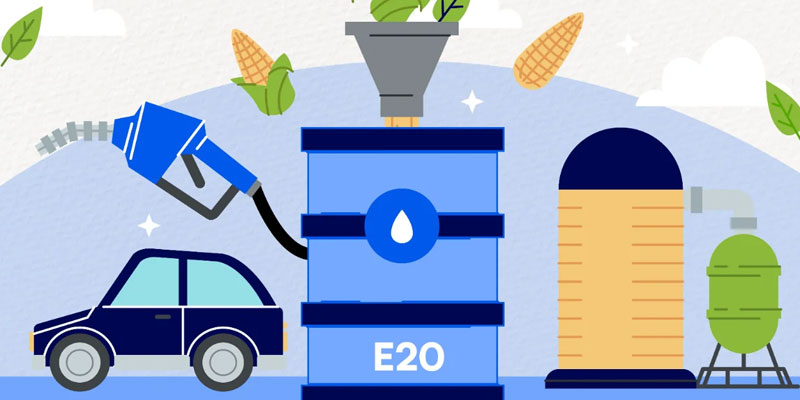
A conflict between a national energy strategy and its practical impact on vehicle owners. This analysis reveals a clear divide between the official government stance and the real-world experiences of a specific segment of consumers.
The core of the issue lies in the compatibility of vehicle engines with higher concentrations of ethanol. While the government promotes E20 as a progressive, cleaner fuel, its chemical properties pose significant risks to vehicles not specifically engineered for it.
The article correctly points out that this is not a one-size-fits-all problem. It specifies that newer cars, particularly those manufactured since April 2023, are largely safe.
This is backed by industry bodies like the Society of Indian Automobile Manufacturers (SIAM), which has confirmed that new lineups from major players like Maruti Suzuki, Hyundai, and Toyota are E20-compliant.
This reassures the vast majority of consumers who purchase new, mass-market vehicles. However, it sidesteps the significant portion of the Indian car parc that consists of older or imported models.
Several critical technical reasons for the risks:
First, it notes that ethanol is hygroscopic, meaning it absorbs moisture from the air. This absorbed water can then lead to rust and corrosion in fuel tanks and pipelines, particularly affecting the precision-engineered components of high-end vehicles.
Secondly, the article identifies that ethanol reacts negatively with rubber and plastic components such as seals, gaskets, and hoses. This reaction causes them to swell, harden, or crack.
Such degradation can lead to fuel leaks and system failures, problems that are particularly expensive to fix in luxury cars with their advanced and specialized systems.
The lower calorific value of ethanol is also cited as a key issue. This means it contains less energy than petrol.
As a result, engines must consume more fuel to achieve the same output, leading to a noticeable reduction in mileage, especially in performance-oriented vehicles.
The article also highlights the risk of engine knocking and overheating. The different combustion properties of high-ethanol blends can cause abnormal combustion.
This can lead to long-term engine wear, a problem that is particularly serious for turbocharged or high-compression engines found in premium cars.
For many imported or older vehicles, the lack of design compatibility with E20 fuel has already resulted in costly fuel system failures, including issues with fuel pumps and injectors.
This has created a significant dilemma for owners of these vehicles, many of whom are worried about the financial burden of frequent and expensive repairs.
Furthermore, a major concern is the potential for E20 to void warranties. Owners of luxury cars, in particular, are hesitant to use the fuel without clear assurances.
This has created considerable public confusion and frustration, leading to calls for the government to provide alternatives, such as the continued availability of E10 or even ethanol-free petrol.
In conclusion, there has to be balanced analysis of the E20 push. It reveals a policy that, while beneficial for the nation's energy security, creates a direct and costly risk for a segment of its population. The primary dilemma is the a lack of a clear, unified solution that serves both the national interest and the needs of all vehicle owners.