Setting the Stage: The India AI Impact Summit in February
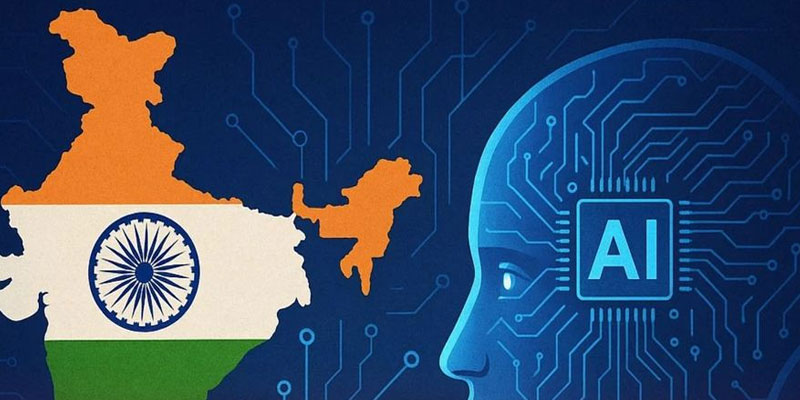
As India prepares to host the India AI Impact Summit in February, the government is clearly positioning artificial intelligence as a pillar of its long-term economic and strategic vision. The summit is designed not merely as a technology showcase, but as a statement of intent: India aims to shape how AI is built, governed, and deployed, particularly for societies outside the Western tech ecosystem. This direction was reinforced weeks earlier, when Prime Minister Narendra Modi convened a high-level roundtable with leading Indian AI startups to align innovation with national priorities.
From Experimentation to Global Ambition
India’s AI ecosystem has moved rapidly from experimentation to execution. With a fast-growing startup base, vast datasets, and an expanding digital public infrastructure, the country now sees AI as both an economic accelerator and a geopolitical asset. The January roundtable with AI founders offered a preview of the themes that will dominate the February summit: indigenous capability, ethical design, and solutions built for scale, diversity, and affordability.
Inside Modi’s Roundtable: What the Startups Brought to the Table
At the meeting, founders from a dozen AI startups presented applications spanning multilingual large language models, speech recognition, generative 3D design for e-commerce, healthcare diagnostics, and advanced engineering simulations. What stood out was not just technical sophistication, but contextual relevance. Several startups demonstrated AI systems trained in Indian languages, accents, and datasets—addressing a long-standing gap where global models remain heavily English-centric.
Prime Minister Modi’s message to the founders was direct and strategic. He urged them to think beyond imitation of Western AI models and instead focus on “Made in India, Made for the World” solutions—technologies that are cost-effective, inclusive, and adaptable to local realities. He framed startups as partners in nation-building, describing them as “co-architects” of a developed India, or Viksit Bharat.
Equally central to the discussion was ethics. Modi stressed the importance of transparency, data privacy, and bias mitigation, particularly as AI becomes embedded in governance, healthcare, and elections. Founders raised practical challenges as well: access to high-end computing power, availability of skilled talent, and protection of intellectual property. Senior ministers present at the meeting reaffirmed state support through infrastructure investment, skilling programs, and policy stability.
Strategic Direction: Why Indigenous and Ethical AI Matters
The emphasis on indigenous AI reflects a broader strategic shift toward technological sovereignty. By building homegrown models—often open-source and trained on Indian data—India seeks to reduce dependence on US- or China-dominated platforms. This approach also positions the country as a credible AI partner for the Global South, where affordability and cultural alignment matter as much as raw performance.
Economically, the stakes are high. India’s AI market is projected to grow severalfold by the end of the decade, with potential gains in exports, employment, and productivity. At the same time, policymakers appear aware of the risks: excessive regulation could slow innovation, while weak safeguards could undermine public trust.
A Defining Test for India’s AI Vision
The January roundtable and the upcoming India AI Impact Summit together mark a transition in India’s AI journey—from ambition to articulation. The challenge ahead lies in execution: balancing ethical guardrails with entrepreneurial freedom, and global competitiveness with local relevance. If successful, India could emerge not just as an AI user or service provider, but as a rule-setter shaping how artificial intelligence serves diverse societies worldwide.
(With agency inputs)