Hasina’s Sharp Rebuke from Exile
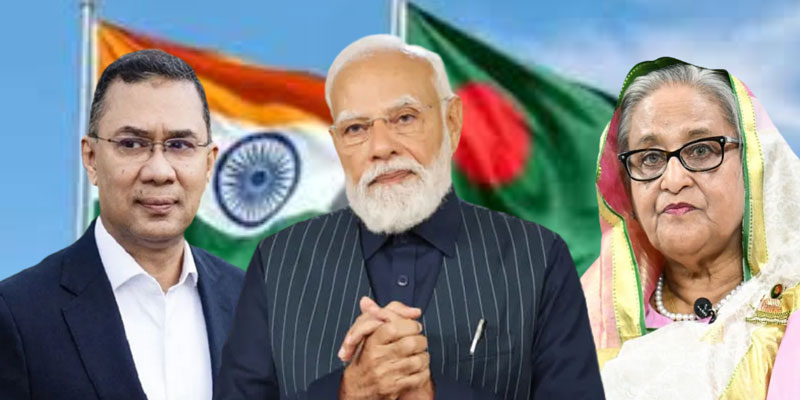
From her undisclosed location in India, former Bangladesh Prime Minister Sheikh Hasina has broken her silence, accusing Muhammad Yunus’s interim government of endangering Bangladesh’s democracy and damaging its historically close ties with India. In an exclusive email interview with PTI, Hasina alleged that the interim administration had “empowered extremist elements” while undermining the foundations of a relationship she described as “vital for Bangladesh’s security and prosperity.”
Hasina, who has lived in exile in India since her ouster last year, has set clear political conditions for her return to Dhaka. Chief among them: the restoration of participatory democracy, the lifting of the ban on the Awami League, and free and inclusive national elections. Her statement signals both a political challenge to Yunus’s administration and an attempt to reassert her relevance in Bangladesh’s volatile political landscape.
Conditions for Return: A Call for Democratic Restoration
Hasina’s primary demand is straightforward but politically charged: a return to democratic governance. She insists that without reinstating the Awami League, any election conducted by the interim regime would lack credibility and legitimacy. “This is not just my demand,” she said, “but the demand of the Bangladeshi people who seek stability, justice, and true representation.”
Her call for inclusivity reflects deep frustration with the current political order. The ban on her party—long Bangladesh’s dominant political force—has silenced millions of supporters and left the nation’s political process skewed in favor of unelected actors. Hasina warned that such exclusionary politics could further destabilize the country, eroding both domestic confidence and international goodwill.
She linked her prospective return to a broader “democratic reset”, one that would rebuild institutions, restore trust in governance, and open space for political competition without fear or retribution.
Diplomatic Rift: India at the Heart of the Controversy
A central thrust of Hasina’s critique concerns the deterioration of India–Bangladesh relations under Yunus. She accused the interim administration of committing “foolish and self-defeating diplomatic errors” that jeopardize decades of strategic partnership. Calling Yunus a “weak monarch dependent on extremist backing,” Hasina argued that his government’s hostility toward India threatens Bangladesh’s economic and regional stability.
Throughout her tenure, Hasina had nurtured deep cooperation with New Delhi on trade, energy, and counterterrorism—ties she believes are now being “recklessly strained.” She emphasized that India remains Bangladesh’s “most important international partner” and expressed gratitude for the protection she has received while in exile.
To Indian audiences, Hasina offered reassurance: “The interim government does not reflect the true will of the Bangladeshi people. Our friendship with India is rooted in shared history and mutual respect—it will outlast this period of misrule.”
Bangladesh’s Fragile Political Crossroads
Hasina’s comments underscore the widening political and ideological divide in Bangladesh. The Yunus-led interim government, installed after mass protests in August 2024 that forced Hasina’s resignation, has struggled to maintain order and legitimacy. Its crackdown on the Awami League has drawn criticism from international observers, while its shifting foreign policy has opened doors for China and Pakistan to expand influence at India’s expense.
Analysts warn that Bangladesh now stands at a dangerous crossroads: democracy in retreat, institutions weakened, and regional alignments uncertain. Hasina’s re-emergence—albeit from exile—may mark the beginning of renewed political contestation both domestically and diplomatically.
The Return Question and the Road Ahead
Sheikh Hasina’s insistence on democratic restoration and stronger India ties represents both a political roadmap and a warning. Her conditions for return signal not merely personal ambition but a broader push for legitimacy and inclusion in Bangladesh’s fractured political landscape.
For Bangladesh, the challenge now lies in reconciling these divides—restoring democracy, preserving sovereignty, and repairing critical regional relationships. As Hasina continues to speak from exile, her voice remains a potent reminder of unfinished political battles and the high stakes of Bangladesh’s democratic future.
(With agency inputs)