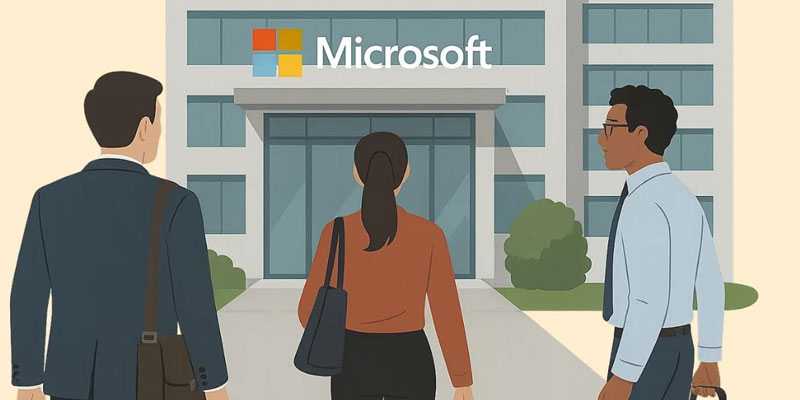
After nearly six years of flexible remote work, Microsoft has announced the end of its fully work-from-home policy. Starting February 2026, employees living within 50 miles of its Redmond, Washington headquarters will be required to work from the office at least three days a week.
The move will later expand to other US locations and then to international offices, including India, marking a significant shift in the company’s workplace culture.
Back to Hybrid Work
Microsoft first introduced its flexible work-from-home model in 2020 during the COVID-19 pandemic, allowing employees to work remotely up to 50% of the time without managerial approval. Now, under its new mandatory hybrid model, employees must maintain regular in-office presence.
Amy Coleman, Microsoft’s Chief People Officer, said employees will have ample time to prepare for the transition as the company rolls out the plan in phases:
-
Phase 1 (Feb 2026): Employees near Redmond HQ to work from office 3 days a week.
-
Phase 2: Rollout to other US offices.
-
Phase 3: Global rollout, including Microsoft India operations in Bengaluru, Hyderabad, and other cities later in 2026.
Global Trend: Return to Office
Microsoft’s decision follows a growing trend among global tech and financial giants moving away from remote-first policies.
-
Amazon: Mandated five days a week for most corporate employees.
-
Meta, Google, JP Morgan, Wipro, Flipkart: Rolled back flexible WFH policies, favoring hybrid or office-first approaches.
The shift underscores a broader move toward reviving in-office collaboration and culture, while still retaining some flexibility through hybrid models.
What It Means for India
Though timelines for India haven’t been finalized, Microsoft employees in India’s major offices are expected to be covered under the new rules by late 2026. This could impact thousands of tech workers, many of whom have grown accustomed to flexible working since the pandemic.