Developed India Vision Enters the Execution Phase
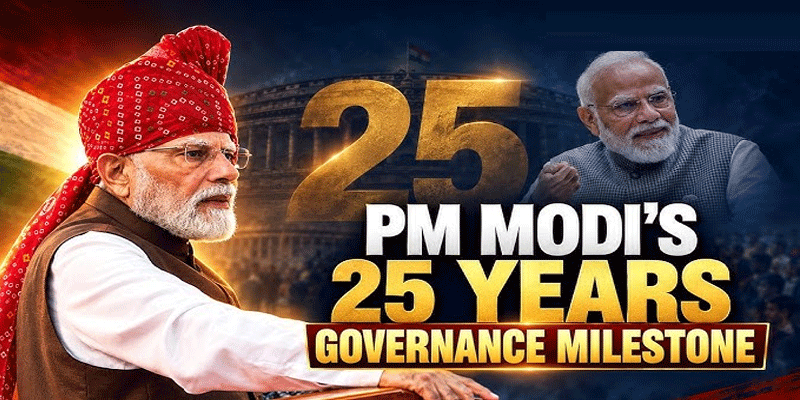
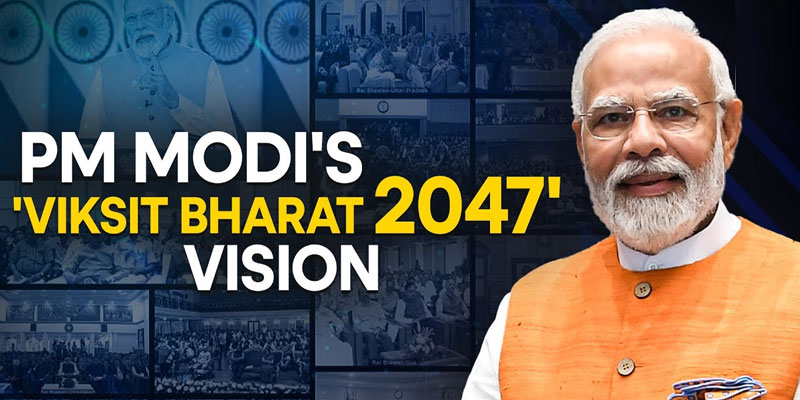
Prime Minister Narendra Modi's vision of transforming India into a developed nation by 2047, marking the centenary of the country's Independence, has emerged as the defining objective of the government's long-term policy framework. Envisioned under the Viksit Bharat 2047 mission, the goal extends beyond achieving higher economic growth to creating an inclusive, technologically advanced, environmentally sustainable and globally competitive India. As the government enters the next phase of implementation, the focus is increasingly shifting from articulating ambitious goals to ensuring effective execution through coordinated governance and institutional reforms.
Viksit Bharat and the Aatmanirbhar Framework
The Viksit Bharat vision represents a comprehensive national development strategy that seeks to position India among the world's developed economies over the next two decades. While sustained GDP growth remains an important pillar, the broader agenda also encompasses improvements in education, healthcare, infrastructure, governance, environmental sustainability and quality of life.
Closely linked to this vision is the Aatmanirbhar Bharat initiative, which aims to strengthen India's domestic manufacturing capabilities, enhance technological self-reliance, build resilient supply chains and reduce excessive dependence on external markets. Since its launch, the self-reliance framework has expanded beyond industrial policy to include reforms in taxation, financial systems, labour markets, logistics and ease of doing business, reflecting a holistic approach to nation-building.
High-Level Secretaries' Meeting Focuses on Delivery
Prime Minister Modi's recent high-level meeting with Union Secretaries marks an important transition from policy formulation to implementation. Coming shortly after the Council of Ministers' review, the meeting underscored the government's intent to align political priorities with administrative execution.
A key message from the Prime Minister was the need to eliminate departmental silos that often slow policy implementation. Ministries were encouraged to function as parts of an integrated governance system rather than as isolated administrative units. This emphasis on inter-ministerial collaboration reflects the recognition that complex development challenges require coordinated planning and seamless execution across sectors.
The meeting also highlighted the growing importance of the PM GatiShakti National Master Plan, which seeks to integrate infrastructure planning, logistics, connectivity and service delivery through a common digital platform. By enabling ministries to share information and coordinate projects more effectively, the initiative aims to reduce duplication, improve project sequencing and accelerate infrastructure development.
Reforms Remain Central to Long-Term Growth
The government considers the coming decade crucial for laying the institutional foundation necessary to achieve the 2047 vision. Consequently, governance reforms are being placed on par with economic reforms, recognising that efficient administration directly influences investment, productivity and public service delivery.
The reform agenda focuses on faster decision-making, improved coordination, transparent governance and better utilisation of public resources. Simultaneously, the Aatmanirbhar framework continues to encourage domestic production, innovation, skill development and stronger industrial ecosystems capable of supporting sustained economic expansion.
If implemented consistently, these reforms could reduce administrative bottlenecks, improve investor confidence, enhance infrastructure efficiency and strengthen India's competitiveness in the global economy while generating greater employment opportunities.
Building State Capacity for a Developed India
The latest meeting between Prime Minister Modi and Union Secretaries signals that the Viksit Bharat 2047 mission is entering a decisive implementation phase. The emphasis on reforms, institutional coordination, self-reliance and integrated governance reflects an understanding that India's development ambitions will ultimately depend on the effectiveness of state capacity rather than policy announcements alone. By encouraging ministries to work collaboratively, leveraging platforms such as PM GatiShakti and sustaining structural reforms, the government is seeking to build a governance model capable of delivering long-term national transformation. The success of the developed India vision will therefore rest not only on economic growth but also on consistent execution, administrative efficiency and policy continuity over the next two decades.
(With agency inputs)