OP Rajbhar’s Bombshell Claim Escalates Political Tensions
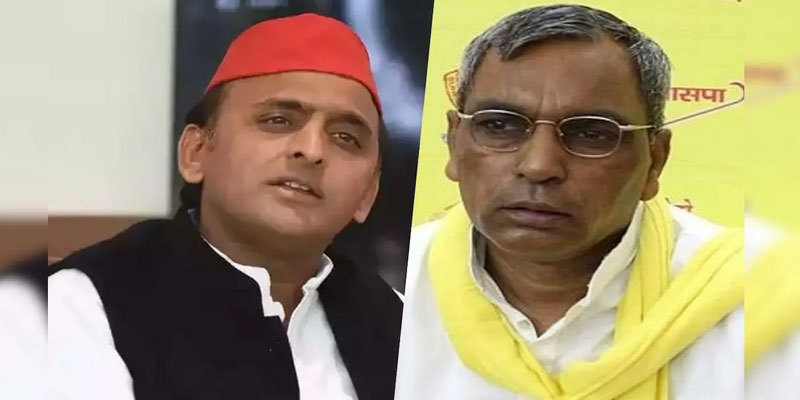
Uttar Pradesh Cabinet Minister and Suheldev Bharatiya Samaj Party (SBSP) President Om Prakash Rajbhar has triggered a fresh political controversy by claiming that the Samajwadi Party (SP) is heading towards a major split. Rajbhar alleged that several leaders, including MPs, are prepared to join the Bharatiya Janata Party (BJP), and linked his claim to an alleged letter submitted by senior SP leader Ram Gopal Yadav to Union Home Minister Amit Shah. The remarks have intensified the ongoing war of words between Rajbhar and the SP leadership, adding a new dimension to Uttar Pradesh’s evolving political landscape ahead of the 2027 Assembly elections.
A Political Contest Gathering Momentum
The latest exchange comes at a time when political parties in Uttar Pradesh are recalibrating their strategies after the 2024 Lok Sabha elections. The Samajwadi Party emerged as a significant challenger to the BJP in the state, improving its electoral performance and strengthening its position within the opposition alliance framework.
Against this backdrop, Rajbhar’s allegations have drawn attention because they touch upon both internal party dynamics and past corruption controversies that have long shadowed the SP. The claims have also revived discussions around investigations linked to the Gomti Riverfront project and the alleged mining scam during previous SP governments.
The Letter Controversy at the Centre
Rajbhar’s allegations revolve around an alleged letter written by Ram Gopal Yadav to Amit Shah. According to Rajbhar, the letter referred to individuals allegedly linked to corruption cases and reflected growing anxiety within the Samajwadi Party as investigations continued.
He suggested that pressure from ongoing probes had created unease within the party and implied that some leaders were seeking political protection. However, no evidence supporting these assertions has been publicly presented, and the SP has strongly rejected the allegations.
Key Factors Behind the Claim
· Corruption Cases Remain a Political Weapon
One of the key factors behind Rajbhar’s claim is the continued political relevance of corruption investigations involving the previous SP government. The Gomti Riverfront project, a flagship initiative during SP rule, and allegations linked to mining activities have remained subjects of scrutiny for years.
By invoking these cases, Rajbhar appears to be highlighting issues that could potentially damage the opposition’s credibility.
· Escalating Rajbhar-SP Rivalry
The claim also reflects the increasingly confrontational relationship between Rajbhar and SP chief Akhilesh Yadav. Over recent months, both sides have exchanged criticism on issues ranging from law and order to political leadership and social media remarks.
The latest allegations fit into a broader pattern of political attacks aimed at shaping public perception ahead of future electoral contests.
· The 2027 Assembly Elections Factor
With the next Uttar Pradesh Assembly election approaching, political messaging has intensified. Claims of defections or internal discord are often used to project weakness within rival parties. Rajbhar’s assertion that SP leaders are prepared to switch sides can therefore be viewed as part of a larger effort to influence the political narrative before the electoral battle gains momentum.
SP’s Strong Rebuttal
The Samajwadi Party has dismissed the allegations outright. Party spokespersons accused Rajbhar of making provocative statements to remain politically relevant, while Akhilesh Yadav rejected suggestions of any internal crisis. The SP leadership has maintained that the party remains united and focused on strengthening its organisation.
Politics, Perception and Electoral Positioning
Rajbhar’s dramatic claim has undoubtedly generated political buzz, but there is currently little evidence to suggest that the Samajwadi Party faces an imminent split. The controversy appears to be as much about shaping perceptions as it is about exposing alleged vulnerabilities. As Uttar Pradesh moves closer to the 2027 Assembly elections, such exchanges are likely to become more frequent, reflecting the intense competition for political advantage in India’s most crucial electoral battleground.
(With agency inputs)