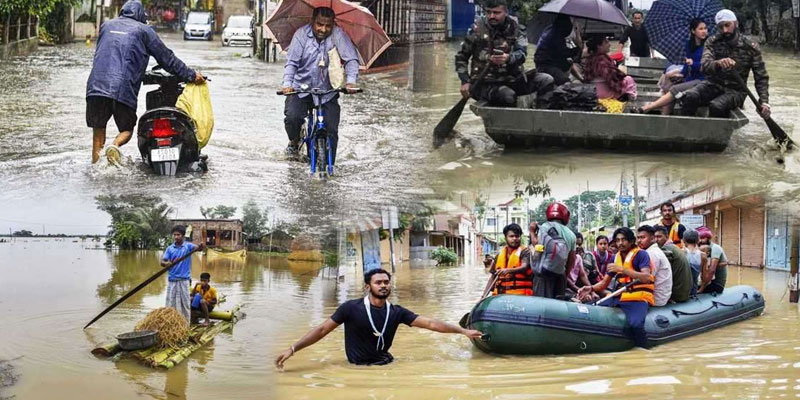
Upper Assam Floods Turn into Major Humanitarian Crisis
More than 21 people lost their lives within 24 hours as relentless monsoon rains triggered severe floods across Upper Assam, displacing thousands and forcing them into relief camps. The latest tragedy has pushed the season's death toll across Assam, the Northeast and Himalayan states beyond 120, highlighting how this year's monsoon has evolved from a seasonal challenge into a large-scale humanitarian emergency marked by extreme rainfall, overflowing rivers, landslides and fragile infrastructure.
The disaster has stretched rescue agencies and exposed the growing vulnerability of flood-prone regions to increasingly intense weather events.
Heavy Rains Intensify Flood Emergency
According to the Assam State Disaster Management Authority (ASDMA), incessant rainfall rapidly worsened flood conditions across Upper Assam within a single day. The worst-affected districts include Sivasagar, Charaideo, Jorhat and Golaghat, where swollen rivers breached embankments and inundated villages, agricultural land and road networks.
Floodwaters Swamp Villages and Cut Off Communities
Several rivers, including the Dikhow and other tributaries of the Brahmaputra, crossed danger levels, flooding vast stretches of land.
The impact includes:
· Embankments breached at multiple locations.
· Villages and cropland submerged.
· Roads and bridges washed away, isolating many areas.
· Thousands forced to shift to relief camps and elevated shelters.
Many remote villages remain inaccessible, making rescue operations and damage assessment increasingly difficult.
Relief Operations Intensified
The Assam government has significantly expanded relief efforts.
Key measures include:
· Over 100 relief camps opened across affected districts.
· Around 9,600 displaced people currently accommodated in camps.
· Food, drinking water and medical assistance being provided.
· Army units and Spear Corps flood-relief teams deployed for rescue operations.
· Hundreds of stranded residents evacuated through continuous day-and-night operations.
Despite these efforts, officials acknowledge that several flood-hit pockets remain cut off because of damaged transport infrastructure.
Northeast and Himalayan States Also Battling Disaster
The Upper Assam tragedy forms part of a wider regional crisis affecting the Northeast and Himalayan belt.
Recent heavy rainfall has triggered:
· Floods in Assam and Meghalaya.
· Landslides in Arunachal Pradesh, Nagaland and Mizoram.
· House collapses and slope failures in hilly regions.
· Large-scale displacement across multiple states.
The cumulative death toll across these regions has now crossed 120, making it one of the deadliest phases of this year's monsoon.
Climate Change and Infrastructure Challenges
Experts say the disaster reflects more than just heavy rainfall.
Major concerns include:
· More frequent extreme rainfall linked to climate change.
· Aging and poorly maintained embankments.
· Settlements expanding into floodplains and unstable hill slopes.
· Weak drainage and transport infrastructure unable to withstand intense downpours.
· Challenges in last-mile early warning and evacuation during rapidly developing floods.
The crisis also underscores the need for better coordination among northeastern and Himalayan states that share interconnected river systems and weather patterns.
Building Resilience Beyond Immediate Relief
While rescue and rehabilitation remain the immediate priorities, Assam's latest flood disaster highlights the urgent need for long-term climate resilience. Strengthening embankments, modernising drainage systems, improving early-warning networks and building disaster-resilient infrastructure will be essential as extreme weather events become more frequent. The tragedy serves as a stark reminder that managing future monsoons will require not only emergency response but also sustained investment in climate adaptation, regional coordination and resilient development to safeguard vulnerable communities.
(With agency inputs)