
Violence in Noida’s industrial belt over wage demands has forced the district administration to respond with a dual strategy—firm law enforcement combined with a structured package of labour-welfare assurances. The unrest, which spilled onto key infrastructure like the DND Flyway, highlights how unresolved workplace grievances can quickly escalate into disruptions with both economic and political consequences.
How a Labour Protest Spiralled into Violence
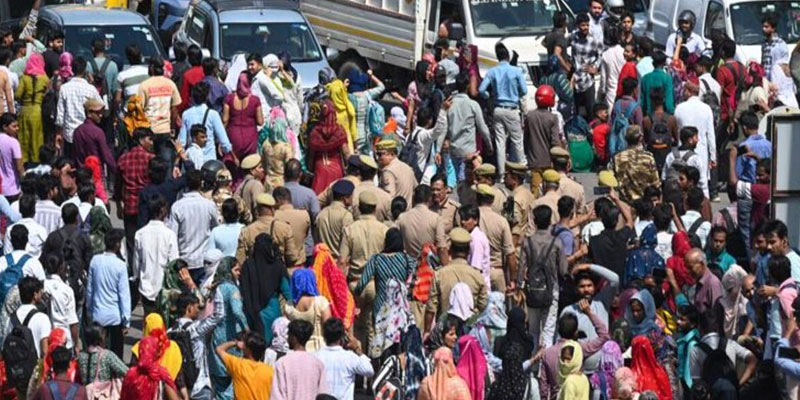
What began as a three-day labour union protest in Noida Phase 2 and parts of Greater Noida intensified dramatically on Monday. Workers, initially demanding higher wages and improved working conditions, blocked major roads connecting to Delhi, triggering massive traffic snarls.
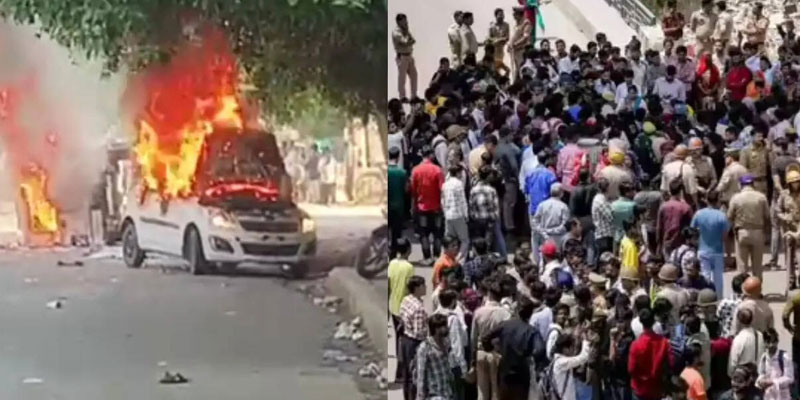
In industrial sectors such as Sectors 1 and 84, the agitation turned violent. Protesters allegedly vandalised property, set vehicles ablaze, and clashed with police. Security forces responded with crowd-control measures including lathi charges and tear gas. Visuals of burning vehicles and blocked highways spread rapidly, amplifying public concern.
While the immediate trigger was a deadlock over wage negotiations and unpaid overtime, the scale of the unrest pointed to deeper, long-standing dissatisfaction with job security, wages, and working conditions.
Administrative Response: Enforcement Meets Assurance
Amid escalating tensions, Gautam Buddh Nagar District Magistrate Medha Roopam appealed for calm and promised stricter enforcement of labour laws. Following discussions with industry representatives and worker unions, the administration introduced binding directives for factories across Noida and Greater Noida.
These include mandatory double wages for overtime, guaranteed weekly offs, timely salary payments by the 10th of each month, and direct bank transfers for bonuses. Factories are now required to issue salary slips to ensure transparency. Additionally, all establishments must set up Internal Complaints Committees under the POSH Act to address workplace harassment.
The administration has also committed to regular inspections, signalling a shift from passive regulation to active enforcement.
Deeper Issues: Why the System Broke Down
Most announced measures are not new; they are already mandated under laws such as the Factories Act 1948 and the Payment of Wages Act 1936. However, the unrest underscores a persistent gap between legislation and implementation.
Workers have long complained about delayed wages, lack of overtime compensation, and absence of basic workplace protections. In densely packed industrial zones dependent on migrant labour, such gaps create a fragile equilibrium—one that can collapse rapidly under stress.
Impact on Industry: Rising Costs, Restored Stability
For industry, stricter compliance will increase operational costs and reduce flexibility in managing labour shifts. Smaller firms, in particular, may struggle to absorb these changes. However, the alternative—frequent disruptions and labour flight—poses a far greater risk.
By institutionalising worker protections, the administration aims to restore stability and reduce the likelihood of sudden protests that can halt production and disrupt supply chains.
A Broader Pattern in Urban Industrial India
The Noida episode reflects a wider trend across India’s manufacturing hubs. High dependence on migrant workers, coupled with limited social safety nets, makes these ecosystems highly sensitive to wage-related disputes. When grievances go unaddressed, they can quickly spill beyond factory gates, paralysing urban mobility and affecting public life.
The blockage of a critical artery like the DND Flyway underscores how industrial unrest is no longer confined to workplaces—it has city-wide implications.
Enforcement as the New Imperative
The administration’s response marks a significant shift—from reactive policing to proactive governance. By focusing on enforcing existing labour laws, authorities acknowledge that sustainable industrial growth depends as much on worker welfare as on investment incentives.
The Noida unrest serves as a cautionary tale: ignoring basic labour rights can carry steep economic and reputational costs. Going forward, consistent enforcement, credible penalties, and ongoing dialogue between workers and employers will be essential to prevent such flashpoints. In India’s rapidly evolving industrial landscape, stability will hinge not just on output, but on fairness and trust within the workforce.
(With agency inputs)