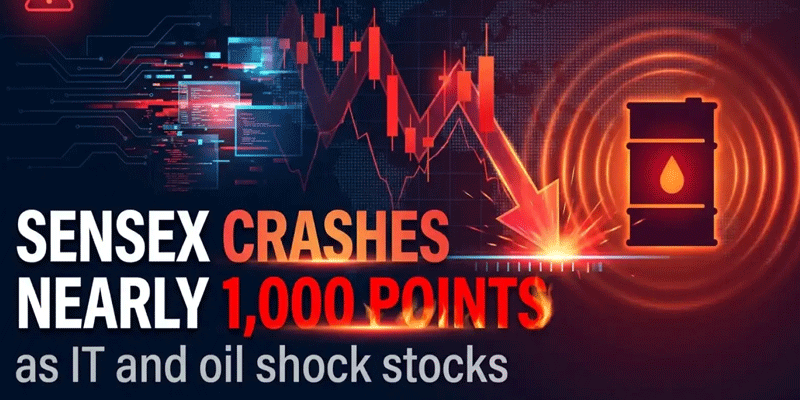
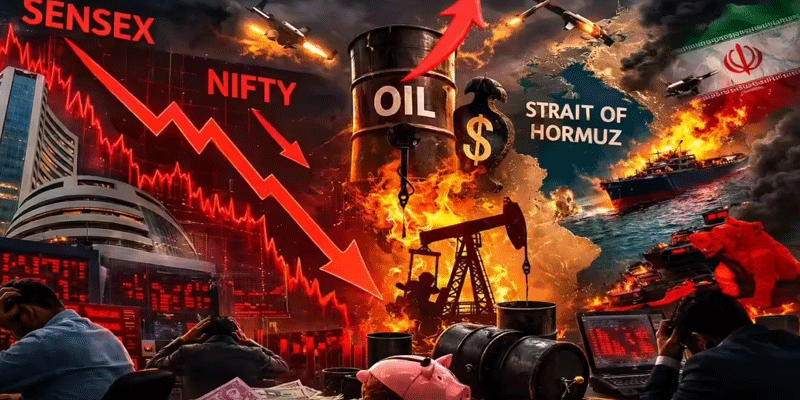
Indian equities opened sharply lower on Monday, reflecting a sudden shift in global sentiment. The collapse of U.S.–Iran talks in Islamabad and an announcement by Donald Trump of a naval blockade on Iranian ports reignited geopolitical risks in West Asia. Brent crude surged back above $100 per barrel, triggering a broad risk-off mood among foreign investors. Benchmark indices like the BSE Sensex and Nifty 50 fell nearly 2%, wiping out much of the previous week’s gains.
From Relief Rally to Sudden Reversal
Just days earlier, Indian markets had staged a strong rebound, rallying nearly 6% on hopes of a fragile ceasefire between the U.S. and Iran. Investors had bet on stabilising oil prices and reduced geopolitical tensions. However, the breakdown of negotiations and the proposed blockade—particularly around the strategically vital Strait of Hormuz—shattered those expectations.
Oil prices reacted instantly, jumping over 7% in early trade. For India, which imports a majority of its crude oil, this spike raises immediate concerns about inflation, currency stability, and corporate profitability.
Investor Behaviour: Foreign Exit, Domestic Support
Foreign portfolio investors (FPIs) have been quick to respond to the uncertainty. Heavy selling in March continued into April, as global funds shifted capital toward safer assets. This exodus has significantly pressured Indian equities.
At the same time, domestic institutional investors (DIIs), supported by steady inflows into mutual funds, have provided some cushion. Retail investors, increasingly adopting systematic investment plans (SIPs), have helped stabilise markets despite global turbulence. This tug-of-war between foreign outflows and domestic inflows is now defining market resilience.
Why Oil Matters: Macro and Sectoral Pressures
The blockade’s biggest implication lies in energy disruption. A sustained rise in crude prices can lead to imported inflation, a widening current account deficit, and pressure on the rupee. Sectors heavily dependent on fuel—such as aviation, logistics, and chemicals—face immediate margin stress.
For the auto sector, the impact is both direct and indirect. Rising fuel costs increase manufacturing expenses, while inflation reduces consumer purchasing power. Together, these factors create a challenging environment for automakers.
Impact on Car Prices: A Dual Shock
The surge in oil prices is likely to push up car prices in India. Higher fuel costs increase transportation and logistics expenses across the supply chain—from raw materials to dealership delivery. Additionally, energy-intensive manufacturing processes become more expensive.
Automakers such as Maruti Suzuki, Tata Motors, and Mahindra & Mahindra may be forced to pass on these rising costs to consumers. This comes at a time when input costs—steel, components, and imported parts—are already elevated.
The result could be a noticeable increase in vehicle prices, potentially dampening demand, especially in price-sensitive segments. At the same time, higher fuel prices may shift consumer preference toward more fuel-efficient or electric vehicles, accelerating an ongoing industry transition.
A Volatile Outlook: Beyond a One-Day Fall
The sharp market decline is not just a reaction to a single event but signals a return to a high-volatility environment. Indian markets are increasingly sensitive to global geopolitical developments, particularly those affecting energy supply.
While India’s long-term growth story remains intact, near-term risks are tied to oil price movements and diplomatic developments. If crude stabilises above $100, earnings pressure and valuation corrections could intensify. Conversely, any breakthrough in negotiations could quickly restore investor confidence.
Global Shocks, Local Consequences
The latest market sell-off underscores how deeply global events influence India’s economic landscape. From stock indices to car prices, the ripple effects of geopolitical tensions are widespread. For policymakers and businesses, the challenge lies in navigating this uncertainty while maintaining stability. Ultimately, India’s resilience will depend on its ability to balance external shocks with strong domestic fundamentals in an increasingly interconnected world.
(With agency inputs)