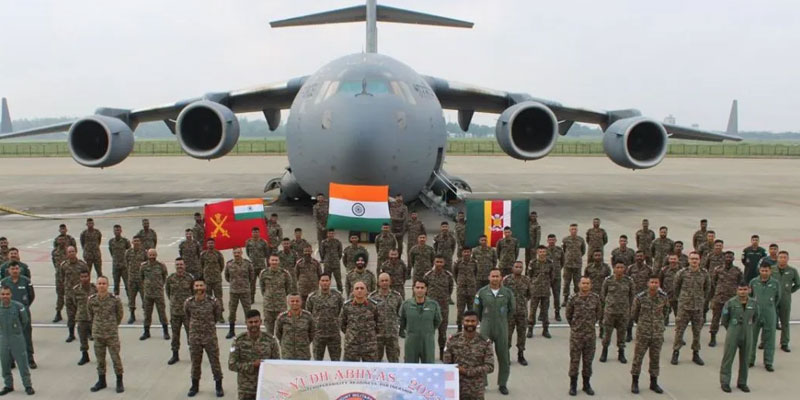
“An Indian Army contingent has reached Fort Wainwright, Alaska for the 21st edition of Yudh Abhyas 2025 (01 – 14 Sept). Alongside U.S. 11th Airborne Division troops, they’ll train in heliborne ops, mountain warfare, UAS/counter-UAS & joint tactical drills—boosting UN PKO & multi-domain readiness,” the MEA posted on X.
People aware of the geopolitics say the Yudh Abhyas between India and the United States is a balancing act amid both sides holding deliberations to broker the truce over tariffs. Defense officials also believe that the strategic partnership built over the last two decades between the two countries faces no risk due to the ongoing row over trade.
The objective of this exercise is to enhance joint training, coordination and combat skills between the armed forces of both countries.
Talking about the troops participating in this exercise, this time, soldiers from the Madras Regiment are representing India. On the other hand, soldiers from the 1st Battalion, 5th Infantry Regiment (Bobcats) of the 11th Airborne Division are participating from the United States.
India-US tariff row
The US initially announced 25 per cent levies on India but later hiked them to 50 per cent, asserting that it was a penalty on New Delhi for fuelling the Ukraine war by buying oil from Russia.
India, however, raised objections and called the US tariffs ‘unjustified’ and ‘irrational’, asserting that several countries, including the European Union and the US itself, were ardently importing goods from Russia, and targeting India was a ‘double standard’ approach.
Despite tensions over tariffs, officials from both countries have been actively working to repair and strengthen bilateral ties. Notably, neither Prime Minister Modi nor his US counterpart has publicly criticized the other; instead, both leaders have often highlighted the historic and strategic importance of the relationship between the two nations.
Moreover, as per Trump’s claim, India offered to reduce the tariffs on US imports to zero when most of the countries announced retaliatory tariffs. This proves India wants to negotiate things on table to avoid confrontation with the US over trade.