Global Spotlight on India’s Resilience
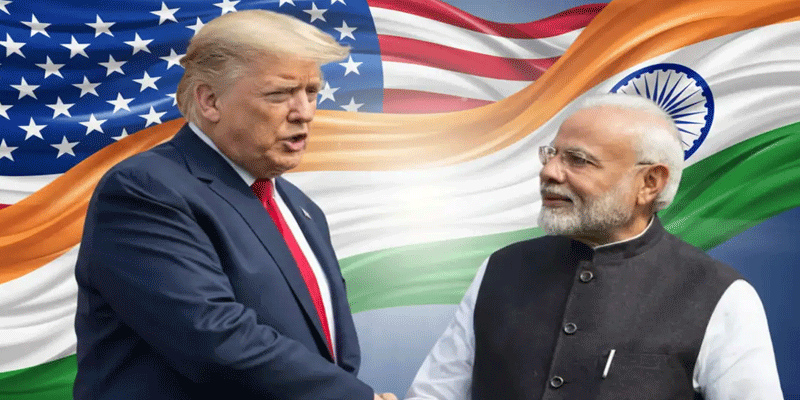
The world’s gaze has increasingly turned to India in recent years, not only for its remarkable economic momentum but also for the way it navigates external shocks. From digital innovation to industrial growth, New Delhi is being hailed as a future pillar of the global economy. The recent imposition of steep U.S. tariffs on Indian goods under President Donald Trump was expected to unsettle that trajectory. Yet, India’s calm handling of the turbulence—while expanding trade with Asia, Europe, and the Middle East—has drawn praise. In parallel, sharp criticism of Washington’s choices has emerged at home, led most recently by former U.S. National Security Advisor Jake Sullivan.
Sullivan’s Stinging Allegations
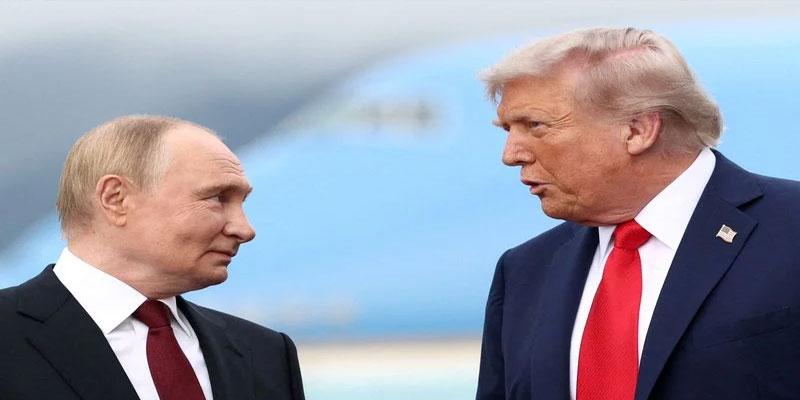
In a candid interview with MeidasTouch, Sullivan accused Trump of “throwing away” America’s decades-long investment in U.S.-India ties. According to him, the Trump administration sacrificed strategic partnership with the world’s largest democracy in favor of the president’s family’s business dealings in Pakistan. “Because of Pakistan’s willingness to do business with the Trump family, Trump has tossed aside the India relationship,” Sullivan charged, describing it as a “huge strategic harm” to U.S. interests.
For Sullivan, the damage was not limited to bilateral ties. The perception that Washington could discard a key partner so casually, he argued, sends tremors across capitals from Berlin to Tokyo: “That could be us tomorrow.”
India Targeted Over Russian Oil
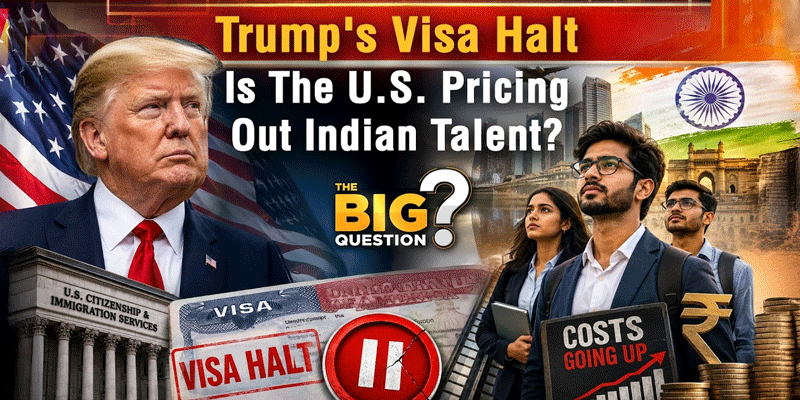
One of the flashpoints was India’s purchase of discounted Russian crude. While China and Europe were importing far larger volumes of Russian energy, Trump’s team singled out India, accusing it of indirectly funding Moscow’s war in Ukraine. The criticism was paired with economic punishment: a 25% tariff on Indian exports, later raised to 50% on certain categories.
Sullivan suggested this selective targeting reflected less of a strategic calculation and more of a political one, linked to the Trump family’s business priorities in Pakistan. Meanwhile, India defended its energy diversification as a measure to stabilize domestic markets, emphasizing compliance with global price-cap mechanisms.
Pakistan’s Sudden Diplomatic Upswing
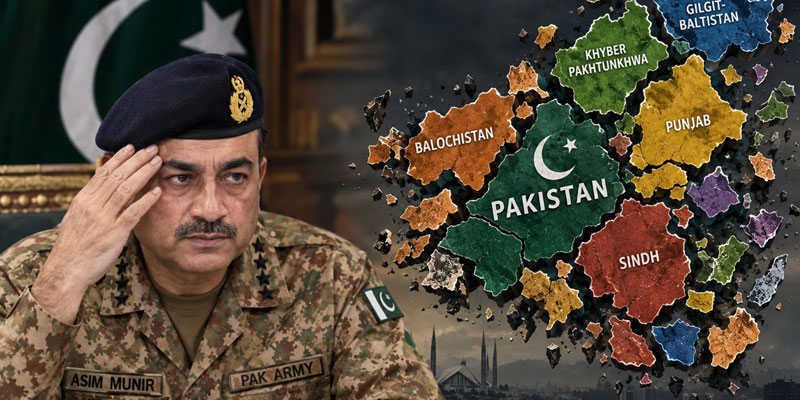
The backdrop to this pivot was an unexpected warming of U.S.-Pakistan relations. After years of icy ties, Pakistan’s army chief Asim Munir was welcomed at the White House. Soon after, Washington announced a trade deal with Islamabad, promising support for its untapped oil reserves. Even more controversially, World Liberty Financial Inc. (WLFI)—a crypto firm majority-owned by Trump’s family—inked partnerships with the Pakistan Crypto Council to promote blockchain investment.
Critics like Sullivan saw these moves as deeply entangled. He argued that by privileging personal business gains, the U.S. president undermined a relationship with India that had been carefully nurtured on a bipartisan basis for decades.
Undermining Trust in U.S. Commitments
Beyond South Asia, Sullivan warned of a broader consequence: erosion of trust in America’s reliability. For allies and partners who depend on Washington’s commitments, the perception that strategic interests could be sacrificed for private deals is destabilizing. “Our word should be our bond,” he stressed, adding that what was happening with India reverberated across alliances.
This, he said, was not merely about India—it was about the credibility of the United States in the eyes of friends and adversaries alike.
India’s Steady Hand
While U.S. policy zigzagged, India projected steadiness. New Delhi continued to expand ties with Europe and East Asia, secure energy at affordable rates, and promote itself as an alternative hub for global manufacturing. Multinationals, from Apple to Samsung, are deepening footprints in India, impressed by policy reforms and political stability. For many global observers, India’s ability to withstand tariff shocks while maintaining growth underscores its ascent as a reliable player in uncertain times.
A Strategic Test for Both Nations
Sullivan’s critique shines a light on a paradox: as the world lauds India’s pragmatic rise, American policy under Trump appeared to undermine rather than leverage this trajectory. For India, the episode demonstrates the value of resilience and diversification, ensuring no single partnership can dictate its economic future. For the U.S., it is a cautionary tale—allowing personal interests to overshadow strategic ones weakens alliances and emboldens competitors.
Ultimately, a strong U.S.-India relationship serves not just the two countries but the global balance. The path forward will require rebuilding trust, aligning long-term goals, and recognizing that India’s rise is not a challenge to be contained but an opportunity to be embraced.
(With agency inputs)