Indonesia Finalizes Deal for India’s BrahMos Missile
Indonesia has finalized a deal to procure India’s BrahMos supersonic cruise missile system, marking a significant milestone in defence cooperation between the two countries. The agreement represents the second confirmed export success for the missile after the Philippines and signals India’s growing presence in the global arms market.
According to Indonesian defence officials, the procurement is part of Jakarta’s broader effort to modernize its military, particularly its maritime defence capabilities. The deal—estimated earlier to be worth between $200 million and $350 million—will likely begin with the purchase of one coastal missile battery, with plans for phased expansion in the future.
What Makes BrahMos a Powerful Weapon
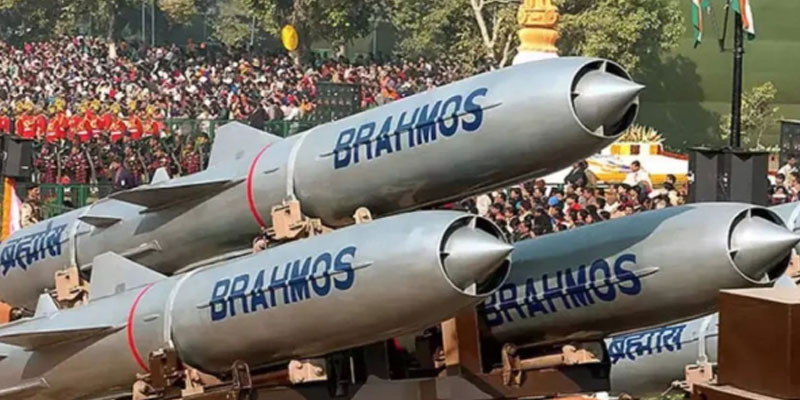
The BrahMos missile is widely regarded as one of the most formidable cruise missiles currently in operation. Developed jointly by India’s Defence Research and Development Organisation (DRDO) and Russia’s NPO Mashinostroyenia through the BrahMos Aerospace joint venture, the weapon combines high speed, precision, and multi-platform versatility.
Capable of traveling at speeds of around Mach 2.8 to Mach 3—nearly three times the speed of sound—the missile is significantly faster than most subsonic cruise missiles. Its operational range varies by version but generally falls between roughly 290 km and extended variants approaching 500–600 km.
One of BrahMos’ key advantages lies in its versatility. It can be launched from land-based batteries, warships, submarines, and fighter aircraft. The missile follows a sea-skimming trajectory that allows it to fly at extremely low altitudes, making it difficult for enemy radar systems to detect and intercept. These capabilities have made BrahMos a central pillar of India’s own military strategy and a highly attractive export product.
Which Countries Are Buying BrahMos
Indonesia will become the second foreign customer for the BrahMos missile system. The Philippines was the first country to purchase the system in 2022 under a $375 million deal that included three coastal missile batteries. The first delivery took place in 2024 as part of Manila’s effort to strengthen its coastal defence in the South China Sea.
Interest in BrahMos is expanding rapidly across multiple regions. Several Southeast Asian countries—including Vietnam and Malaysia—have explored similar purchases, while nations in the Middle East and Latin America have also expressed interest in acquiring the system. The growing demand reflects both the missile’s proven capabilities and India’s increasing push to become a major defence exporter.
Why Indonesia Needs the Missile System
Indonesia’s decision to acquire BrahMos is closely tied to its evolving security environment. As the world’s largest archipelagic state, Indonesia must protect thousands of islands and extensive maritime boundaries. The North Natuna Sea, located near disputed areas of the South China Sea, has become an increasingly sensitive zone due to overlapping claims and the presence of foreign vessels.
Deploying a high-speed coastal defence missile system allows Indonesia to strengthen its maritime deterrence without dramatically expanding its naval fleet. By placing BrahMos batteries along strategic coastal points, Jakarta can monitor and potentially deny hostile ships access to critical waters.
The procurement also aligns with Indonesia’s long-term defence modernization roadmap known as the “Minimum Essential Force,” which aims to upgrade military capabilities between 2024 and 2044.
A Strategic Boost for Both Nations
Indonesia’s BrahMos purchase highlights a shifting balance in the Indo-Pacific defence landscape. For Jakarta, the missile system strengthens coastal defence and improves its ability to safeguard strategic waters. For India, the deal marks another step toward establishing itself as a major exporter of advanced defence technology.
Beyond the immediate military benefits, the agreement also deepens strategic ties between the two countries. As interest in BrahMos continues to grow globally, the missile is rapidly becoming a symbol of India’s expanding role in the international defence market and the evolving security architecture of the Indo-Pacific.
(With agency inputs)