Protests as France’s Political Pulse
In France, street demonstrations are more than expressions of anger — they are often a powerful political barometer. From student uprisings in 1968 to the “Yellow Vest” movement a decade ago, protests have repeatedly reshaped public policy and tested governments. On Wednesday, that legacy was renewed as mass demonstrations erupted across the country, underscoring the volatility of French politics.
A Nationwide Wave of Disruption
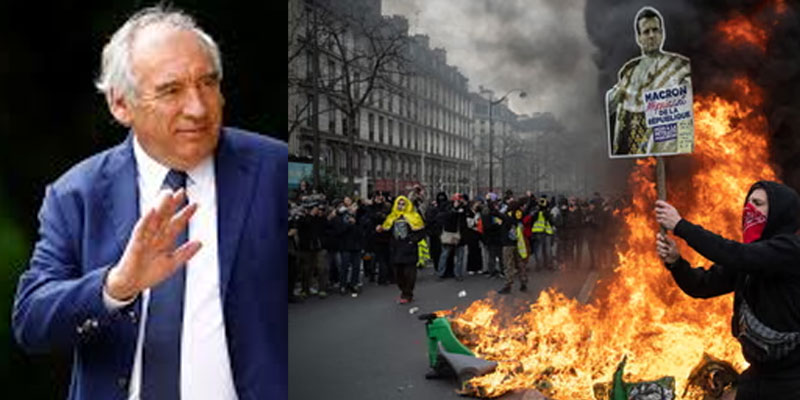
The latest unrest, branded as the “Bloquons Tout” (“Block Everything”) movement, saw protesters block roads, burn vehicles, and clash with police in Paris and other cities. Nearly 200 arrests were made in the opening hours despite the deployment of 80,000 police officers nationwide.
Interior Minister Bruno Retailleau described the situation as an attempt to create “a climate of insurrection,” citing incidents such as a bus set ablaze in Rennes and damage to a power line in the southwest that halted train services. Though the disruption fell short of the movement’s ambition to paralyze the country, it created multiple flashpoints of confrontation.
Political Backdrop: A Government in Transition
The demonstrations coincided with a moment of political fragility. Prime Minister François Bayrou was ousted this week after losing a parliamentary confidence vote. His replacement, Sébastien Lecornu, appointed just a day earlier, was immediately confronted with nationwide unrest — a symbolic “baptism of fire.”
President Emmanuel Macron, already familiar with street opposition, faces renewed challenges in stabilizing his leadership. His first term was marred by the Yellow Vest uprising, while his second has been dominated by controversy over pension reforms and riots in 2023 following the police killing of a teenager in a Paris suburb.
“Block Everything”: Leaderless but Loud
Unlike traditional labor strikes or party-led protests, “Block Everything” grew virally online through social media and encrypted messaging channels. The movement has no clear leadership structure, making it harder for authorities to negotiate or contain.
Its grievances are wide-ranging: resistance to budget cuts proposed by Bayrou, anger over inequality, and general discontent with Macron’s perceived elitist governance. This spontaneity and diversity of voices echo the Yellow Vest protests, which also began without centralized leadership but mushroomed into a national revolt.
Scenes on the Ground
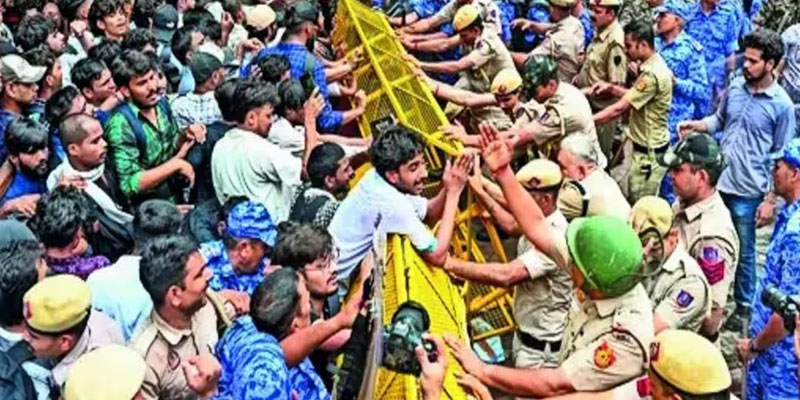
In Paris, protesters attempted multiple times to block the peripheral beltway, causing chaos during rush hour. Barricades were erected, objects were hurled at police, and burning tyres added to the atmosphere of confrontation. Police responded with tear gas barrages to disperse crowds, but the scattered actions kept traffic snarled and tensions high.
Across provincial cities, smaller but symbolic acts of resistance — from vandalism to infrastructure sabotage — reinforced the sense of a nationwide wave of discontent, even if not at the scale seen in earlier crises.
The Bigger Picture: A Pattern of Discontent
For Macron, the latest turmoil is part of a broader cycle of unrest that has characterized his presidency. Economic reforms, perceived inequality, and questions over democratic accountability have repeatedly triggered waves of dissent. France’s protest culture, deeply embedded in its political DNA, often translates online frustration into street-level mobilization.
Another Stress Test for France’s Democracy
While Wednesday’s protests may not have completely “blocked everything,” they have highlighted the fragility of France’s political order and the depth of public mistrust. Macron’s new prime minister faces an immediate test of authority, while the president himself must once again balance reformist ambitions with the realities of street opposition.
If France is to break out of this cycle of protest and crisis, leaders will need to address not only budgetary concerns but also the deeper social fractures fueling anger — from inequality to alienation from political elites. Otherwise, movements like “Block Everything” will remain a recurring reminder that in France, political legitimacy is as much tested in the streets as in parliament.
(With agency inputs)