India Builds Strong Medal Momentum in Glasgow
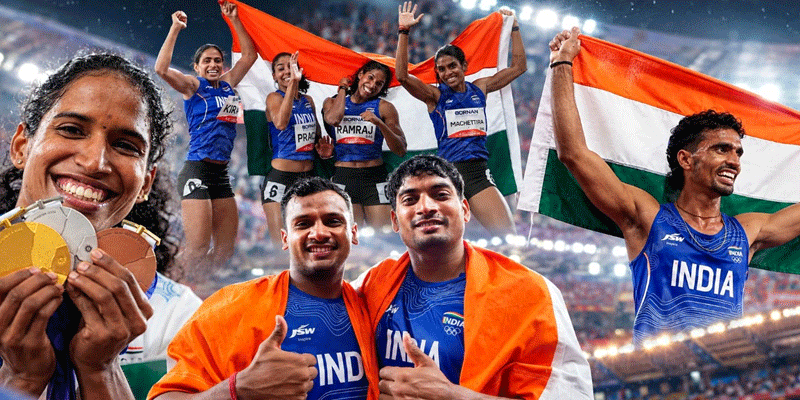
India’s campaign at the Commonwealth Games 2026 in Glasgow has gathered significant momentum, with weightlifting, athletics and para sports emerging as the strongest pillars of its medal challenge. The tally cited in the initial update stood at 15 medals—three gold, nine silver and three bronze—but subsequent results have taken India’s haul higher. By the latest available update on July 30, India had reached 17 medals: three gold, 10 silver and four bronze, placing the country ninth in the standings.
India’s Commonwealth Legacy
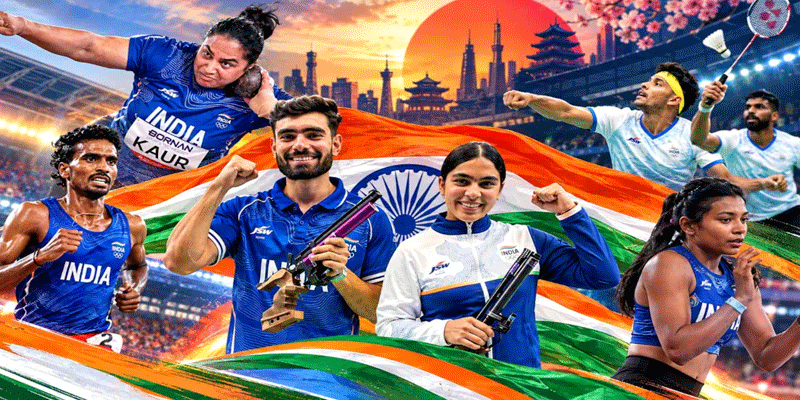
Glasgow 2026 is another important chapter in India's long Commonwealth Games journey. India has traditionally been among the leading medal-winning nations, with weightlifting, wrestling, shooting and boxing historically providing much of its success. With shooting and some other traditional strengths not dominating this edition, the early Glasgow campaign is notable for the growing contribution from athletics and para sports.
The 2026 performance is therefore significant not simply because of the medal count, but because of the diversification of India's podium finishes.
India’s Latest Medal Tally: 3 Gold, 10 Silver, 4 Bronze
The latest available tally stands at:
· Gold: 3
· Silver: 10
· Bronze: 4
· Total: 17
· Current position: 9th
The original 15-medal tally has since been surpassed, with Murali Sreeshankar's silver and Dilip Mahadu Gavit's gold, along with other results, strengthening India's position.
Mirabai Chanu Leads Historic Weightlifting Charge
Weightlifting remains one of India's most reliable medal-producing disciplines. Mirabai Chanu opened India's gold account in the women's 48kg category, delivering a dominant performance and securing her third Commonwealth Games gold.
Other Indian lifters, including Rishikant Singh, Raja Muthupandi, Valluri Ajaya Babu and Gyaneshwari Yadav, have contributed silver medals, while Bindyarani Devi added bronze. Their performances demonstrate that India's strength in lifting extends beyond established champions.
Para Athletes Rewrite India’s Commonwealth Story
Perhaps the most striking feature of India's campaign is the emergence of para-athletics as a central medal engine. Sharmila Dhankar created history with gold in the women's F57 shot put, while Dilip Mahadu Gavit won gold in the men's T47 100m.
Gavit's victory was especially notable because Mohammed Basil took silver in the same event, giving India a historic one-two finish. Para powerlifter Jhandu Kumar also contributed a bronze, underlining the increasing depth of India's para-sport programme.
Athletics Adds New Depth to Medal Campaign
Athletics, traditionally a tougher medal territory for India at the Commonwealth Games, has produced encouraging results. Sarvesh Kushare won silver in the men's high jump, while Murali Sreeshankar secured his second consecutive Commonwealth Games long-jump silver. Distance runner Gulveer Singh has also added to India's athletics medal haul.
These performances suggest that India's track-and-field programme is steadily developing a broader competitive base.
The Bigger Picture: From Medal Count to Sporting Depth
India's Glasgow campaign is increasingly significant because of where the medals are coming from. Weightlifting continues to provide proven strength, while para-athletics and mainstream athletics are assuming a much larger role. With boxing medal rounds and other events still unfolding, India's final tally could rise further.
The immediate challenge will be converting remaining opportunities into gold medals and improving its overall ranking. Yet Glasgow 2026 has already demonstrated an important transformation: India's Commonwealth success is becoming less dependent on a handful of traditional disciplines. The growing contribution of para-athletes, lifters and track-and-field competitors’ points towards a broader and potentially more sustainable sporting ecosystem—one that could strengthen India's ambitions well beyond Glasgow.
(With agency inputs)