Rising Input Costs Intensify Inflationary Pressures Across the Economy
From crude oil to metals, what's driving India's 12.29% wholesale inflation? India's wholesale price index (WPI) inflation accelerated to 12.29% in October 2026, compared with 11.39% in September, signalling intensifying price pressures across the production and manufacturing sectors. The latest data point to a broad-based increase in wholesale costs, with energy, metals and chemicals among the key contributors identified by the government. Cumulative WPI inflation during April–October stood at 10.14%, against minus 0.30% during the corresponding period of the previous financial year.
Understanding the Wholesale Inflation Surge
According to provisional data released by the Ministry of Commerce and Industry, India's wholesale price index rose to 113.3 in October from 112.5 in September.
WPI measures price movements at the wholesale or producer level, capturing changes in the cost of raw materials, intermediate goods and manufactured products before they reach consumers. Unlike the Consumer Price Index (CPI), which tracks retail prices, WPI provides an early indication of emerging production-cost pressures.
Fuel and Power Emerge as Major Inflation Drivers
Fuel and power recorded the sharpest acceleration, with inflation climbing to 32.84% in October from 25.85% in September. Rising crude oil, energy and commodity costs have significantly increased the expenses associated with production, transportation and industrial operations.
Other components also reflected considerable pressure:
· Primary articles: Inflation increased to 9.24% from 8.67%, indicating higher agricultural and mineral input costs.
· Manufactured products: Inflation moderated slightly to 9.54% from 9.76%, although factory-gate price pressures remained elevated.
· WPI food index: Inflation eased marginally to 8.58% from 8.66%.
The figures indicate that energy costs remain the dominant source of wholesale inflation, despite modest moderation in certain categories.
Wholesale Prices Could Push Retail Inflation Higher
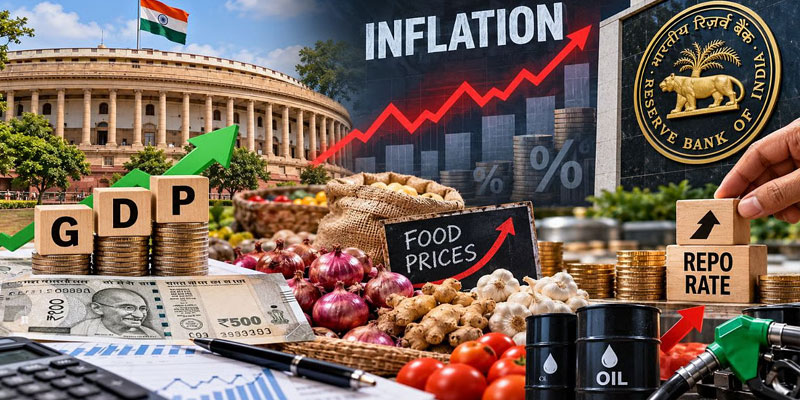
The WPI surge assumes significance because higher production and transportation costs can eventually pass through to consumers. India's retail inflation also increased to 6.09% in October from 5.54% in September, crossing the Reserve Bank of India's 6% upper tolerance limit.
Although food prices were the principal driver of retail inflation, rising energy and raw-material expenses could increasingly influence broader consumer prices.
RBI Faces a Difficult Monetary Policy Choice
Economists anticipate further monetary tightening, with expectations of another repo-rate increase in December following October's 25-basis-point hike. Some analysts have suggested that rates could rise by another 25–50 basis points, depending on food inflation and emerging economic conditions.
Inflation Control Will Test India's Economic Resilience
Ultimately, October's 12.29% WPI inflation signals that India's price pressures extend beyond individual commodities. Sustained energy costs could increase manufacturing expenses, weaken business margins and eventually burden households. Stable crude prices, improved supply conditions and effective inflation management will therefore be essential. The challenge for policymakers is to contain inflation without undermining investment, consumption and economic growth.
(With agency inputs)