A Turbulent Backdrop
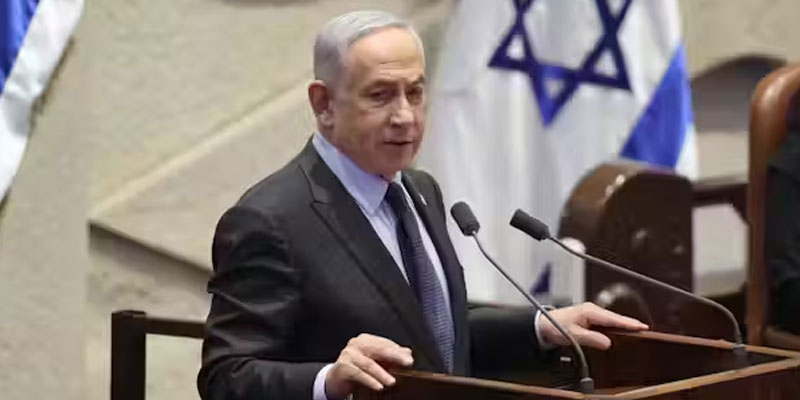
Israel’s latest actions have escalated tensions in an already volatile region. Just days after a failed attempt to target Hamas leaders in Qatar—a move widely condemned abroad—Prime Minister Benjamin Netanyahu reignited one of the most contentious settlement projects in the West Bank. At a signing ceremony in Maale Adumim, he declared unequivocally: “There will never be a Palestinian state. This place is ours.” The announcement has not only outraged Palestinians but also drawn sharp criticism from the international community, which sees the move as a fatal blow to the two-state solution.
The E1 Settlement Project Revived
The focal point of Netanyahu’s declaration is the E1 area, a 12-square-kilometer stretch of land east of Jerusalem that connects to the settlement of Maale Adumim. Long disputed, the project envisions building 3,400 homes alongside new roads and infrastructure worth nearly USD 1 billion. Israel’s defense ministry planning body has now given final approval, ending years of freezes imposed after strong objections from Washington and European capitals in 2012 and 2020.
Critics warn that this development would sever the West Bank, effectively cutting off the north from the south while encircling East Jerusalem. Such a move, they argue, would make a geographically contiguous and viable Palestinian state impossible to achieve.
Global Backlash and Growing Isolation
International reaction has been swift. The United Nations, European Union, and numerous governments—including Britain and France—condemned the decision. UN Secretary-General António Guterres described the plan as an “existential threat” to a future Palestinian state. With growing impatience over Israel’s continuation of the Gaza war and its disregard for ceasefire appeals, several Western nations are now openly considering recognition of Palestinian statehood at the upcoming UN General Assembly.
This potential shift marks a diplomatic warning: if Israel continues settlement expansion, it risks not only international isolation but also formal recognition of Palestine by states that have long supported negotiations instead.
Israel’s Position on Legality
Israel disputes claims that the settlements violate international law. While the Fourth Geneva Convention prohibits an occupying power from transferring its population into occupied territories, Israel argues the West Bank was not under recognized sovereignty before the 1967 Six-Day War. Officials further insist that settlers move voluntarily rather than being transferred by the state.
Nevertheless, the overwhelming global consensus, reiterated in repeated UN Security Council resolutions, is that all Israeli settlements in the West Bank—including E1—are illegal. For many, this project represents not just an expansion but a de facto annexation of occupied land.
The Endangered Two-State Vision
The timing of Netanyahu’s declaration coincides with mounting skepticism about the viability of a two-state solution. Since Hamas’s October 2023 attack triggered renewed fighting in Gaza, far-right members of Israel’s coalition have grown bolder in calling for outright annexation of the West Bank. Finance Minister Bezalel Smotrich has been one of the loudest advocates of the E1 project, framing it as part of Israel’s permanent hold over the territory.
For Palestinians, the consequences are stark. With around three million Palestinians living in the West Bank alongside 500,000 settlers, continued expansion deepens the sense of dispossession. Civil society groups like Peace Now have warned that the E1 project would be “deadly for the future of Israel and any chance of achieving a peaceful two-state solution.”
Isolation Abroad, Uncertainty at Home
Israel’s push to advance the E1 settlement project underscores a hardening stance that rejects the notion of Palestinian sovereignty. By closing off the physical and political space for compromise, Netanyahu risks turning a long-standing conflict into an intractable stalemate.
The international community faces a choice: whether to continue urging restraint or to take tangible steps—such as recognizing Palestinian statehood—to preserve the possibility of peace. For Israel, the cost of isolation may grow heavier with time. For Palestinians, the struggle for dignity and statehood becomes ever more urgent.
Ultimately, the decision over E1 is not just about housing units or roads; it is about the future of two peoples and the fading dream of coexistence.
(With agency inputs)