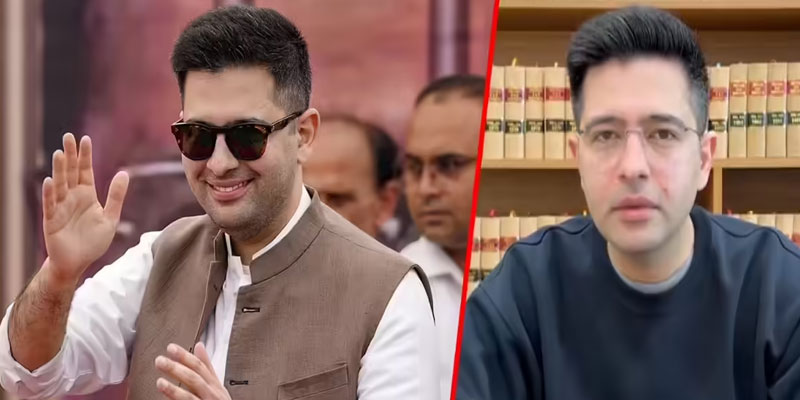
Days after internal tensions within the Aam Aadmi Party (AAP) came into the spotlight, Raghav Chadha saw a dramatic change in his security cover. The Punjab government withdrew his Z+ security, only for the Centre to step in within hours and grant him Z-category protection. The swift sequence of events has triggered political speculation, particularly as it coincides with Chadha’s apparent rift with party leadership.
What the Security Shift Means
Security categories in India reflect the level of threat perception. Z+ security, previously provided to Chadha by the Punjab government, is among the highest, involving a large contingent of armed personnel. The Centre’s Z-category cover, though slightly lower, still offers substantial protection through central paramilitary forces.
The Union government’s decision was reportedly based on an Intelligence Bureau (IB) assessment that flagged potential threats to Chadha. The new arrangement ensures his protection in Delhi and Punjab, while a lower category may apply elsewhere
The AAP Rift: Background and Political Undercurrents
The security reshuffle comes against the backdrop of growing friction within AAP. Chadha, once considered a key face of the party and a close aide of Arvind Kejriwal, was recently removed as deputy leader in the Rajya Sabha and replaced by Ashok Mittal.
Party insiders have hinted at dissatisfaction with Chadha’s political positioning, with some accusing him of being “soft” on the Centre and not actively engaging with key issues in Punjab. The leadership reshuffle has fueled speculation about internal divisions, particularly at a time when the party faces governance and political challenges in the state.
Punjab Government’s Move and Its Implications
The Punjab government’s decision to withdraw Chadha’s Z+ security has been widely interpreted as a political signal. The move came shortly after his removal from a key parliamentary role, reinforcing perceptions of a widening rift.
State leaders reportedly questioned Chadha’s role and engagement, adding to the narrative that he is being side-lined within the party. The withdrawal of security, typically based on threat assessment, has thus taken on political overtones in this context.
Centre Steps In: Security or Strategy?
The Centre’s quick decision to provide Z-category security has raised further questions. Officially, it is being framed as a routine response to IB inputs regarding Chadha’s safety, given his high-profile status and past threats.
However, political interpretations differ. An AAP spokesperson has claimed that Chadha recently held a meeting with senior BJP leaders, intensifying speculation about possible political realignments. While no confirmation has emerged, such claims have added another layer of intrigue to the episode.
Critics argue that the move could be seen as the Centre extending support to a leader at odds with his party, while others maintain that ensuring the safety of a Member of Parliament is a non-partisan responsibility.
Security Decision Amid Political Uncertainty
The sequence of events surrounding Raghav Chadha’s security cover reflects the complex interplay between governance, security, and politics. While the Centre’s decision may be rooted in threat perception, its timing—amid an internal party dispute—has inevitably drawn political attention.
As AAP navigates internal challenges, the focus will remain on whether these developments signal deeper realignments or remain a temporary phase of discord. For now, the episode underscores how even security decisions can become part of a larger political narrative in an increasingly competitive landscape.
(With agency inputs)