The Curtain Falls on a Political Stalwart
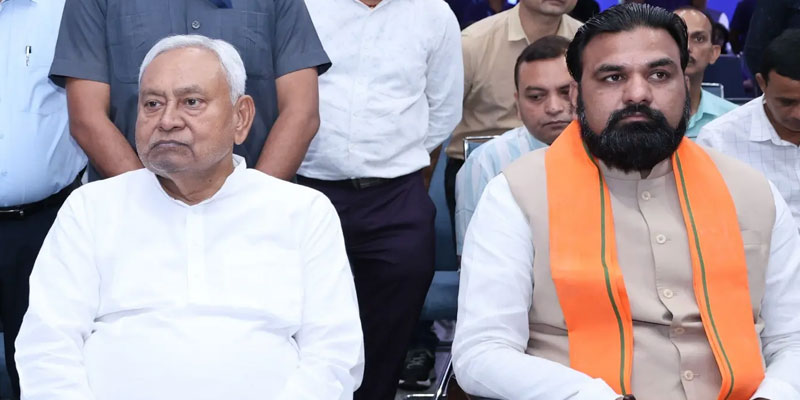
Nitish Kumar is set to tender his resignation as Bihar Chief Minister to Governor Syed Ata Hasnain, bringing an end to a remarkable two-decade-long tenure. His departure marks not just a routine leadership change, but the conclusion of one of the most defining political chapters in Bihar’s modern history.
A Political Journey Shaped by Power and Pragmatism
Since first assuming office in 2005, Nitish Kumar has been the central figure in Bihar’s governance and political evolution. His leadership blended administrative reform with political adaptability, allowing him to remain relevant despite shifting alliances and changing electoral dynamics.
His tenure saw improvements in infrastructure, law and order, and welfare delivery. Yet, it was equally characterized by strategic realignments—moving between alliances such as the Janata Dal (United) and the Bharatiya Janata Party—which underscored his reputation as a master tactician in coalition politics.
Bihar’s Political Backdrop: Stability Amid Flux
Bihar’s political landscape has long been fragmented, shaped by caste equations, regional loyalties, and coalition dependencies. Within this complexity, Nitish Kumar managed to project an image of stability and governance.
However, over time, the balance of power began to shift. The Bharatiya Janata Party steadily expanded its influence in the state, altering the dynamics within the National Democratic Alliance (NDA). This gradual shift set the stage for the current transition, where the BJP appears poised to take a more dominant leadership role.
The Resignation: A Personal and Political Moment
Nitish Kumar has formally submitted his resignation, concluding his long innings as chief minister. Reports from his final Cabinet meeting suggest an emotional farewell, where he acknowledged his efforts over the years and expressed hope for Bihar’s continued progress.
This moment carries symbolic weight. Nitish’s governance style was deeply personalized, relying on his credibility and administrative image. His exit therefore represents not just a leadership change, but the end of a governance model closely tied to his individual authority.
The Rise of Samrat Choudhary: A New Power Equation
With Nitish stepping aside, Samrat Choudhary is widely expected to emerge as the next Chief Minister. His elevation would signal a decisive shift in Bihar’s political structure, with the BJP moving from a supporting role to the forefront of governance.
As an OBC leader with strong organizational backing, Samrat Choudhary represents both continuity and change. His leadership could help the BJP consolidate its social base while reshaping the state’s political narrative.
The Nishant Factor: A Hint of Continuity
An interesting development is the potential entry of Nitish Kumar’s son, Nishant Kumar, into the government as Deputy Chief Minister. If realized, this would introduce a limited dynastic element into Bihar’s politics while helping the JD(U) retain some relevance.
Nishant’s role could act as a bridge between the old and new regimes, preserving a connection to Nitish Kumar’s legacy even as power transitions to a new leadership structure.
Political Meaning: Transition and Transformation
Nitish Kumar’s resignation is more than a procedural shift—it marks the end of one of Bihar’s longest and most influential chief ministerial tenures. It also reflects a broader political transition, where coalition equations are being recalibrated and new power centers are emerging.
The coming phase will test whether the BJP-led leadership can maintain stability while redefining governance priorities in the state.
Beyond Nitish, Toward a New Bihar
As Nitish Kumar exits the political stage, Bihar enters a moment of significant transition. His tenure leaves behind a mixed but meaningful legacy of governance and political adaptability.
The challenge now lies in managing a smooth transition while sustaining development momentum. Whether the new leadership can build on Nitish’s foundation or chart an entirely new course will define Bihar’s next political chapter.
(With agency inputs)