A Strategic Energy Reset, Not Instant Windfall
US President Donald Trump’s Venezuela oil pact is being presented as a historic energy breakthrough, but its significance extends far beyond barrels and fuel prices. Trump says Washington has secured majority control over more than 65 billion barrels of Venezuela’s proven oil reserves, describing it as the “biggest oil deal in world history.” Yet the headline masks a crucial reality: reserves are not the same as production, and control is not necessarily ownership. The agreement could reshape US energy strategy and Washington’s geopolitical influence in Latin America, but turning the announcement into sustained oil output will take years.
From Political Intervention to Oil Realignment
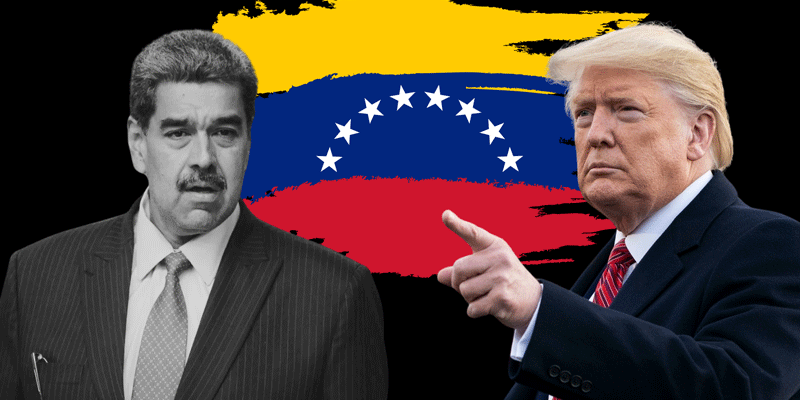
The agreement follows the dramatic US intervention in Venezuela in January, which removed President Nicolás Maduro and brought interim President Delcy Rodríguez to power. Washington has since gained extraordinary leverage over Venezuela’s political and economic direction.
Rodríguez’s administration has moved toward opening the oil sector to private investment. Venezuela’s revised hydrocarbons framework gives private operators greater autonomy, facilitates asset transfers and reduces the dominance of state oil company PDVSA. That policy shift has created the legal and political space for American companies to return to a market many had abandoned after nationalisation, expropriations, sanctions and prolonged instability.
What Trump’s Oil Deal Actually Promises
Trump says the arrangement was negotiated by Secretary of State Marco Rubio and Defense Secretary Pete Hegseth with Rodríguez through a private-sector partnership. Reuters reports that the agreement covers more than 65 billion barrels and seeks to revive 17 strategic fields. The emerging structure reportedly gives the US majority control through a new commercial arrangement rather than transferring Venezuelan sovereignty over the reserves.
That distinction matters. Venezuela still owns its natural resources, while the precise ownership, operating, revenue-sharing and contractual arrangements remain critical questions. Reports indicate the plan could attract around $100 billion in investment, while Caracas expects substantial tax revenues.
Why Washington Wants Venezuela’s Heavy Crude
The strategic logic is powerful. US Gulf Coast refineries are well suited to Venezuela’s heavy crude, potentially giving American refiners a geographically close source of feedstock. Increased Venezuelan production could eventually help moderate fuel prices, replenish US strategic petroleum stocks and reduce dependence on more distant suppliers.
There is also a China dimension. Venezuelan crude increasingly flowed toward China under sanctions-era trading arrangements. Bringing American companies back into Venezuela would therefore strengthen US influence over a major oil producer while limiting Beijing’s strategic access to the region.
Reactions Reveal Both Opportunity and Risk
Caracas has welcomed the agreement, portraying it as a route to economic recovery, investment, employment and greater government revenue. US officials have similarly highlighted cheaper energy and expanded commercial opportunities.
But investors and analysts remain cautious. Venezuela’s oil infrastructure is severely degraded, production remains far below its potential, and much of its extra-heavy crude requires specialised technology, diluents and massive capital investment. Legal questions surrounding long-term contracts and Venezuela’s political future could further complicate implementation.
The Real Test Begins After the Headline
Trump has announced a geopolitical and energy reset, not an instant oil windfall. The pact’s success will ultimately be measured not by 65 billion barrels on paper, but by wells restored, infrastructure rebuilt, investment secured and additional barrels actually reaching global markets.
The agreement gives Washington unprecedented leverage and Venezuela a potentially transformative investment opportunity. But its durability will depend on legal legitimacy, investor confidence and political stability. The real deal is not control of Venezuela’s oil reserves—it is whether that control can be converted into reliable production, lasting economic recovery and enduring strategic influence.
(With agency inputs)