A New Transparency Tool
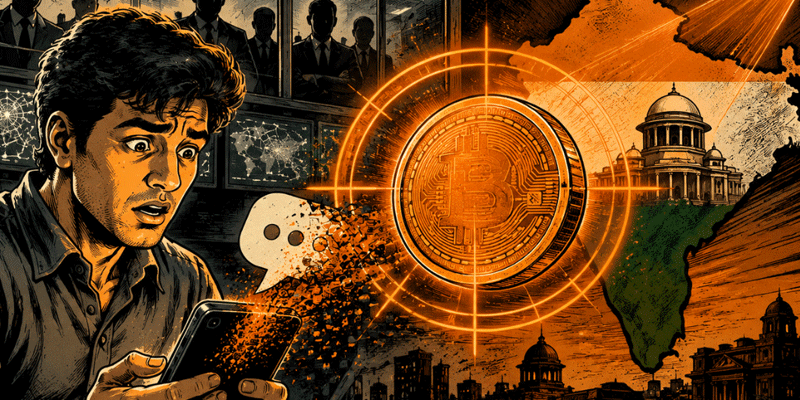
X, the social media platform formerly known as Twitter, recently introduced a location feature that displays the region or country from which an account is based. Designed as part of the platform’s broader efforts to increase transparency and curb misinformation, the feature has quickly become a flashpoint in India’s political discourse. By revealing the geographic origins of accounts, X inadvertently highlighted foreign-linked activity, particularly among politically active users critical of the ruling Bharatiya Janata Party (BJP).
Social Media Meets Politics
India’s digital ecosystem has long been a battleground for political influence, with social media platforms shaping public opinion, mobilizing voters, and amplifying narratives. The rollout of X’s location tool brought this dynamic into sharper focus by exposing the apparent international footprint of certain political accounts. BJP leaders seized upon this development to question the legitimacy of opposition voices, while digital analysts began examining the extent and impact of cross-border political engagement.
Controversy and Implications
The controversy centers on allegations that foreign-operated accounts, particularly critical of the BJP, are part of coordinated campaigns to influence Indian political discourse. BJP IT Cell chief Amit Malviya claimed that numerous pro-Congress and anti-government handles are run from countries such as Pakistan, Bangladesh, and other regions in South Asia. He emphasized that some accounts frequently change usernames, suggesting deliberate efforts to obscure identity and geographic origin.
Several high-profile cases added fuel to the debate. Accounts operated from Pakistan and other foreign countries were found posting content critical of the BJP, some allegedly tied to organized political campaigns. Additional handles appeared to originate from locations including West Asia, Africa, and Nigeria, posting Hindi-language content designed to sway Indian audiences. BJP analysts argue that these foreign-linked accounts may have amplified dissent during protests over contentious legislation like the Citizenship Amendment Act and farm laws, framing them as externally influenced narratives.
However, the accuracy of the location data remains contested. Users employing VPNs, proxy servers, or temporary relocations may appear to operate from abroad, even if they are based in India. X’s head of product, Nikita Bier, emphasized that the feature is “99% accurate” but acknowledged technical limitations. Additionally, verified government accounts are exempt from location disclosure to maintain security.
The feature highlights the dual-edged nature of digital transparency. While it can expose foreign influence and enhance accountability, it also risks misinterpretation, privacy concerns, and further polarization. It underscores the increasing role of social media in political campaigns, the vulnerabilities of digital discourse, and the challenges regulators face in balancing transparency with user protection.
Navigating Digital Politics in India
X’s location feature has sparked a heated debate over cross-border influence, misinformation, and political strategy in India. While it reinforces the platform’s commitment to transparency, the controversies it has triggered illustrate the complex interplay between technology, politics, and public perception. Moving forward, both social media platforms and regulators will need to develop strategies that ensure authenticity, safeguard privacy, and mitigate the manipulation of political narratives in an increasingly digitized democracy.
(With agency inputs)