Kyiv Appeals for Urgent Financial Backing
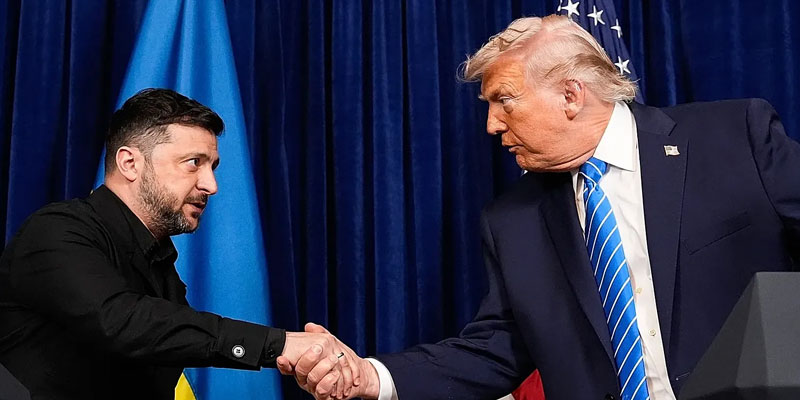
Ukrainian President Volodymyr Zelensky has urged European Union leaders to provide at least €70 billion in additional support for 2027, warning that his country will need approximately €155 billion to sustain its war effort and national resilience. Addressing the European Council in Brussels on October 16, he argued that predictable financial assistance was essential to strengthen Ukraine’s defences, expand weapons production and prevent further Russian advances.
Zelensky presented the request not merely as financial aid for Kyiv, but as an investment in European security at a time when the future of international support remains uncertain.
The Funding Gap Behind Kyiv’s Appeal
Ukraine continues to face enormous financial demands as Russia’s full-scale invasion, launched in February 2022, enters another year. Military expenditure, weapons procurement, infrastructure protection and the functioning of the state have placed sustained pressure on the country’s resources.
The European Union is already preparing approximately €45 billion to support Ukraine’s government and defence. However, Zelensky’s latest appeal seeks additional financing to address the projected shortfall in 2027.
His request comes amid uncertainty over the scale and reliability of future American assistance under US President Donald Trump. Zelensky has expressed frustration with Capproach, while European leaders have sought to reassure Kyiv of the bloc’s continuing commitment.
The European Council’s October 15–16 meeting also addressed Ukraine’s broader European integration, including progress towards EU membership negotiations.
Why Drones Are Central to Ukraine’s Strategy
A major part of Zelensky’s argument centres on expanding Ukraine’s domestic drone industry. He told European leaders that the country could manufacture two to three times more drones, depending on the type, if sufficient funding were available.
According to Zelensky, drones have become indispensable to Ukraine’s battlefield strategy by disrupting Russian supply lines, countering frontline assaults and striking military logistics. Their comparatively lower cost also allows Ukraine to challenge a larger military without relying exclusively on expensive conventional weapons.
He argued that additional financing could help Kyiv transform its defence industry into a more powerful deterrent. Rather than depending solely on individual weapons deliveries, Ukraine wants sustained investment that would enable manufacturers to increase production, develop technology and maintain reliable supplies.
The strategy could also ease pressure on European military stockpiles by strengthening Ukraine’s own capacity to produce essential equipment.
Europe Signals Support, but Funding Remains Uncertain
EU leaders reiterated their political support for Ukraine’s defence, but did not immediately commit to the entire €70 billion request. French President Emmanuel Macron stressed the importance of providing Kyiv with the means to defend itself and protect civilians and critical infrastructure.
However, disagreements over the EU’s long-term budget and the mechanisms for financing continued assistance complicate the negotiations. European governments must determine how to distribute the financial burden while balancing domestic economic priorities and security commitments.
Europe’s Credibility Hinges on Delivering Support
Zelensky’s appeal highlights a strategic question facing Europe: whether political solidarity can be translated into predictable financial commitments. For Ukraine, the stakes extend beyond purchasing weapons to sustaining its military capabilities and national institutions through 2027.
The proposed €70 billion remains a request, not an approved commitment. Its eventual outcome will depend on negotiations over the amount, funding sources and implementation. If European leaders agree on a sustainable financing framework, they could strengthen Ukraine’s ability to resist Russian pressure. Failure to bridge the gap, however, would leave Kyiv confronting another year of war with greater uncertainty over its resources and long-term defence preparedness.
(With agency inputs)