A Fresh Push to Attract Global Capital
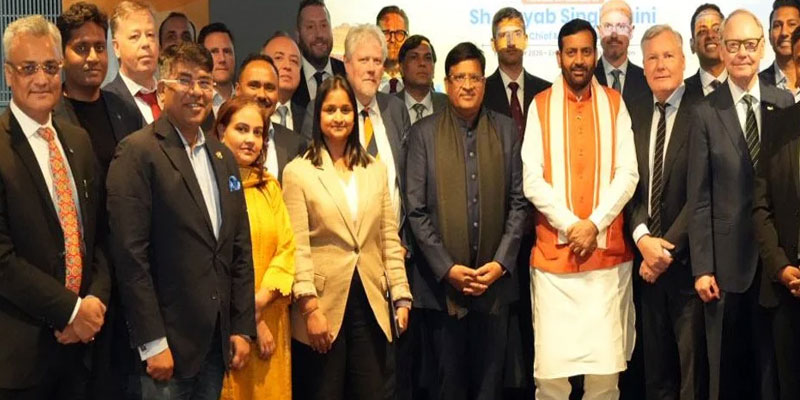
Haryana has signed letters of intent (LoIs) worth ₹4,000 crore with Swedish companies during Chief Minister Nayab Singh Saini’s visit to Sweden from October 14 to 17. The proposed investments aim to strengthen industrial growth, expand trade, create employment opportunities and accelerate urban development, reinforcing the state’s ambition to emerge as a preferred destination for international investors.
The agreements combine prospective industrial investment with cooperation on smart cities and sustainable development, giving the visit significance beyond the headline financial commitment.
What the Agreements Cover
A separate city-to-city collaboration agreement between Gurugram and Stockholm establishes a framework for cooperation in several areas:
· Smart-city development: Sharing expertise in urban planning, infrastructure and technology-led public services.
· Sustainability: Exploring solutions for sustainable urban development and environmental challenges.
· Innovation and investment: Promoting knowledge exchange, technological collaboration and business opportunities.
The Gurugram-Stockholm partnership is particularly significant because it creates a framework for sustained institutional engagement rather than limiting cooperation to individual investment announcements.
Haryana’s Swedish Investment Push
Haryana, particularly Gurugram, has developed into a major centre for multinational corporations, information technology, automotive manufacturing, consulting and business services. The state is now seeking to attract higher-value investments that can diversify its economic base, strengthen manufacturing and logistics, and generate skilled employment.
Sweden offers expertise in advanced manufacturing, clean technology, sustainable mobility, logistics and innovation. Collaboration could help Haryana access these capabilities while providing Swedish businesses with opportunities in one of India's most important industrial and commercial regions.
Gurugram also faces persistent challenges involving congestion, water management, waste disposal and infrastructure pressure. Swedish experience in urban planning and sustainable technology could support efforts to address these issues, provided the partnership translates into practical projects.
Economic Potential and Policy Significance
The ₹4,000-crore package represents proposed investment, not capital already deployed. Its economic impact will depend on the conversion of the LoIs into binding agreements, project approvals, financing and implementation.
The retail and warehousing component could build on Haryana’s strategic location within the Delhi-NCR economic corridor. Meanwhile, the larger investment proposal could support industrial expansion and employment, although specific job numbers and project details remain to be established.
For the Saini government, the visit also signals an effort to strengthen Haryana’s international investment profile and connect foreign capital with domestic development priorities.
From Investment Intentions to Industrial Transformation
Haryana’s Swedish outreach offers an opportunity to combine investment, technology and sustainable urban development. However, the ultimate measure of success will not be the value announced during the visit, but the projects delivered on the ground.
Identifying investors, establishing implementation timelines, securing approvals and publishing employment commitments will be crucial next steps. If the proposed agreements translate into operational businesses and meaningful technology partnerships, Haryana could deepen its global economic integration. The challenge now is to turn diplomatic momentum into measurable industrial growth, skilled jobs and lasting benefits for the state’s economy.