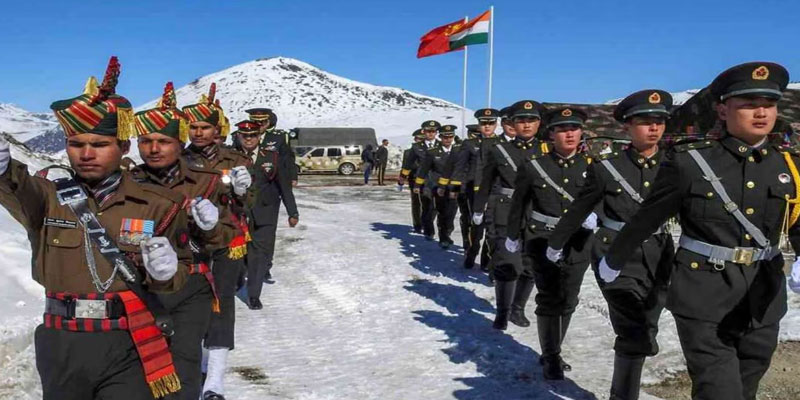
The confrontation with Chinese troops is ongoing at multiple locations along the India-China border in Arunachal Pradesh, highlighting persistent tensions along the disputed Line of Actual Control (LAC). The Indo-Tibetan Border Police (ITBP) has confirmed that several face-offs remain unresolved, including a prolonged standoff near Taksing, where Chinese personnel have reportedly pitched tents in an area falling within India’s perception of the LAC.
Taksing Standoff: What Happened?
ITBP Director General Shatrujeet Kapur confirmed the continuing confrontations at an investiture ceremony ahead of the force’s 65th Raising Day. According to government sources cited by The Hindu, the principal standoff is near Asaphila in Upper Subansiri district.
During routine patrolling in July, Indian and Chinese personnel reportedly encountered each other near the Maja operating base. Although both sides initially withdrew, Chinese troops allegedly returned days later in greater numbers and established tents. Reports place these tents approximately 6–7 km inside India’s perception of the LAC.
Why the Disputed Border Matters
The LAC separates Indian- and Chinese-controlled territories, but the two countries have not mutually agreed on its precise alignment throughout the frontier. Consequently, differing perceptions of the boundary frequently trigger patrol confrontations.
A sustained presence of personnel or temporary structures in a contested area can complicate patrolling arrangements and create fresh friction, even without a formally acknowledged territorial change.
Diplomacy, Defence and Border Preparedness
The latest confirmation comes despite continuing diplomatic and military engagement between New Delhi and Beijing. Previous discussions have sought to maintain peace, improve communication and prevent local confrontations from escalating. However, the reported standoff illustrates the difficulty of translating diplomatic commitments into stability on the ground.
India’s priorities include maintaining surveillance, ensuring the security of forward positions and strengthening infrastructure in remote frontier areas. The ITBP has also highlighted the importance of modernising equipment and expanding drone and counter-drone capabilities to address evolving security challenges.
Vigilance and Dialogue Must Secure the Frontier
The continuing face-offs underscore the need for sustained vigilance along Arunachal Pradesh’s sensitive frontier. India must protect its territorial interests while ensuring that operational decisions are guided by verified ground assessments and effective coordination among security agencies.
At the same time, established military and diplomatic channels remain essential to prevent misunderstandings from escalating into a wider confrontation. The immediate priorities are to clarify the situation around Taksing, resolve local disputes and prevent any unilateral alteration of ground conditions. Ultimately, credible border preparedness, stronger frontier infrastructure and firm diplomatic engagement must work together to preserve peace without compromising India’s security interests.
(With agency inputs)