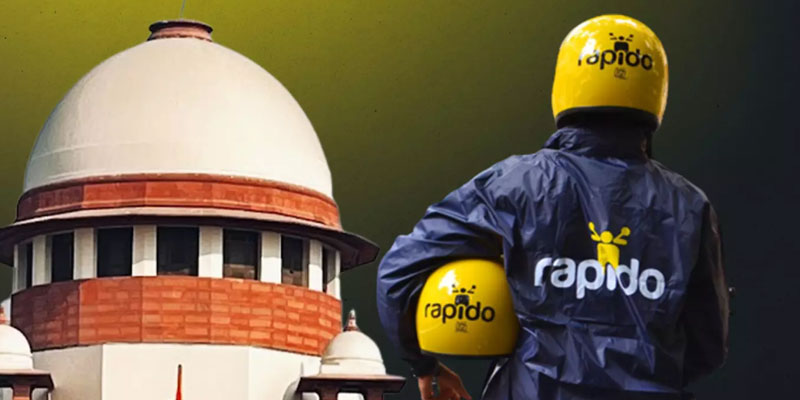
Rapido, one of India's leading affordable mobility platforms, has welcomed the Supreme Court's landmark decision in the Karnataka bike taxi matter, describing it as a defining moment for the country's bike taxi industry. The ruling, which dismissed the Karnataka government's Special Leave Petition (SLP), provides greater legal clarity for the category and opens the way for a structured regulatory framework. The development is expected to benefit commuters, platform operators and thousands of two-wheeler owners seeking flexible earning opportunities.
Rapido: Transforming India's Urban Mobility
Founded in 2015, Rapido operates under Roppen Transportation Services Private Limited. It has expanded across more than 400 cities, offering bike taxis, auto-rickshaws, cab services, parcel deliveries and other technology-enabled services. Its focus on affordable, convenient and accessible transportation has made it an important player in India's urban mobility ecosystem.
The Karnataka government's Special Leave Petition (SLP) was an appeal filed before the Supreme Court challenging the Karnataka High Court Division Bench's January 23, 2026, judgment that had set aside the restrictions on bike taxi operations in the state. The government sought to restore the effective ban, arguing that motorcycles should not be permitted to carry passengers for commercial purposes without an appropriate regulatory framework, and raised concerns regarding passenger safety, insurance coverage and operational guidelines. However, on November 20, 2026, a Supreme Court bench comprising Justices Satish Chandra Sharma and N. Kotiswar Singh dismissed the Karnataka government's SLP, thereby upholding the High Court's decision. During the hearing, Justice Sharma observed that bike taxis should be regulated rather than banned, highlighting their affordability, GPS-enabled safety features and convenience, particularly for women commuters. The High Court's ruling allows motorcycle owners to apply for registration as transport vehicles and seek contract carriage permits, while permitting authorities to impose reasonable regulatory conditions. Importantly, the Supreme Court's decision does not mean unrestricted operations; bike taxi services must comply with applicable registration, permit and regulatory requirements.
Supreme Court Verdict: A Major Legal Milestone
The Supreme Court's dismissal of Karnataka's SLP marks a significant development in the legal status of bike taxis in the state. Rapido believes the decision establishes greater certainty for commuters and its platform partners, popularly known as captains. Bike taxis have increasingly become an alternative for short-distance journeys, particularly in congested cities where conventional transport can be expensive or time-consuming. The ruling also provides an opportunity for state governments to establish clear operational guidelines governing the category.
Rapido Welcomes the Decision
Rapido Co-founder Pavan Guntupalli welcomed the verdict, describing it as recognition of the practical role bike taxis play in India's transportation network. He emphasised that two-wheelers are among the country's most accessible mobility assets and can strengthen first- and last-mile connectivity while creating flexible livelihood opportunities.
He also expressed the company's willingness to work with the Karnataka government to develop a safe, responsible and regulated operating environment.
Next Phase: Safety, Regulation and Sustainable Growth
The decision shifts attention towards effective implementation and state-level regulation. In Bengaluru, bike taxis can complement Metro services, buses, auto-rickshaws and cabs by connecting commuters to transport hubs and employment centres.
Key priorities for the next phase include:
· Clear licensing and operational guidelines for bike taxi services.
· Passenger safety, insurance and driver verification.
· Transparent fare structures and accountability.
· Better integration with public transportation.
· Sustainable earning opportunities for captains.
Legal Clarity Can Accelerate Mobility Transformation
Rapido's expansion across more than 400 cities and its stated support for over nine million livelihoods underline the economic significance of platform-based mobility. The Supreme Court decision provides an important opportunity to bring bike taxis into a clearer regulatory framework. However, long-term success will depend on balancing commuter convenience, passenger safety, workers' interests and government oversight. The next challenge is to transform this legal milestone into a sustainable mobility model that strengthens India's urban transport infrastructure.
(With agency inputs)