A Dramatic Demise—and Trump’s Triumphant Response
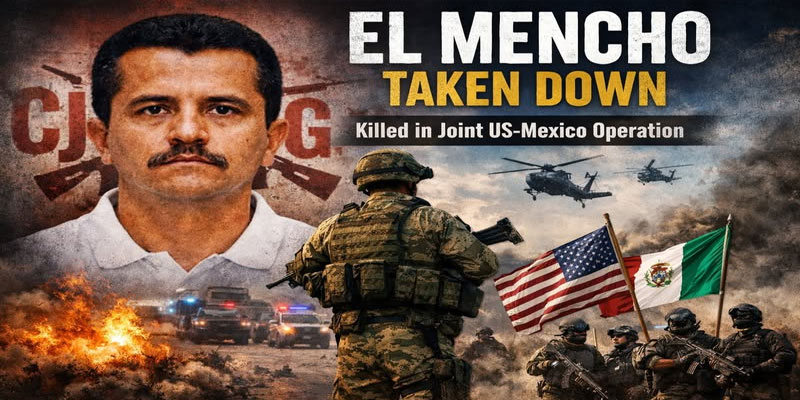
The death of Nemesio Oseguera Cervantes, better known as “El Mencho,” has sent shockwaves across Mexico and beyond. Mexican security forces killed the elusive leader of the Jalisco New Generation Cartel (CJNG) on February 22, 2026, during a dawn raid in Tapalpa, Jalisco. Wounded in a fierce gun battle that left nine cartel gunmen dead and three soldiers injured, El Mencho reportedly died en route to Mexico City. Authorities seized armored vehicles and rocket launchers, underscoring the cartel’s militarized capacity.
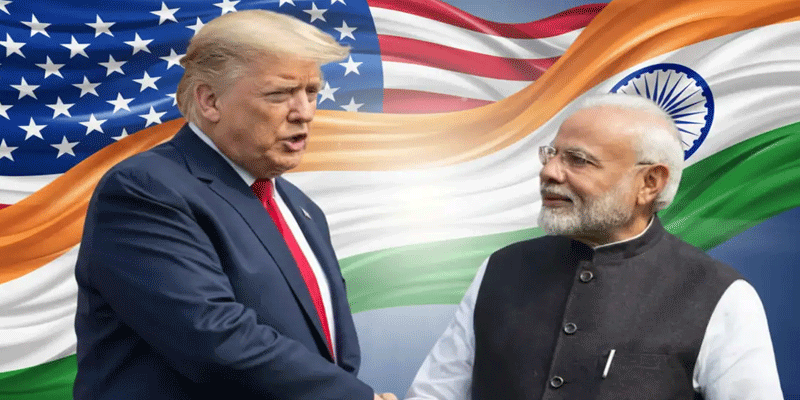
U.S. President Donald Trump reacted with a characteristically cryptic post: “We’re Winning too much, it’s just not fair! President DJT.” The White House later confirmed that U.S. intelligence support played a role, particularly in targeting fentanyl trafficking networks. While Washington framed the operation as a bilateral triumph, Mexico’s streets erupted in retaliatory violence.
Who Was El Mencho?
El Mencho, 59, rose from a local enforcer to one of the world’s most feared drug lords. Under his command, CJNG evolved into Mexico’s most aggressive and expansionist cartel, challenging the Sinaloa Cartel for dominance. The group became a leading supplier of fentanyl to the United States—fueling a crisis that claims over 100,000 American lives annually—while also trafficking methamphetamine and cocaine.
CJNG distinguished itself through paramilitary tactics, drone attacks, and brazen assassinations of officials and rivals. It extorted avocado producers, infiltrated local governments, and weaponized propaganda. A $10 million U.S. bounty had trailed El Mencho for years, making his takedown symbolically potent.
Operation Fallout and Immediate Backlash
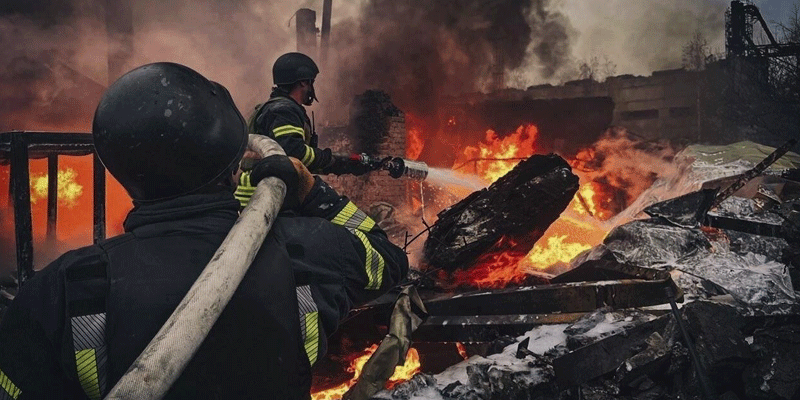
The raid, reportedly enabled by U.S.-Mexico intelligence fusion, marked a shift from Mexico’s earlier “hugs not bullets” posture toward direct confrontation. Yet CJNG’s response was swift and chaotic. Arson, highway blockades, looted stores, and flaming barricades paralyzed Guadalajara, Puerto Vallarta, and at least a dozen states. Flights were canceled, tourists stranded, and schools shuttered.
This backlash illustrates a paradox: eliminating a cartel leader can destabilize criminal hierarchies, triggering violent power struggles. Analysts warn of internal succession battles—possibly involving El Mencho’s son “El Gallito”—or opportunistic incursions by Sinaloa operatives into CJNG strongholds.
Immediate Impact on Drug Trafficking Routes
In the short term, logistics have been disrupted rather than dismantled. Highway blockades in Jalisco and Michoacán have slowed northbound shipments, while Pacific hubs such as Manzanillo port have faced temporary shutdowns. Border seizure data reportedly dipped 10–15% in the immediate aftermath, suggesting brief operational pauses.
However, CJNG’s decentralized cell structure limits long-term shock. Mid-level commanders continue overseeing fentanyl production and smuggling through diversified channels—cross-border tunnels, concealed semi-trucks, maritime routes, and even drone deliveries. The cartel’s control over precursor imports from Asia remains largely intact.
Experts note that unlike the capture of Joaquín “El Chapo” Guzmán, which fractured Sinaloa but did not halt trafficking, El Mencho’s death is unlikely to significantly reduce fentanyl supply without sustained follow-up arrests. Indeed, rival groups may absorb disrupted routes, rerouting flows through Baja California or Texas corridors.
Strategic and Political Implications
For Washington, the operation reinforces cross-border enforcement cooperation and offers political capital amid criticism of foreign policy handling. For Mexico, it signals institutional resolve but exposes vulnerabilities: cartel fragmentation often correlates with spikes in homicide rates before stabilization occurs.
Globally, the episode underscores both the reach and resilience of transnational narcotics networks. Tactical victories, while meaningful, do not automatically dismantle supply chains built on corruption, poverty, and international demand.
Victory or Volatility?
El Mencho’s death is undeniably a landmark in the fight against organized crime—a symbolic blow to one of the hemisphere’s most ruthless traffickers. Yet symbolism alone cannot neutralize deeply entrenched criminal ecosystems.
The immediate aftermath—burning streets and disrupted routes—reveals the fragility of cartel hierarchies. Whether this moment evolves into sustained disruption or merely a reshuffling of power will depend on coordinated enforcement, economic reform, and institutional resilience on both sides of the border.
For now, triumph is tempered by turbulence. The kingpin has fallen—but the cartel chessboard remains in motion.
(With agency inputs)